



More stories of interest around the Nonwoven & Textile business
From plant to performance
From decortication to web forming, ANDRITZ delivers end-to-end bast fiber processing and airlay & carding solutions
As global industries accelerate their transition toward sustainable materials, natural fibers are moving to the forefront of innovation. Bast fibers and regenerated natural fibers are increasingly used in technical textiles, automotive components, construction materials, insulation, and geotextiles. Mastering these fibers, however, requires deep process knowledge and robust technology.
Natural fibers in industrial applications
Jute, hemp, flax, and coconut fibers – each serve a broad range of end applications, reflecting their distinct mechanical and functional properties. Jute is widely used in geotextiles, erosion control fabrics, carpet backing, and packaging due to its strength, biodegradability, and cost efficiency. Hemp combines high tensile strength with durability and moisture resistance, making it ideal for automotive interior components, technical composites, insulation materials, and construction applications. Flax, valued for its fine fibers and excellent stiffness‑to‑weight ratio, is commonly applied in high‑quality textiles, automotive lightweight composites, furniture, and thermal or acoustic insulation panels. Coconut fibers (coir), known for their resilience and resistance to moisture and rot, are extensively used in mattress and bedding products, horticulture, erosion control mats, brushes, and cushioning applications. Together, these fibers enable a wide spectrum of sustainable end products, ranging from high‑performance industrial solutions to everyday consumer goods
France’s expertise in natural fibers
France has long been at the forefront of natural fiber handling and utilization, building on a deep industrial and cultural heritage. For centuries, the country has been a global reference for linen (flax) production, particularly in regions such as Normandy and Northern France, which are still recognized today for producing some of the world’s finest flax fibers used in textiles and technical applications.
France also played a key role in the historical development of hemp processing, with hemp widely cultivated and transformed for ropes, sails, and industrial textiles as early as the Middle Ages. In addition, the French silk industry, centered around Lyon from the Renaissance onward, set benchmarks for fiber processing, innovation, and textile engineering. This long tradition of mastering natural fibers - from agriculture to industrial transformation - has laid the foundation for France’s continued leadership in modern, sustainable nonwoven and technical textile solutions.
Today, ANDRITZ is closely involved in this development through its three locations in France, building on longstanding expertise in natural fiber processing.
ANDRITZ solutions for natural fiber processing
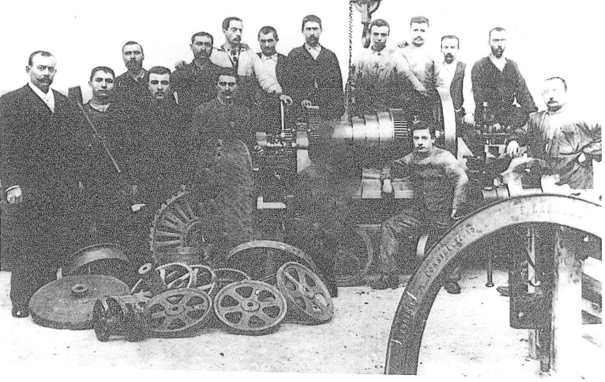
With over a century of experience in textile engineering and a unique portfolio covering the entire value chain, ANDRITZ offers industrial solutions that transform natural fibers from decortication to final nonwoven products, using downstream airlay and carding technologies - reliably efficiently, and at scale. The company offers access to three internationally recognized technical centers in France, located in Elbeuf, Cours-La-Ville and Montbonnot where customers can test a wide range of fibers and applications under production-like conditions.
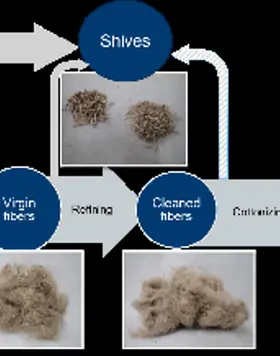
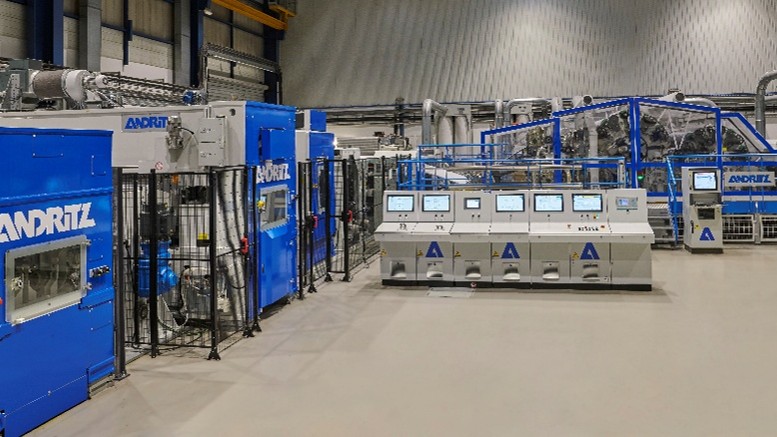
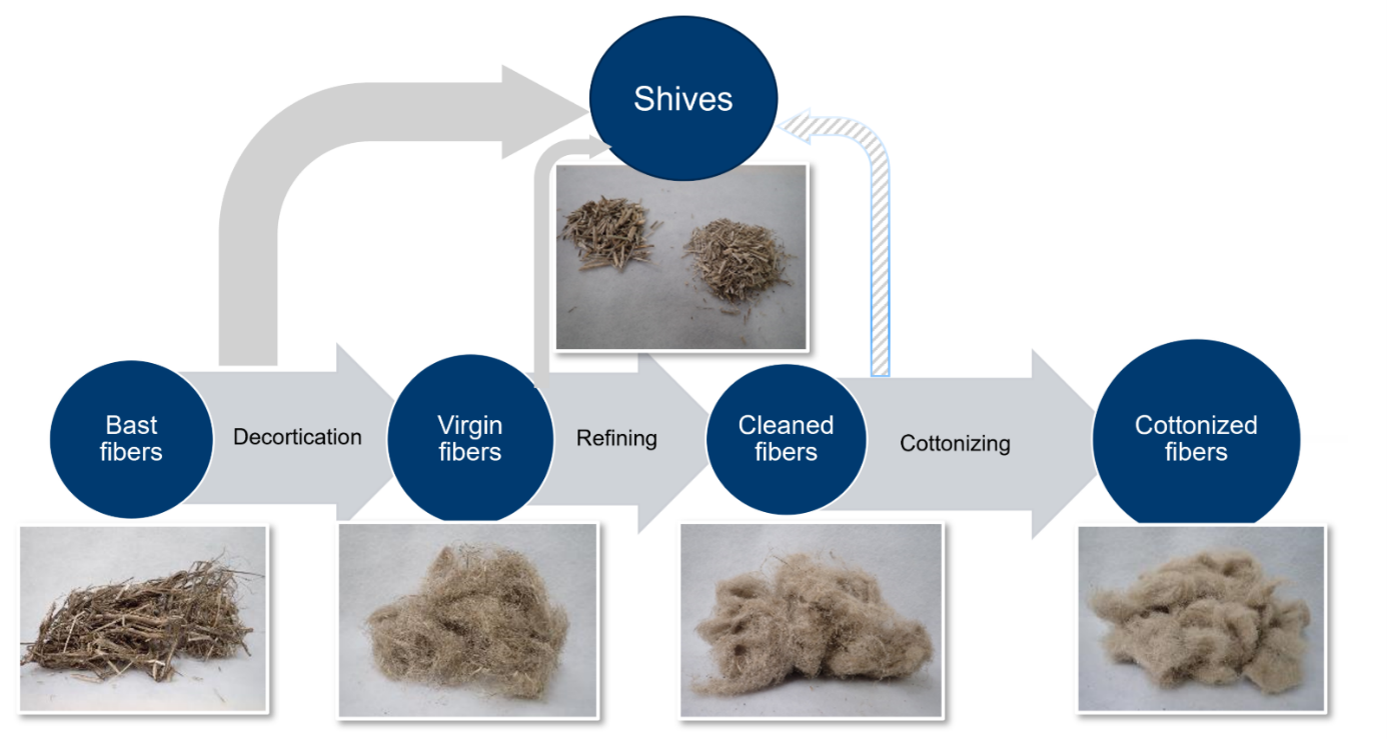
Processing natural fibers starts long before web formation. Fiber variability, impurities, length dispersion, and dust content present significant challenges that many equipment suppliers address only partially. It therefore becomes key taking a different approach by engineering integrated solutions starting at the fiber preparation stage. In order master natural fibers handling from the very beginning, ANDRITZ decortication, refining, and cottonizing technologies are specifically designed for bast fibers, ensuring gentle fiber opening, excellent cleaning efficiency, and optimal downstream processability - whether for carding or airlay applications.
Bast fiber processing performance and output
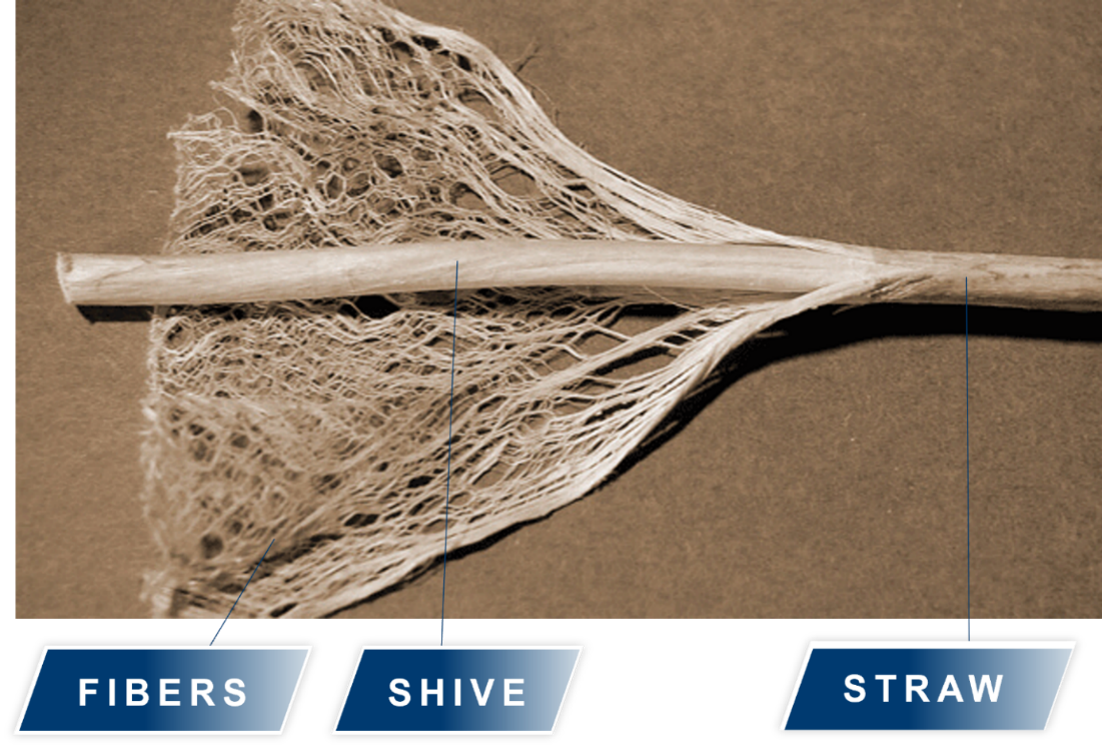
ANDRITZ teXline bast fiber integrates dry cleaning, decortication, and refining to deliver reproducible material yields and stable industrial performance. For typical hemp processing, the teXline configuration achieves approximately 50% cleaned shives, 25% cleaned refined fibers, 15–20% dust, and about 5% very short fibers, while maintaining high separation efficiency and fiber integrity. The solutions are designed to process bast straw at controlled humidity levels between 12 and 16%, depending on fiber type, and can handle both rectangular cut bales (up to 50 cm length) and round uncut bales. Modular and upgradeable line concepts allow installed capacities to start at 1 T/h and be expanded up to 2.5 t/h, with standard industrial lines available for 2.5, 5, or 10 t/h of straw throughput. In addition, ANDRITZ offers dedicated cottonizing processes, derived from decades of flax cottonizing experience, with capacities ranging from 0.1 to 1 t/h, enabling downstream use of bast fibers in spinning, nonwovens, hygiene, and specialty applications while ensuring consistent fiber quality and minimal shive content.
from fiber processing to value creation
With decades of experience in bast fiber processing via its own technical centers in France, ANDRITZ provides customers with a stable, repeatable fiber base, significantly reducing production risks and quality fluctuations.
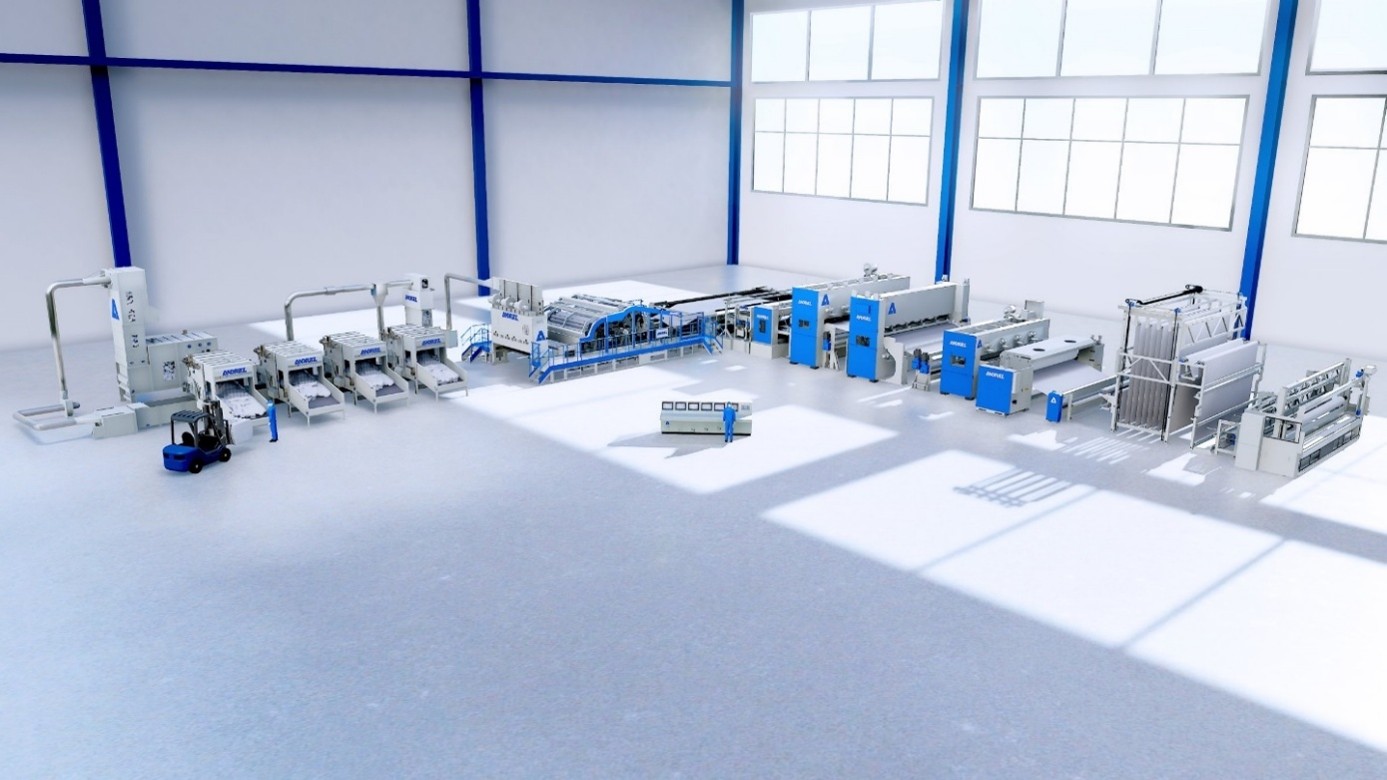
Once fibers are prepared, ANDRITZ technologies enable precise and flexible web formation through airlay & carding systems, tailored for natural fibers, while remaining compatible with recycled or shoddy fibers as a complementary activity. This downstream process will give the final products their textile characteristics. It appears for leading market players to be more and more crucial to control the full value-chain both for competitiveness and quality control, as natural fiber properties can vary depending on their origin and harvest conditions.
Natural fiber production relies on a complete local ecosystem. Decortication lines must be located close to cultivation areas, such as hemp fields. The fibers produced should then be further processed locally through downstream applications, supporting value creation across the overall production process.
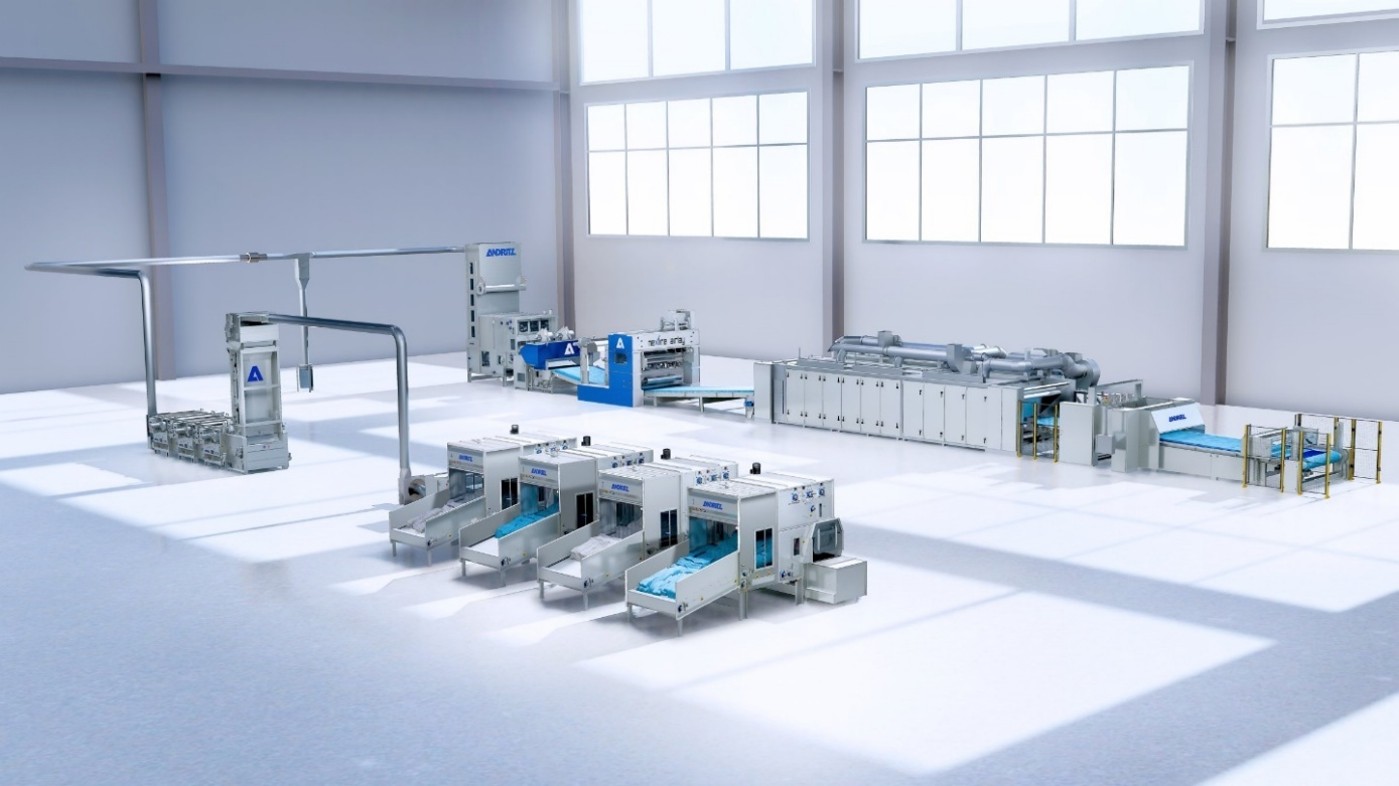
Airlay production lines
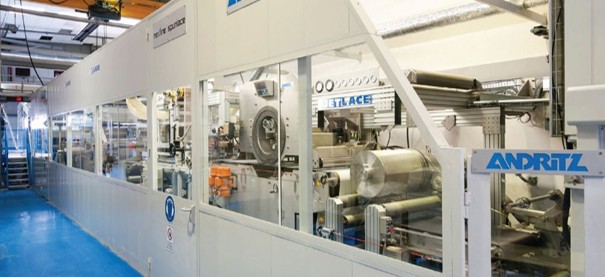
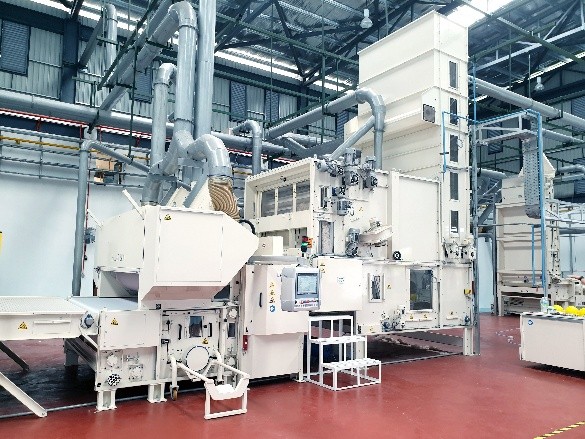
ANDRITZ airlay lines stand out for their ability to process short, long, recycled, and fragile natural fibers in a single, highly controlled process. From blending to mat consolidation, the technology ensures homogeneous fiber distribution, excellent weight uniformity, and consistent product performance, even with challenging raw materials, usually for end products included from 500 to 10,000 gsm mainly aimed at automative and insulation.
End-to-end integrated solutions
When considering new capital investments, complete success is not solely based on individual machines, but also on system expertise and long‑term upstream & downstream partnerships. One distinguishes itself through comprehensive end-to-end process competence, covering every step from natural fiber decortication to the production of finished nonwovens. As a true one-stop-shop, ANDRITZ integrates fiber preparation, web forming, bonding, and finishing into fully engineered solutions tailored to customer needs. This approach is reinforced by application-driven engineering, with technologies developed, tested, and validated around the world. Backed by hundreds of proven installations across Europe, Asia, the Americas, and emerging markets, ANDRITZ combines global experience with a strong sustainability focus, enabling customers to profitably valorize natural, recycled, and bio-based fibers while meeting the demands of future-oriented markets. This holistic approach translates into faster commissioning, higher uptime, consistent quality, and long‑term competitiveness for customers for the decades to come.
Download article and pictures

Related links
BAST FIBER
Bast fiber technology gets you the best out of plants like hemp, flax, kanef, jute and many others for the production of natural yarns and fibers for nonwoven processes
BAST FIBER
Bast fiber technology gets you the best out of plants like hemp, flax, kanef, jute and many others for the production of natural yarns and fibers for nonwoven processes
AIRLAY
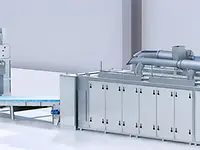
ANDRITZ offers Airlay technology for numerous end uses in nonwovens processing, durables and disposables.
neXline needlepunch eXcelle range
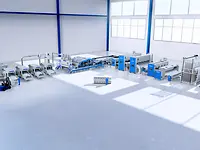
The neXline needlepunch eXcelle range offers comprehensive solutions for the premium drylaid production line.