Benefits:
- High dimensional stability: no deformation in normal operation
- High wear resistance
- Low risk of blockage due to special hole geometry

A high dry mass content at constant or higher throughput of the pulp press is a decisive factor for subsequent processes. The higher the dewatering performance, the lower the energy costs for drying. A dewatering process can be optimised in different places. ANDRITZ helps you to optimally exploit potential for improvement.
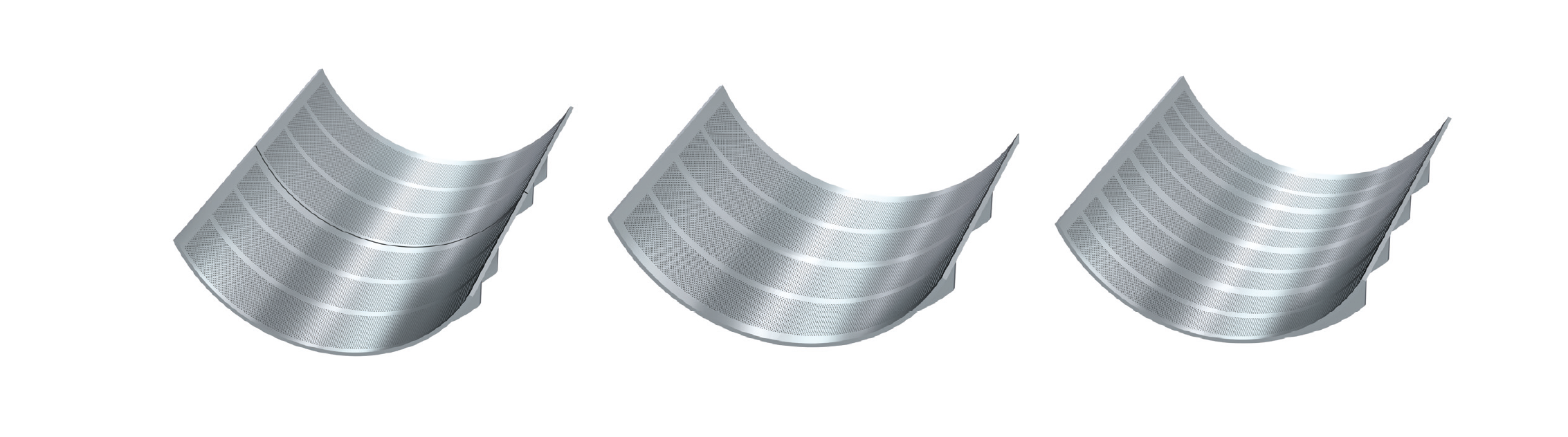
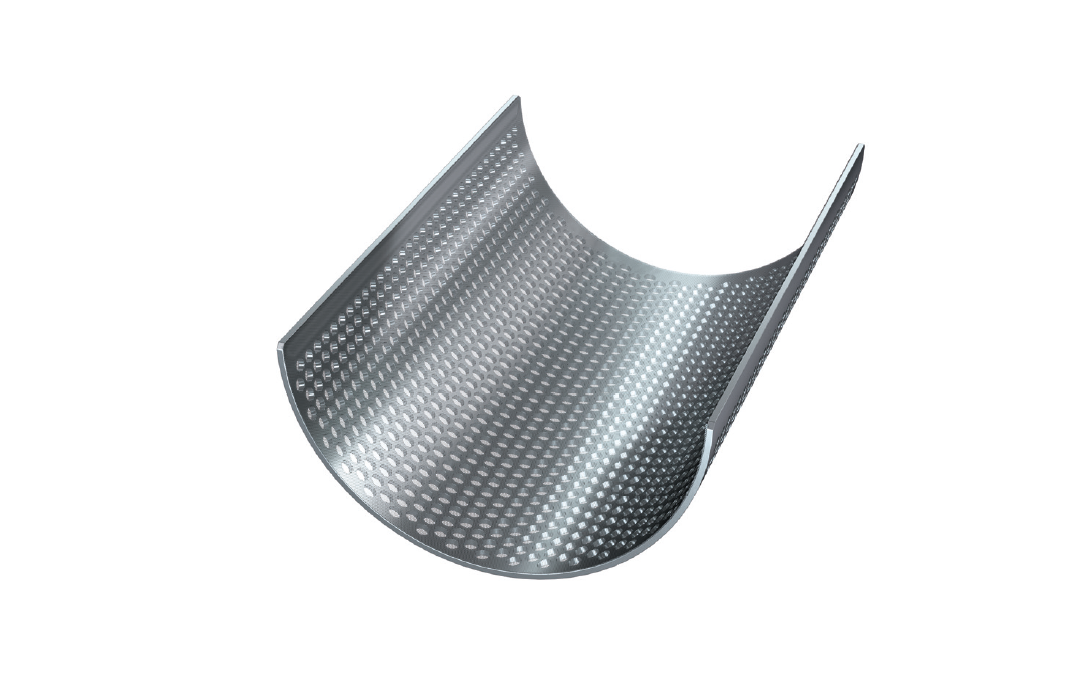
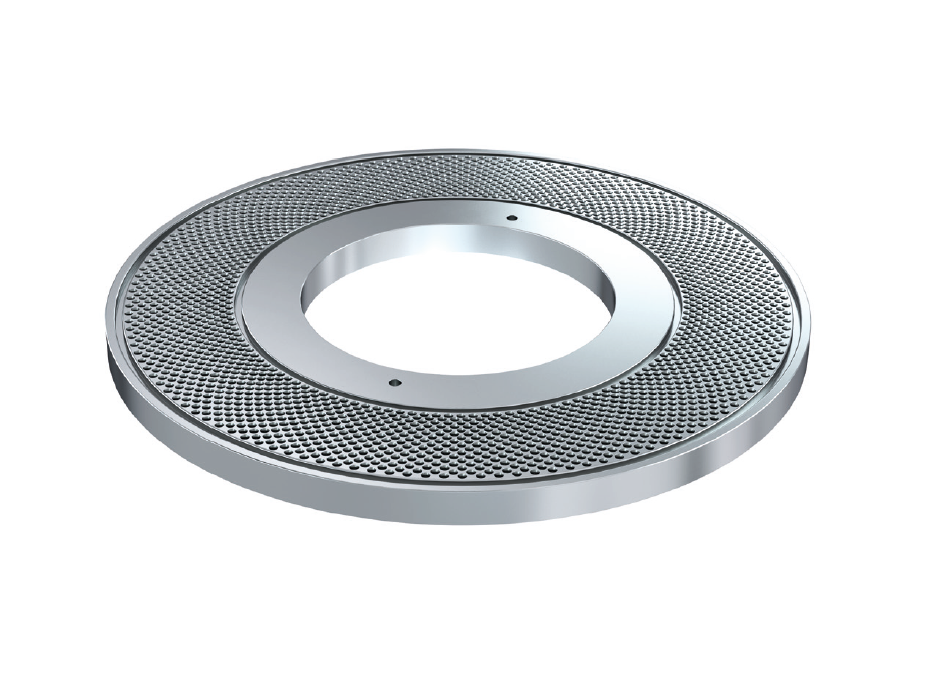
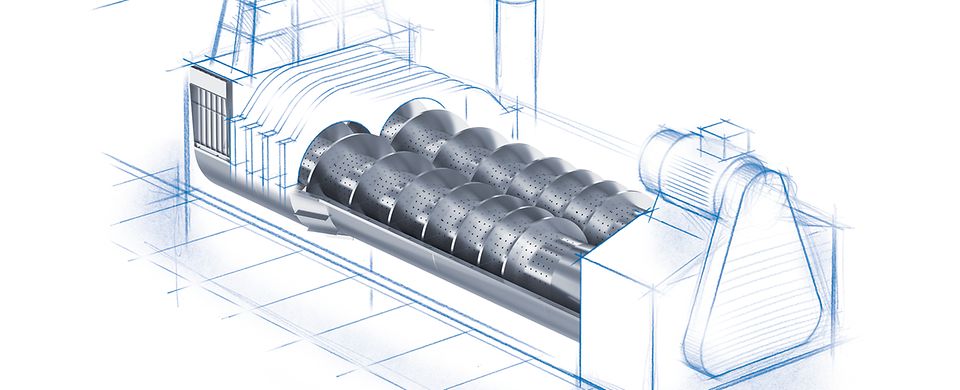
The drilled screens from ANDRITZ ensure optimal dewatering in the pulp presses and enable both a reduction in energy consumption and maintenance costs. Thanks to the maximum number of holes and an ideal hole geometry, the risk of clogging is minimised and optimum dewatering results are achieved, which reduces energy consumption for the subsequent drying of the beet pulp.
Another important aspect of dewatering is the correct distance between the screw and the screens in the press, in addition to the number of holes. The drilled screens from ANDRITZ are more resistant to abrasion and deflection, and therefore have a longer service life. This robustness is a result of the screen design and the use of particularly wear-resistant stainless steel alloys, which are perfectly matched to the requirements in the presses.
As a less expensive alternative to drilled press screens, ANDRITZ also supplies punched screens for sugar beet presses. Punched screens for pulp presses have a hole diameter greater than 1 mm and a sheet thickness of 1-2.5 mm, depending on the hole diameter. The lower stability of these thin sheets is compensated by punched support screens.
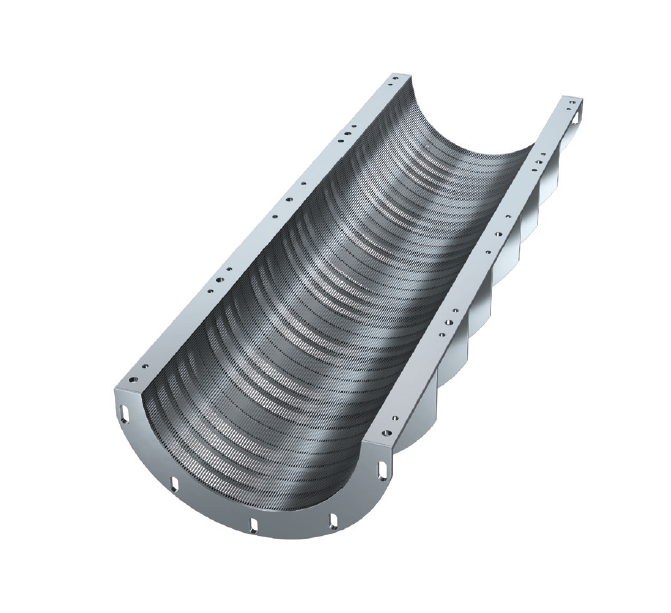
Another step to increasing the dewatering performance of the pulp press is to start dewatering in the pulp feed. For this purpose, ANDRITZ offers pre-dewatering screens made of wedge wire for maximum dewatering performance.
Pellet presses are used in the further processing of beet pulp residues. The dewatered beet residues are pressed through drilled matrices into pellets, which are then used as animal feed.