Zum Hauptinhalt springen
se-rheoscan-detail

RheoScan – AI-based measurement system

Earn up to 40% polymer savings through AI‑supported, real-time dosage control

se-RheoScan_cover

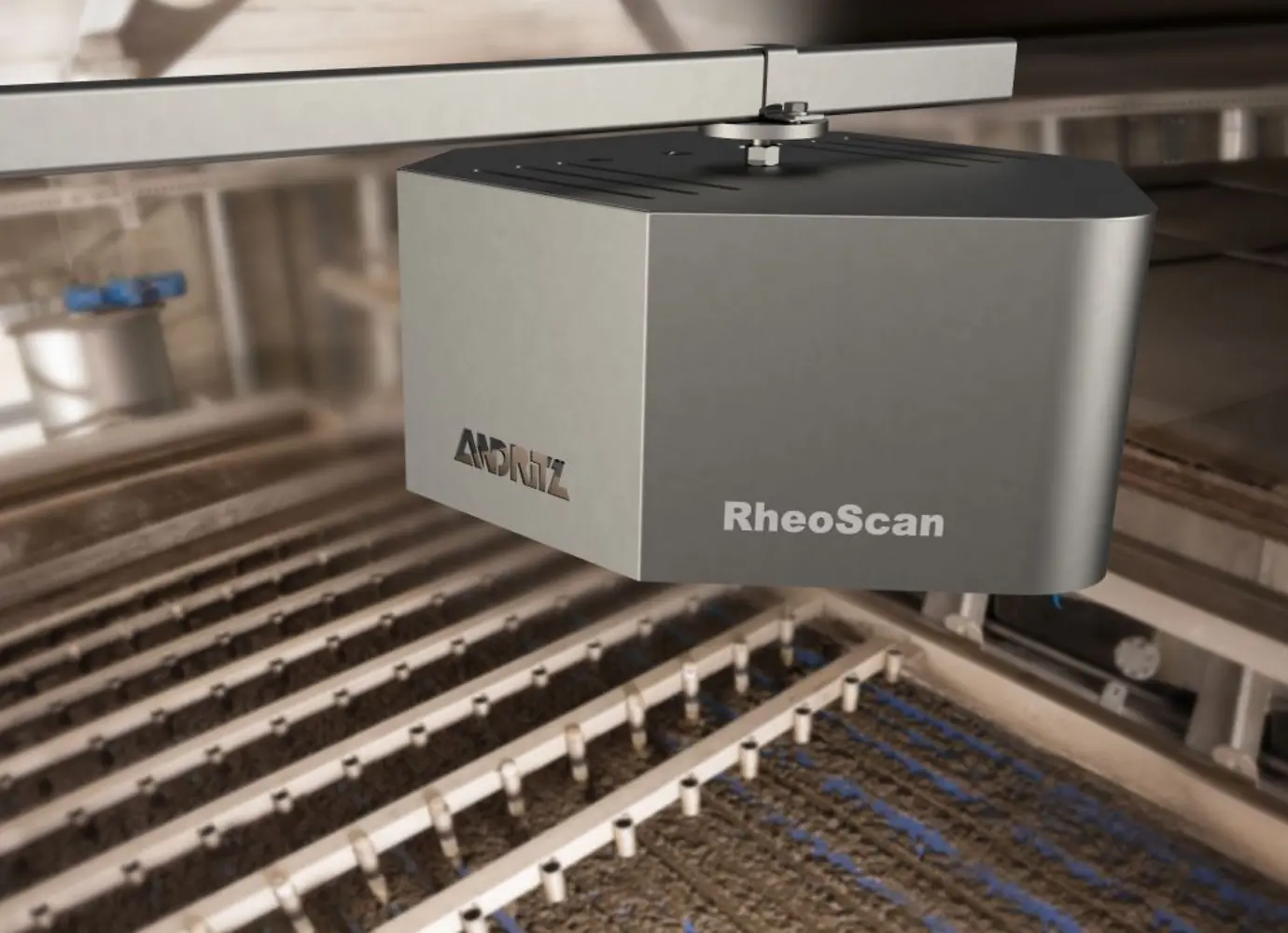
ANDRITZ RheoScan is an AIsupported optical measurement and control system for the automatic adjustment of polymer dosage during sludge thickening and dewatering processes. 

The system continuously detects actual sludge conditions directly in the process and automatically adapts the polymer dosage in real time. 

By combining optical measurement with intelligent data interpretation, RheoScan stabilizes dewatering performance despite fluctuating feed characteristics – without the need for constant manual intervention. 

As part of the ANDRITZ automation and digitalization portfolio, RheoScan enables a higher level of autonomous operation on belt filter presses and gravity belt tables. 

From optical detection to automatic control

During sludge thickening and dewatering, the visible behavior of the sludge on the machine provides direct information about its actual condition. RheoScan makes this information measurable and usable for process control.

An intelligent camera system continuously observes the sludge distribution and surface characteristics in the dewatering zone. Based on this optical input, the system evaluates whether the current operating condition deviates from the defined optimal range.

If deviations are detected, RheoScan automatically adjusts the polymer dosage accordingly. This closed‑loop control runs continuously and reacts immediately to changing sludge properties, flow rates, or process influences.

The result is a self‑regulating system that keeps the dewatering process within a stable operating window – even under variable conditions. 

Rheoscan (EN) - Real time, automatic adjustment of polymer dosage to reduce your costs by up to 40%

How can artificial intelligence support high-efficiency wastewater treatment while cutting costs?

Stable dewatering performance across different applications

ANDRITZ RheoScan is designed for use on belt filter presses and gravity belt tables and can be integrated into existing installations from all major manufacturers.

The system is suitable for a wide range of municipal and industrial sludge treatment applications. While the functional principle remains the same, the effects of automatic polymer control can vary depending on sludge characteristics, process conditions, and application environment.

For this reason, RheoScan applications are typically differentiated between municipal wastewater treatment and industrial processes.

Application focus: Municipal wastewater treatment

In municipal wastewater treatment (WWTP), sludge properties often vary significantly due to fluctuating influent loads, weather-related events, seasonal effects, and upstream process changes. These variations directly affect dewatering performance and polymer demand.

RheoScan addresses this variability by continuously adapting polymer dosage to the actual sludge condition.

Your benefits:

  • Reduced polymer consumption by avoiding safety‑driven overdosage
  • More stable cake dryness despite changing feed conditions
  • Significant reduction of overspills
  • Increased stability and reliability of belt press operation
  • Reduced dependency on manual adjustments

Where digestion processes are involved, optimized polymer dosing can also have a positive influence on downstream sludge handling. 

Application focus: Industrial applications

In industrial applications such as paper production or mining, sludge and suspension characteristics may change due to raw material variations, production changes, or fluctuating solids content.

In these environments, RheoScan supports stable dewatering by automatically compensating for these variations in real time.

Your benefits:

  • More consistent dewatering results across varying material qualities
  • Avoidance of precautionary polymer overdosage
  • Improved process stability at higher throughputs
  • Better predictability of operating costs

The actual impact depends on the specific application and material properties. RheoScan provides the control framework to keep the process within its optimal operating range. 

Optical detection. Intelligent interpretation. Automatic control.

  • Optical detection of actual sludge behavior: An intelligent camera system continuously observes sludge distribution and surface characteristics directly in the dewatering process
  • Interpretation of process deviations: Based on the optical input, RheoScan identifies deviations from the defined optimal operating range, independent of fixed setpoints or predefined recipes.
  • Automatic adjustment of polymer dosage: When deviations are detected, the system automatically adapts the polymer dosage in real time to counteract changing sludge conditions.
  • Closed-loop control for stable operation: This continuous interaction between detection and control establishes a closed-loop regulation concept that stabilizes the dewatering process under variable conditions.
  • Consistent application across processes: The same functional principle is applied in municipal and industrial applications, while the resulting effects may vary depending on sludge characteristics and process setup.

Proof & experience

ANDRITZ RheoScan is a proven solution with installations in municipal and industrial applications worldwide. 
Documented reference projects demonstrate measurable reductions in polymer consumption as well as improved process stability under real operating conditions.

se-success-story-process-optimization-rheoscan-slovenia

Process optimization with RheoScan

in Ljubljana, Slovenia

Success Story LEIPA

Flocculant reduction with RheoScan

at LEIPA paper mill in Schwedt, Germany


Increase efficiency and flexibility with RheoScan

at Ocean County Utilities Authority, Bayville, New Jersey, USA

Find out more ...

se-hz-peeler

Our products

The world´s most comprehensive portfolio of separation technologies.

Go to our products

Intelligence for machine and process control

The brain behind your operation: Metris addIQ control systems

Read more