Wastewater pump selection: Time for a rethink?

Wastewater pump selection: Time for a rethink?

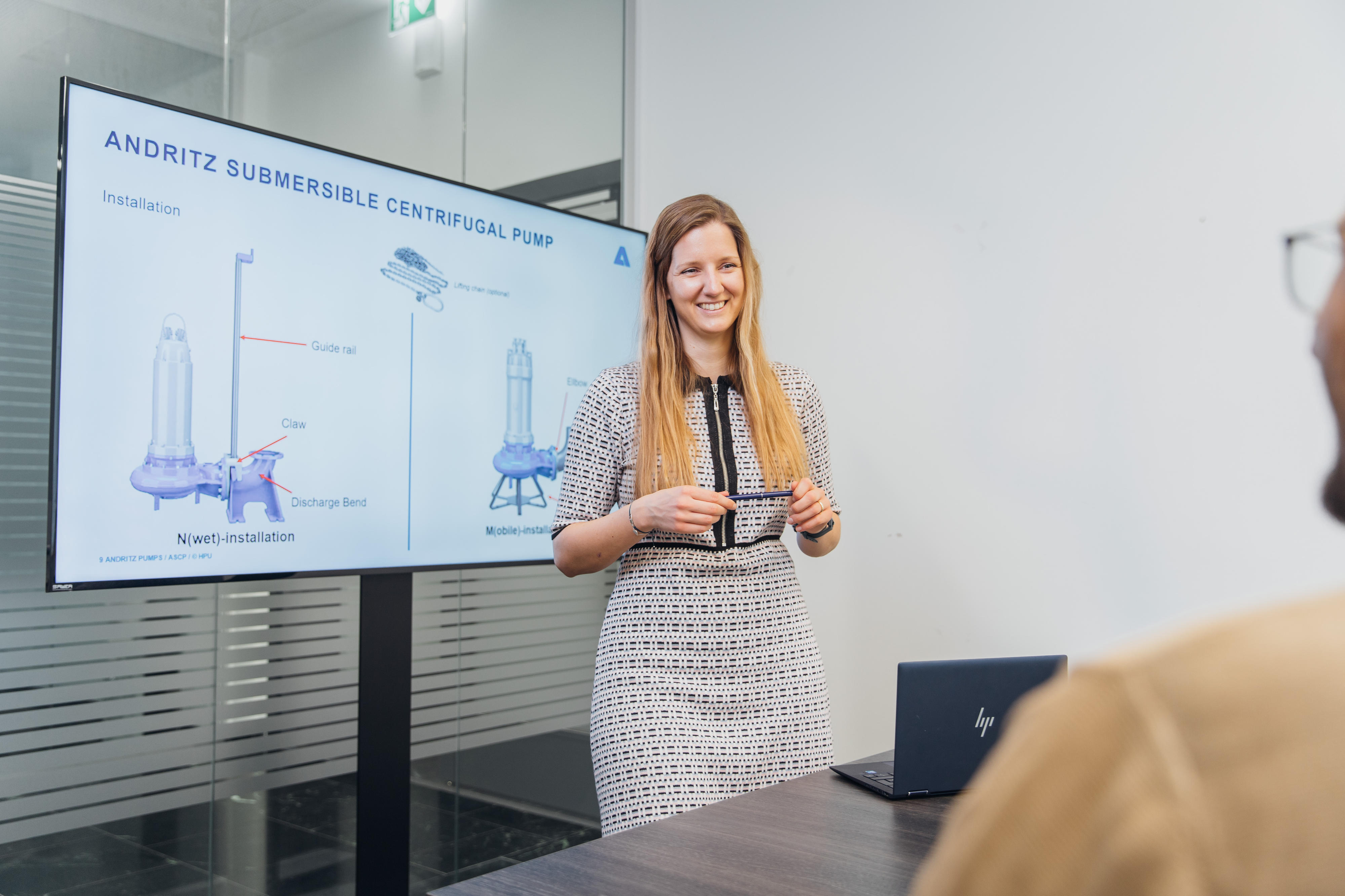
Efficient, reliable pumping systems are the heartbeat of modern wastewater treatment plants. They help purify the water we can’t live without – but they also account for a significant share of total plant energy use. Yvonne Tripolt, our Industry Segment Manager Waste- & Sewage Water, Pumps discusses how ANDRITZ’s new approach can cut energy use dramatically while maintaining reliability and efficiency.

Let’s start with a big picture question: can you give us a sense of the scale of the global wastewater industry?

Exact figures are difficult to pin down but estimates suggest a worldwide market of roughly 9 to 16 billion US dollars, translating to between 1.5 and 3 million pumps sold every year. That gives an idea of the sheer scale - and of the energy involved in moving and processing wastewater globally. In every treatment plant, pumps influence almost every stage of purification, so improving their efficiency can have a huge cumulative impact.

What are the different types of pumps, and what are the differences between them?

There are two main types of pumps: positive displacement pumps and centrifugal pumps. In wastewater applications, both are used - centrifugal pumps are typically used for more fluid wastewater, while positive displacement pumps handle higher sludge concentrations.  

In the past the focus for wastewater pumps was having a large free-ball passage diameter and low blade numbers (both of which affect the size and density of the solids it could handle) - and how reliable the pump itself was. But there is a tension between the choices: the larger the diameter and the fewer the blades, the lower the hydraulic efficiency. (For example, vortex pumps have an efficiency of about 50%.) In the past, it made sense to go with those big diameters and low blade numbers, because screening was less effective than it is now, so more (and tougher) solids were going through the pumps.

That’s changed now though. Prescreening at the plant entrance removes most debris – in the best case down to mesh sizes of around three millimeters – so we can often move beyond those traditional pump designs. 

Yvonne Tripolt, Industry Segment Manager Waste- & Sewage Water, Pumps

And would you say that customers are always aware of that progress?

That’s a really interesting challenge for us. So, for example, order specifications are often copied from old tenders. Customers might order a “two-blade semi open-impeller with a 100 millimeter passage” without really checking if that’s still the best option. Suppliers then deliver exactly what they’ve been asked to deliver, without asking any further questions or going into the details of what the client needs from their pumps.

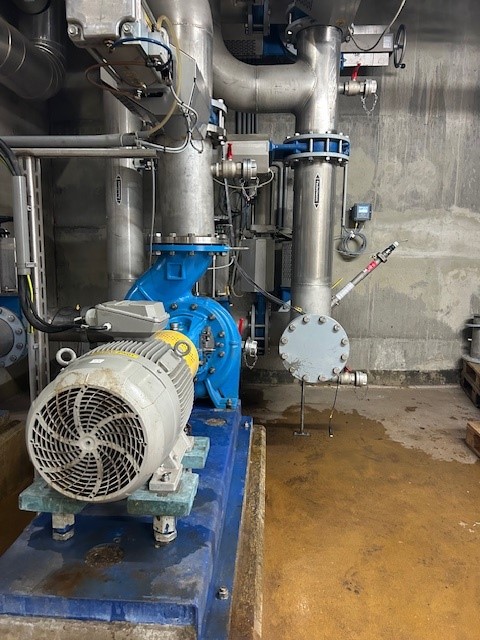
Our role at ANDRITZ is to open that conversation and ask: What kind of media are you really pumping? Once we understand that, we can advise whether a conventional nonclog wastewater pump is justified, or whether a singlestage industrial centrifugal design might perform better. In many cases, the latter option is both more efficient and equally reliable.

It sounds like you’re trying to strike a balance between respecting customer choices and also offering your own expertise?

Exactly. Ultimately, our main goal is the same as the customer’s – finding the best pump solution for their needs.

And when we say ‘expertise’ we’re not just talking about our expertise in pump technology – we want to show that we understand how the pumps fit into the broader changes across the entire market.

To give an example, around 20 or 30 years ago we had a very different approach to rainwater – it was just allowed to flow into wastewater treatment plants if there was heavy rainfall. Whereas now, heavy rainfall is more likely to be stored separately and only sent to the wastewater plant when the weather has improved, so as not to affect the overall process.

That opens the door to conversations about how our products can help meet shifting priorities and needs.

And new regulations probably fit into that picture too?

Exactly. For example, in Europe, the upcoming fourth cleaning stage, aimed at removing micropollutants such as hormones and pharmaceuticals, must be implemented by 2035 for larger plants. That means wastewater arriving at this stage is already very clean - almost drinkingwater quality - so specifying pumps with huge passages no longer makes sense.

So, we’re really aware of how the overall industry has changed and how different pumps are more relevant now. It’s just customers often have a ‘if it isn’t broke, don’t fix it’ (or a ‘never touch a running system’) attitude, and are happy to stick with the same pump they’ve used for years, if not decades. But often that isn’t the most efficient approach! 

How much energy could operators be wasting simply by not reevaluating their pump choices?

Based on studies I carried out during my doctoral research and subsequent field work, there is potential to reduce energy consumption of the pumps by up to 30 percent simply by selecting the right hydraulic design and matching it accurately to each duty point. In wastewater treatment, roughly a quarter of total electricity is consumed by pumps, so the potential savings are substantial.

Beyond energy use, how does correct pump selection influence reliability and maintenance?

The easiest way to measure reliability is how often you have to handle the pump -ideally once it’s installed, you’ll hardly ever have to touch it! But if you choose the wrong type, you’ll be intervening frequently. Select the right one, and it can run five to ten years with only basic annual checks - greasing bearings, verifying seals, things like that. So proper selection dramatically improves uptime.

Customers are often afraid of high investment costs – is that a valid concern?

That’s another misconception. We compared costs when replacing traditional vortex pumps with our singlestage centrifugal pumps and found that the capital expenditure is effectively the same. So, operators are not paying more up front, but they are gaining significant longterm savings through higher efficiency.  

Tell us a bit more about the ACP series and how it boosts performance.

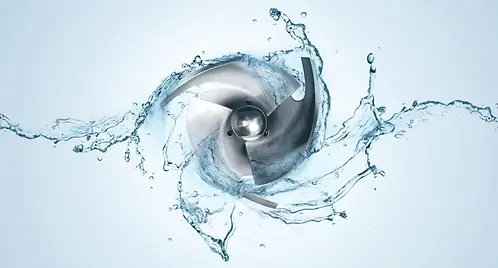
Our ACP pump series was developed by adapting existing industrial hydraulics to wastewater applications, which ended up in two new impeller types specially developed for wastewater. Where a typical vortex pump achieves around 45 percent efficiency, the ACP design reaches up to 83 percent.  

That means significant energy savings while maintaining operational stability. We’ve already proven this in replacement projects, for example switching from vortex to ACP pumps at plants in Brazil and in Graz, Austria. Without naming customers, I can say the results have been consistently positive. 

Wastewater pump selection: Time for a rethink?

How does your team support customers in practice?

We can act as consultants if clients involve us early enough. When they tell us where in the process the pump will be located and what kind of media they expect, we analyze the data and recommend the most suitable pump type and hydraulic design. The advantage we offer is we have the complete range - from conventional nonclog wastewater pumps to highly efficient industrial designs.  

What would you like plant operators and consultants to take away from this discussion?

We need to be more granular about wastewater, because it’s not one single type of thing. Even the categories of ‘screened’ and ‘raw’ are too broad I would say. The more specific we can be, the better we can tailor the equipment we offer.  

Wastewater will always be with us – no matter how sensible we are with our showers, for example, we can still only reduce it, not eliminate it. But we can treat and move it much more efficiently. And my main ask for anyone reading this would be to be open minded! We can make a huge difference by using the latest technology, which ultimately benefits all of us. 

Meet Yvonne Tripolt, Industry Segment Manager Waste- & Sewage Water, Pumps

Working at ANDRITZ’s Graz office for eight years now, Yvonne Tripolt combines academic rigor with practical expertise to transform wastewater management. With a master’s degree in process engineering from TU Graz and a PhD from TU Berlin, her research on “Energetic and Technical Potential in the Selection of Centrifugal Pumps in Wastewater Treatment Plants” uncovered how smart pump selection can dramatically improve energy efficiency and reliability. Today, Yvonne applies these insights to help operators rethink pump choices – driving sustainability and performance across the industry. 


Professional focus

Yvonne champions innovation in wastewater pump technology, leveraging advanced hydraulic design to optimize energy efficiency and reliability. Her work bridges engineering excellence with sustainability, ensuring pumps meet the evolving needs of modern treatment plants.


Why it matters

Pumps account for roughly 25% of a wastewater plant’s electricity use. By rethinking traditional designs and challenging outdated specifications, Yvonne’s work helps operators cut energy consumption of their pumps by up to 30%, reducing costs and environmental impact across the industry.


Purpose in action

Through solutions like the ACP pump series, Yvonne and her team adapt high-efficiency industrial hydraulics for wastewater applications. These pumps deliver up to 83% efficiency compared to 45% for conventional designs, enabling treatment plants worldwide to achieve significant energy savings while maintaining operational stability.


Vision for the future

Yvonne envisions a wastewater industry that embraces precision and sustainability – where pump selection is based on real process data, not legacy specs. Her goal: to make wastewater treatment smarter, greener, and more resilient, supporting global efforts to conserve resources and protect water quality.