The three ongoing development projects accelerating the BioCircleToZero program:


BioCircleToZero

The five-year initiative, led by ANDRITZ and supported by Business Finland, has been set up to encourage cooperation and R&D efforts with companies, research institutions, and universities working in the field of forest products development. Johan Engström, Chief Technology Officer at ANDRITZ Finland says, “We simply have to get more value out of wood by burning less and increasing pulp yield by utilizing side streams such as lignin and biomethanol or creating high value bioproducts such as fiber-based textiles.
“The BioCircleToZero program, with its intense combined innovation and effort, can realistically see a doubling of the value of wood into the future.”
The three ongoing development projects accelerating the BioCircleToZero program:
The mission is to facilitate international collaboration and exchange of knowledge to advance the bioeconomy sector. Through collaborative research in fundamental science and engineering, as well as economic, environmental, and social assessments of future biocomposite products, the GCSB seeks to promote sustainable and inclusive bioeconomy practices.
Åbo Akademi and other universities in Finland have the project lead, and several international partners are involved, including leading Veturi companies such as ANDRITZ, Mirka, and Nokian Tyres, as well as Stora Enso and Boreal Bioproducts.

“Our mission is to create high value bioproducts across value chains and to bring new products to the market. We believe the CirBRes project will go some way to support this journey.”
H₂ELP is a research and innovation project aimed at reducing the levelized cost of hydrogen and methanol production by improving system performance, lifetime, and operational practices under dynamic Nordic conditions.
The project is carried out together with the VTT Technical Research Centre of Finland and industrial partners, including Vaisala and Fortum, which combine research expertise with real pilot and laboratory environments. Through hands-on collaboration across the hydro¬gen value chain, H₂ELP supports faster deployment of commercially viable hydrogen and Power-to-X solutions. The project is part of the Veturi Co-Innovation initiative funded by Business Finland.
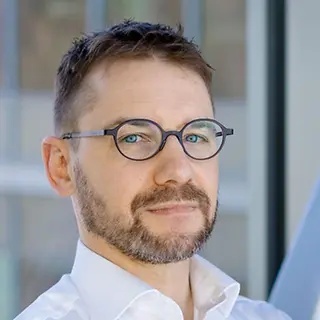
“In H₂ELP, lowering the levelized cost of product is a critical enabler for accelerating the large-scale deployment of green hydrogen and its derivatives, strengthening their competitiveness, and enabling wider, faster market adoption.”

“The targeted outcome for a SAUNA project is a scalable technical solution for a sustainable biorefinery with integrated pollution prevention and monitoring strategies covering air, noise, water, and soil.”
Through these projects, the BioCircleToZero initiative is clearly making rapid progress toward more sustainable and valuable use of forest resources.
Kari Tuominen, CEO of ANDRITZ Finland says, “This is an extremely important initiative. At ANDRITZ we have always been known for developing innovative new technology that is well received by our customers.
“Although we are leading the BioCircleToZero program, our partners are key in any new development that enables the creation of added value from wood.”

The ANDRITZ BioCircleToZero program is a five-year innovation initiative led by ANDRITZ and supported by Business Finland. Its goal is to increase the value generated from wood resources by improving pulp yield, reducing the need to burn biomass, and creating new high-value bioproducts from side streams such as lignin and biomethanol. Through collaboration with industrial partners, research institutes, and universities, the program aims to accelerate the development of sustainable forest-based products and technologies.
Three major projects are currently advancing the BioCircleToZero program:
Together, these projects support more efficient use of wood resources and contribute to a more sustainable future.
Partnerships are a key element of the BioCircleToZero program because solving complex sustainability challenges requires expertise from across industry, academia, and research organizations. By combining knowledge, technology, and innovation capabilities, partners can accelerate the development of new solutions that create greater value from wood resources, improve environmental performance, and bring sustainable bioproducts to market faster.

Unlocking the unused potential of Finnish forests.
ANDRITZ BioCircleToZero program sees new development projects. ANDRITZ BioCirceToZero initiative is already gaining significant pace with three ongoing development projects launched; SAUNA, H₂ELP and CirBRes.

ANDRITZ provides holistic and integrated P2X solutions for producing green hydrogen, e-methanol and e-ammonia.
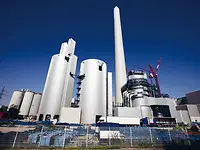
We provide you with tailor-made air pollution control solutions focusing on reduced emissions and improved performance and efficiency to meet changing market conditions and comply with asset strategies. Our offering covers the entire flue gas line, ranging from particulate control, dry and wet scrubbers, to multi-pollutant equipment for industrial, waste-to-energy and power generation plants.

ANDRITZ continues to innovate new ways of increasing the value of wood at pulp mills, ultimately aiming to create biorefineries. With the recently launched BioCircleToZero program, funded by Business Finland, the company aims to take a giant leap forward in efforts to double the value of wood.