Multi-capability pellet mill delivers fodder and fuel from the same plant
Modernized plant allows French cooperative to better support member farmers with essential agricultural products
The Déshyouest agricultural cooperative specializes in dehydration, leveraging its extensive experience to support farmers for the harvesting, preservation and processing of alfalfa and maize forage.
Its primary goal is to provide its 1,500 active members with the best possible returns, and to guarantee the forage and protein self-sufficiency of their farms.
The dehydration process it deploys is the only technique that preserves 100% of the quality and nutritional value of the forage, and Déshyouest and its team have mastered all stages of the production and processing of alfalfa, from crop establishment, through dehydrating and pelletising and on to the eventual end-product use by its members.
It is at the pelletising stage that Déshyouest was looking to make improvements, while also looking to diversify its output to include wood-based biofuel pellets. And this is where ANDRITZ has played a significant role, helping Déshyouest to modernize its operations and create new revenue streams.

CHALLENGE
Déshyouest was being held back by the performance of its existing pelletizing machine.
Not only was it dated, originally installed in 1982, but spares were also hard to find. In addition to its limited capacity, it also struggled to deliver the capabilities necessary to process wood-based products, which curtailed the company’s aspirations to grow the capacity of its wood-based products.
According to Samuel Maignan, Director Coopérative Agricole Déshyouest: “We wanted a solution that would not only give us better capabilities but also integrate with our existing automation and hardware. The idea being that our operators could change parameters remotely, rather than going near the machines.”
As a result of these requirements, Déshyouest knew it needed to invest in a more capable contemporary solution.

“The beauty of this new ANDRITZ machine is its flexibility and capabilities.”
SOLUTION
The multi-stage process that has been perfected by Déshyouest sees the raw materials (alfalfa, maize or wood) being dried in a high-temperature 20-tonne drier. Once dried, the product is ground to the right consistency before passing through a mixing system and then into the pelletiser.
After pelletizing the product is cooled and any remaining dust is collected and fed back into the mixer. The end product is then collected by farmers for their livestock.
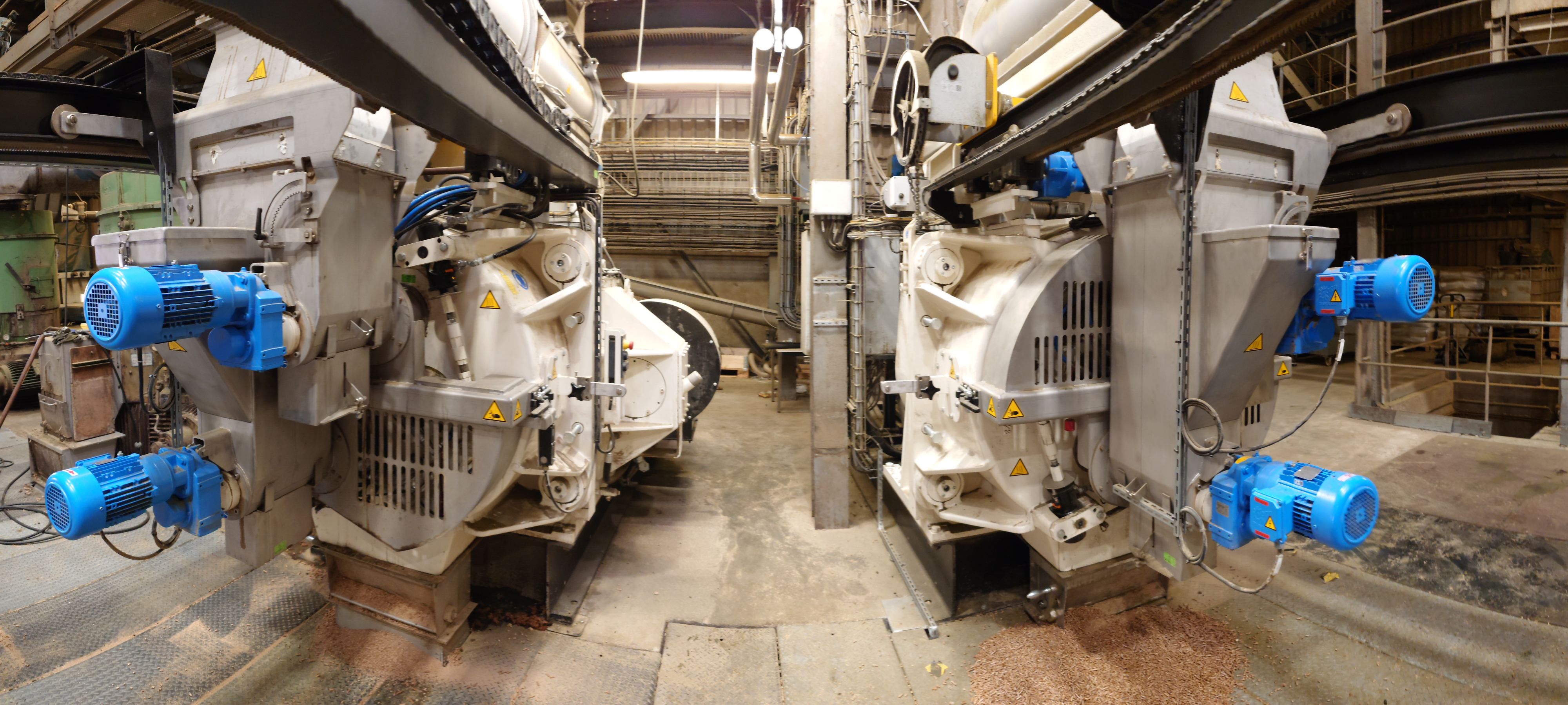
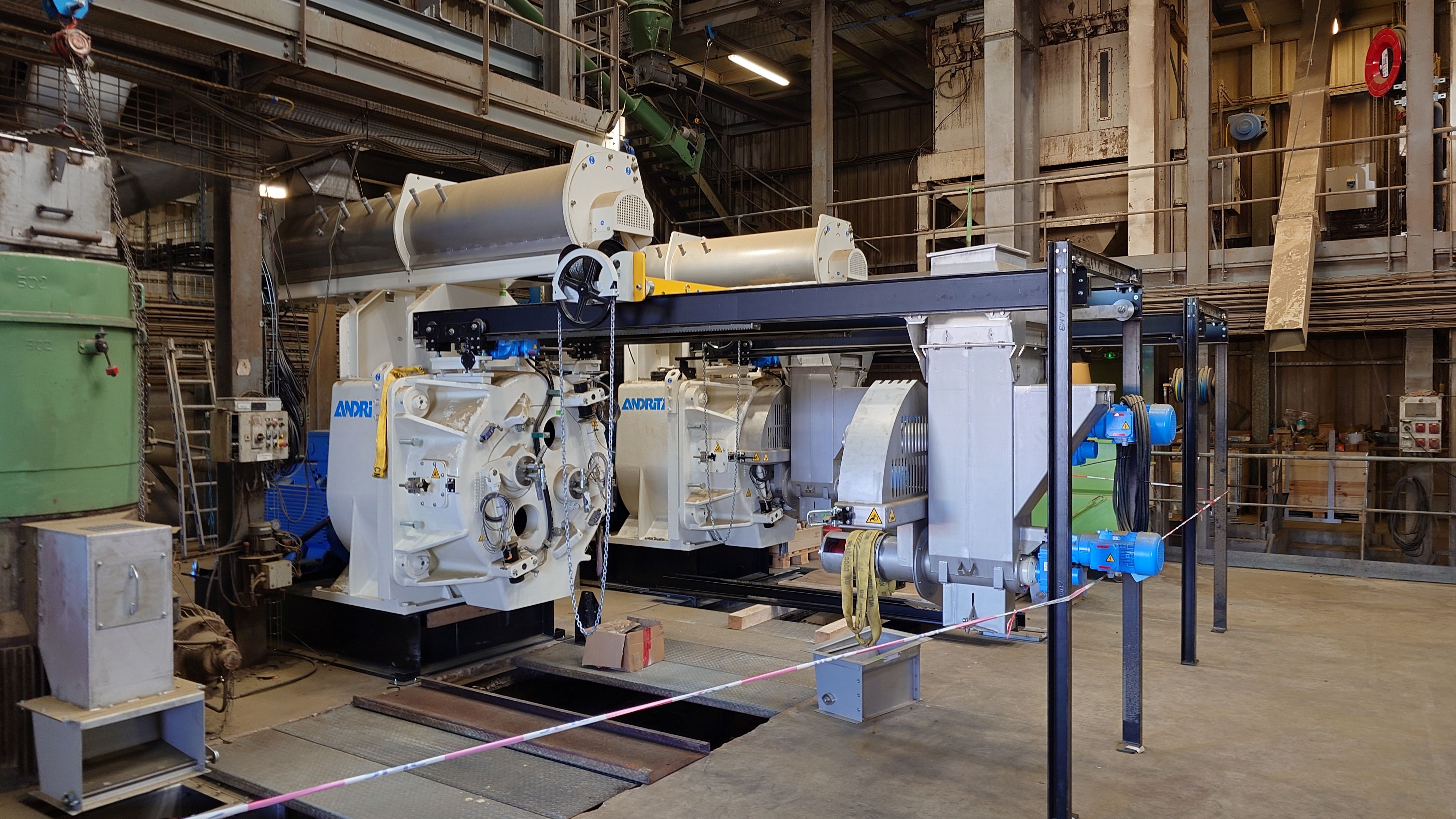
Central to the process is the ANDRITZ PM30-6 pellet mill, which is specifically designed for biomass, wood residues, agricultural residues, and energy crops. It also offered the automation capabilities required by Déshyouest, which, after some initial early integration issues, are all working as required.
Compared to earlier ANDRITZ variants, the PM30-6 sets a higher standard in pelletizing efficiency, delivering measurable gains in throughput, energy efficiency and reliability. In addition to offering a 10% higher capacity (with no increase in energy consumption) it also offers 98% uptime, helping users to maximize TCO & OEE. And from a maintenance perspective, it delivers extended die and roller lifetime coupled to enhanced safety and serviceability.
RESULTS
Déshyouest has another production operation, which also has a recently renewed press system for wood chips from an ANDRITZ competitor, but in operation, the ANDRITZ mill uses significantly less energy for an equivalent level of output.
“The beauty of this new ANDRITZ machine is its flexibility and capabilities,” Maignan explains. “We have been running it on alfalfa for the past seven months, wood for three and corn/maize will start next month.
“We are vey pleased with how the machine is operating and were well supported by ANDRITZ in the development of this project. I do not regret our choice of machine at all. We certainly undertook a lot of research and comparisons – including with our other new machine – and the ANDRITZ machine is an all-round better choice. We also envisage a lower demand for maintenance and spares. Uptime is very important for us. In another part of the factory, we sometimes may need to wait months for spares.
“We are looking to further develop our production capabilities and for this – and for future machines and projects – we will continue to work with Andritz, because we know the machine we have installed is doing precisely what we require of it.”