State-of-the-art second-generation bioethanol facility relies on ANDRITZ for optimized feed materials
New plant in India ramps up to help hit ambitious government sustainability targets
Inaugurated on the 14th of September 2025 by the Honourable Prime Minister of India, Shri Narendra Modi, the Assam Bio Ethanol Private Limited (ABEPL) is World’s first facility to produce fuel-grade ethanol from bamboo biomass.
Located in Numaligarh in the Golaghat district of Assam, this second-generation bioethanol plant has an annual rated production capacity of 49,000 metric tonnes (MT) of ethanol, 19,000 MT of furfural, 11,000 MT of acetic acid, 32,000 MT of food-grade liquid CO2 and 25.6 MW of green power.
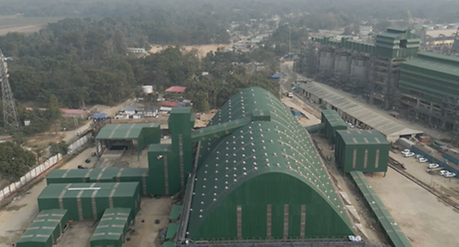
Key to the entire highly sustainable process is the initial handling and preparation of the raw bamboo materials, a task undertaken in a custom-built facility housing state-of-the-art processing equipment from ANDRITZ.

CHALLENGES:
The plant was developed to address a national need for ‘homegrown’ ethanol that could be blended with petrol to counter the country’s heavy reliance on imported crude oil. This ambitious policy initially called for a 5 % blend in 2018 but has subsequently gone through 10 % and is now set at 20 %.
In order to hit its full output capability, the plant will require 500,000 metric tonnes of raw bamboo every year. This level of supply will be achieved using a combination of purpose-built bamboo plantations and supplies from thousands of registered farmers and entrepreneurs across the region.
According to Khagen Bora, Project Manager at ABEPL: “Although being a new facility, with new technologies and machines, the plant’s proximity to an existing refinery has helped in the deployment of a local skilled workforce. The processing facility was designed to meet stringent requirements for control, quality, and throughput, while also being intuitive and managable by local skilled workforce.“ cattle-feed-india optimized feed materials

“The decision to go with ANDRITZ solutions was not just trust and reputation based, we undertook significant technical and cost analyses, too.”
SOLUTIONS:
ANDRITZ supplied all the key processing equipment, including chippers, screens, re-chippers, a screw reclaimer, and conveyors. In addition to the machines, it also undertook structural design and supply, providing robust frameworks and chip-storage silos. It also installed the electrical and plant-control systems, integrating automation and seamless interconnections with up- and downstream processes. Finally, ANDRITZ also supervised the installation and commissioning, ensuring smooth and efficient plant start-up.
Khagen Bora explains: “The raw-material preparation undertaken by the ANDRITZ plant is the pre-cursor to a highly sustainable closed-loop process, which makes the best possible use of all byproducts.”
The bamboo chips are first cleaned and dried before being chipped into smaller pieces and stored in silos. Before being conveyed by a screw conveyor to one of four digesters, larger chips are screened out and fed to a re-chipper and then fed to the digestor.
In the digester, a mixture of formic and acetic acid is added, and is heated to 165 °C and maintaining a pressure of 6-7 kg/cm2. This process converts bamboo biomass into a low-pH cellulose pulp, which is then washed before being converted into glucose through hydrolysis, using enzymes and ammonia. The glucose is fed to a fermenter, where diluted ethanol is generated. This is then purified to a level suitable for blending with petrol before being delivered to the parent refinery.
Where possible, all the byproducts and processing chemicals are either extracted or converted for other uses or reused in the process to offset chemical consumption.
For example, the liquid generated in the initial washing stage is evaporated for recovery of chemicals and the residue, basically lignin is dried and used as fuel for the boilers. This fuel generates 25.6 MW of power and process steam, which is more than the process needs, so there is a proposal to feed the excess power to the grid.
The resulting liquid from the second washing stage is distilled, generating additional commercially viable chemicals and the water is recovered and reused. The pulp byproduct is solidified and also used to power the boilers as it still retains some calorific value. Finally, the 18 MT of ash created every day by the incineration of the stillage and lignin exhibits a level of potassium that makes it attractive to further downstream use, with cement and bricks being investigated. Due to prominent level of potassium, the ash may be used as fertilizer, too.
RESULTS AND OUTCOMES:
During the trial run, the plant produced 99.7 % pure fuel-grade ethanol. Khagen Bora adds: “As the site scales up it will become a big employer of local labour, improving the area both socially and economically.”
According to Arun Chidambaram, Project Manager at ANDRITZ Feed and Biofuel: “By delivering an end-to-end engineered solution, ANDRITZ has ensured operational excellence and reliability, reflecting its expertise in handling complex biomass processing systems. This project underscores our commitment to innovation, sustainability, and driving India’s clean-energy journey forward.”
Khagen Bora explains: “I am from the pulp and paper industry, so I already knew ANDRITZ as a leading supplier for these types of processes. The decision to go with its solutions was not just trust and reputation based, we undertook significant technical and cost analyses and looked at the long-term outlook in terms of total cost of ownership (TCO) and overall equipment effectiveness (OEE), and we are confident in our choice.
“We have a great relationship with the ANDRITZ team,” he concludes. “The on-site team has really helped us to learn about the equipment and has trained our personnel in its effective operation and upkeep, and whenever we have issues, we talk to the people on site, who have always done everything they can to support us.”