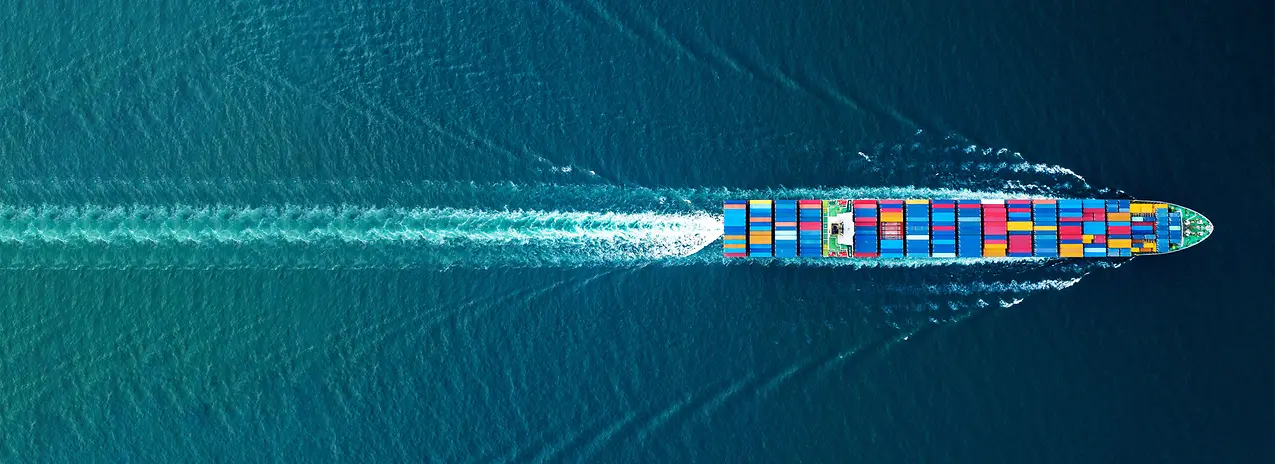
Aerial view of a dual-fuel cargo ship in the Northern Sea from a drone panoramic_8K

The rise of e-methanol

The fuel of the future is an ongoing debate, but e-methanol has emerged as one of the early frontrunners. Despite being a synthetic fuel, e-methanol is becoming a backbone of industrial sustainability efforts, bridging the critical gap between renewable energy generation and hard-to-abate end-use sectors such as shipping that depend on liquid fuels and chemicals.

For industry leaders in Europe and Brazil in particular, the question is no longer "if" e-methanol will become a commodity, but how quickly production can be scaled to meet accelerating demand. That acceleration is being driven by an unprecedented regulatory framework that is fundamentally reshaping fuel economics.

Regulation as a changemaker

Green fuels often struggle to compete with fossil fuels at the point of purchase. Fossil fuels appear cheaper "at the pump" because their real costs (climate damage, air pollution, health impacts) are long-term. Society and the ecosystem eventually must pay the bill through environmental degradation and public health burdens. 

There's also the issue of infrastructure legacy. Adapting or replacing the existing extracting, refining, transporting, and storing infrastructure originally designed for fossil fuels will take massive capital investment. And while fossil fuel prices do fluctuate, some times quite extremely, we can't rely on market forces alone to drive the transition fast enough to meet climate targets.

However, demand can be stimulated through regulation; governments can set both mandates and penalties that encourage infrastructure upgrades and the uptake of green fuels, and that’s precisely what we’re seeing across multiple jurisdictions.

The cost of inaction

Although the long-awaited IMO Net Zero framework was postponed, strong regional regulations are already in place and having an impact on the market. The EU's RED III directive and FuelEU Maritime initiative aim to change the economics of shipping fuel, and the industry is responding.

RED III sets binding targets for renewable energy use across the transport sector as a whole, mandating specific percentages of renewable fuels of non-biological origin (RFNBOs) that member states must achieve. FuelEU Maritime, meanwhile, establishes greenhouse gas intensity limits for vessels calling at EU ports, with RFNBO targets becoming binding from 2031 onward. 

Industry momentum is building regardless. The Zero Emission Maritime Buyers Alliance (ZEMBA) announced its commitments after the IMO postponement, and major carriers like Hapag-Lloyd have since ordered additional dual-fuel vessels capable of running on e-methanol, signalling confidence that the regulatory and commercial conditions are already in place.

The penalties for missing these targets are starting to add up. Germany's draft legislation, for instance, would impose fines of around €14.40 per kilogram of hydrogen equivalent. When you translate that to methanol (on a lower heating value basis), you're looking at roughly €2,300 per tonne. The FuelEU Maritime regulation itself sets penalties at approximately €1,200 per tonne of methanol equivalent for ships that don't meet their emissions intensity targets.

Do the math on those numbers and the picture becomes clear: when the penalty for non-compliance costs as much as, or more than, just buying the green fuel in the first place, sustainability stops being a "nice to have" and becomes basic financial sense.

Early adopters

The maritime sector, with its enormous vessels that must travel thousands of miles without refueling, has played a pivotal role in the early development of the e-methanol market. The International Maritime Organization (IMO) has set attempted to set ambitious global emissions targets, although now postponed, and major shipping companies have made commitments that correspond to those targets. As of February 2026, there are 449 MeOH Vessels on order or already operating.

While shipping offers the most visible early business case, e-methanol also has established applications in road transport, particularly as anti-knock agent in gasoline, called MTBE (methyl tertiary-butyl ether), though this market is limited to approximately 1 million tonnes annually in the EU. The chemical industry is also exploring e-methanol as a platform chemical for producing plastics, solvents, and other derivatives, albeit without equivalent regulatory pressure.

For large shipping organizations operating in a multi-billion-dollar industry, fuel represents roughly 50% of operational costs, making the green premium a significant expense. However, when distributed across the value of shipped goods, particularly high-value consumer products, the impact on end consumers is negligible. A smartphone or laptop or pair of sport shoe shipped via e-methanol might cost only a few cents more. CSR-minded buyers, like Nike and Amazon, are part of the Zero Maritime Fuel Buyers Alliance, and are actively requesting greener shipping.  

For low-value bulk commodities like grain (approximately €200 per tonne), the cost increase is more noticeable. Right now, blending mandates sit at just 1–2%, which softens the blow for consumers while production scales up.

As for the existing fleet, yes, you can technically retrofit older vessels to run on e-methanol. But it's complicated and expensive. A more realistic path forward might be a gradual phase-out of conventional ships, pushed along by carbon taxes and stricter emissions rules. According to DNV's alternative fuels database, as of mid-2026, there were 425 vessels with methanol-compatible engines in the global order books, suggesting that the industry is confident in e-methanol as a long-term fuel solution.

Production as an opportunity

Current global production of e-methanol sits at under half a million tonnes annually. To meet regulatory requirements and fulfil vessel orders already in place, industry estimates suggest the market needs to scale to approximately 8 million tonnes by 2030. This represents roughly a 16-fold increase in production capacity - effectively building an entirely new transport fuel infrastructure requiring tens of billions in investment. Few industrial transitions of this speed and scale have been attempted in recent decades, or ever. For contrast, there was an 80 year gap between the first niche uses of oil until there was the widespread adoption that we are used to today. 

For those with the infrastructure and capital to support it, this represents a substantial economic opportunity. Investors backing Power-to-X (P2X) facilities are positioning themselves in an emerging market with long-term regulatory support. Ports and terminals that adopt tank storage and bunkering infrastructure for e-methanol early will likely remain critical logistics hubs as the market matures.

Reducing production costs

This infrastructure development provides the market "pull" necessary to complement the regulatory "push" driving e-methanol adoption.

Currently, e-methanol production costs two to three times more than conventional methanol. However, more cost-efficient production pathways are being developed and demonstrated. Over the past year, ANDRITZ has studied this topic in depth and identified concrete levers to reduce production costs. These focus primarily on integration engineering excellence and strategic co-location with industrial facilities generating concentrated biogenic CO2. Such integrated concepts are a critical pathway to achieving commercial viability in the near term rather than a decade from now.

A standalone e-methanol plant faces considerable challenges. Operators must source CO2 from third parties, let-alone the logistics hassle to transport this molecule from point of capturing to point of utilization, build independent power and heat infrastructure, and manage waste heat streams, driving production costs to between €1,200 and €1,600 per tonne of MeOH.

In contrast, facilities integrated with pulp mills or other biorefinery operations can achieve significantly lower costs. ANDRITZ’ Methanol-Attached-to-Pulp study suggests that in optimal conditions, particularly in South America with low-cost renewable power and oxygen utilization from electrolysis, production costs could approach €800 -1’00 per tonne, dependent on electricity prices. 

Scaling Power-to-X

While the chemistry of e-methanol synthesis is well-understood, industrial-scale production presents significant challenges. A major bottleneck is the availability of large-scale electrolyzers. Getting to 8 million tonnes of e-methanol by 2030 means a massive ramp-up in electrolyzer manufacturing and installation, we're talking about industrial scale-up across PEM, AEL, and even emerging SoEC technologies. Each has different trade-offs in terms of efficiency, cost, and how well they integrate with existing infrastructure.

EPC companies are trying to streamline the process with modular, plug-and-play systems that bundle hydrogen production, carbon capture, and methanol synthesis together. ANDRITZ and others are working on these integrated packages to shorten project timelines and reduce risk.

Safety considerations

E-methanol is not some miracle fuel without its own drawbacks and challenges, however. While it’s safer than oil in the case of maritime disasters, it's more corrosive than marine diesel, more flammable, and has lower energy density, meaning you need about twice the tank space for the same range, and ships need upgraded seals, gaskets, and fuel handling components to deal with it.

That said, leading vessel operators already have operational experience with methanol-fuelled ships. CMA CGM, one of the world's largest container shipping companies, has assessed e-methanol as the best choice after bio-methanol when evaluating well-to-wake (WtW) emissions per container transport work (gCO2eq/TEU·km), according to their 2025 life cycle assessment comparing e-/bio-methanol and e-/grey-/blue-ammonia for maritime transport. This real-world validation from major carriers demonstrates that the technical and safety challenges are manageable.

The good news is that the industry already knows how to handle methanol safely, it's been used industrially for decades. Nitrogen blanketing of fuel tanks, for example, has always been standard practice to prevent vapor buildup and fire risk. Ports in Europe and Asia are now investing heavily in specialized bunkering infrastructure with appropriate leak-detection systems, dedicated loading arms, and proper ventilation.

Closing the carbon loop

The climate value of e-methanol depends on its full lifecycle emissions. Under RED III, a fuel needs to cut lifecycle CO2 emissions by at least 70% compared to fossil fuels to qualify as "renewable." E-methanol made from biogenic CO2 and green hydrogen can hit 80–90% reductions, depending on how you draw the system boundaries.

Here's why renewable CO2 matters for the long term: pulp mills are the biggest source of concentrated biogenic CO2, followed by biomass power plants. Some early projects in Europe have looked at capturing fossil CO2 from industrial sites, but regulators are increasingly pushing toward renewable carbon sources.

The key difference is this: fossil fuels release carbon that's been locked underground for millions of years. E-methanol made from biomass uses carbon that trees pulled out of the atmosphere just a few years or decades ago. When a ship burns that fuel, the CO2 goes back into the atmosphere, but it's a short cycle, not a one-way addition to the carbon stock.

There are air quality benefits too. E-methanol combustion produces zero sulfur oxides, far less nitrogen oxides, and almost no particulate matter - a big win for air quality in port cities.

Conclusion: Navigating the 2030 Horizon

The push to 8 million tonnes of e-methanol by 2030 is already in motion. Regulations are locked in, shipping companies are placing orders for dual-fuel vessels, and production projects are moving through permitting and financing. For players in Europe, Brazil, and other key markets, the time to get positioned is now, not in a few years.

The economics work best when you can tap into existing infrastructure. If you can co-locate with a facility that's already producing concentrated biogenic CO2, already generating excess heat, and already has logistics in place, you can cut production costs by a third or more versus building everything from scratch. That 30%+ cost advantage can make the difference between a green premium that's manageable and one that's not.

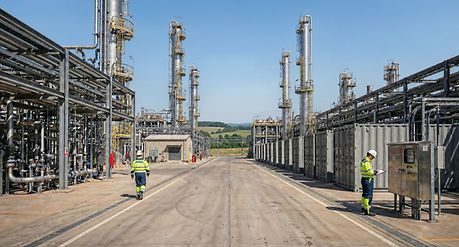
Technology providers like ANDRITZ are part of this build-out, working with developers, shipping lines, and port operators to get the physical infrastructure in place; the carbon capture units, the electrolyzers, the synthesis reactors.

There will be bumps along the way. Electrolyzer supply chains are tight, regulatory details are still being worked out in some regions, and competition from other fuel options (ammonia, hydrogen, biofuels) will continue. But the fundamentals are there: regulatory pressure, proven technology, and real economic incentives. E-methanol looks set to play a major role in cleaning up shipping and other sectors where electrification just isn't an option.

ANDRITZ P2X solutions

ANDRITZ responds to the urgent need for decarbonization and green transition. We provide integrated P2X solutions for the production of green hydrogen, e-methanol and e-ammonia — ranging from consulting to EPC projects with full performance guarantees. Our long-term service agreements are based on our proprietary digital solution. 

Explore our solutions

Author

Henrik Grönqvist

Director E-Methanol