Sergey Malkov,
Vice President Man Made Cellulosic Fibers, ANDRITZ Nonwoven & Textile

Question: Does Lyocell process ensure the curcularity - textile to textile? How much CO2 can be saved in the future? How many tons of textile waste will be avoided?
Lyocell technology is circular by design at the production stage, but not yet fully circular at the system level. The process utilizes a closed-loop solvent recovery system, reusing over 99% of solvent. As a result, very few new chemicals are required, and almost no toxic emissions are generated—unlike viscose manufacturing, which relies on carbon disulfide and produces hazardous by-products. Generally, Lyocell fibers are considered as more environmentally friendly when compared to both traditional viscose and conventional cotton fibers.
From the textile-to-textile circularity standpoint, Lyocell process is not fully circular, as only up to 20-30% of the recycled textile cellulosic material can be blended with dissolving pulp in Lyocell fiber production, without impacting the stability and spinning performance. New MMCF processes based on ionic liquids are under development that address these challenges and will enable higher circularity degree in the future.
Life-cycle assessments indicate that Lyocell fibers have a much smaller carbon footprint, generating 0.6–1.0 kg CO₂e per kilogram of fiber, according to PW Consulting. In comparison, cotton typically emits between 2.1 and 4.0+ kg CO₂e per kilogram. The closed-loop system used in Lyocell production also significantly decreases harmful effluent and wastewater, with internal recycling optimizing water use beyond possibilities in viscose production.
While the exact reduction in CO₂ emissions and textile waste depends on factors such as production scale and whether recycled cellulosic waste or virgin wood pulp is used, we can consider that wider adoption of Lyocell could cut millions of tons of CO₂ emissions each year.
From the standpoint of waste reduction, the EU throws away about 5 million tons of clothing each year, and currently, less than 1% of this is recycled back into new fibers. With new mandatory Extended Producer Responsibility (EPR) regulations that entered into force in October 2025, there will be significant improvements in textile collection and recycling infrastructure throughout European Union. By 2028, all EU countries will be required to implement textile EPR systems, which will directly increase the availability of feedstock for sustainable MMCF fibers
Question: How do we assess the market potential?
The market potential is exponential. According to Hawkins Wright’s report “Defining the Global
such as wipes and hygiene products. This versatility allows Lyocell to serve both consumer and industrial markets, supporting diversified demand and long-term growth opportunities.
The Lyocell has been commercially produced by the leading manufacturer Lenzing since the Lyocell Market”, Lyocell has moved from a niche Man Made Cellulosic Fibres (MMCF) category into a fast‑expanding global fiber market. Their five‑year forecasts confirm rising demand across apparel, home textiles, nonwoven and technical sectors, supported by brand uptake, improved processing technologies, consumers eco-consciousness and regulatory pressure for more sustainable fibers.
We can estimate the capacity to grow from 1.2 million tons in 2025 to around 2.5 million tons by 2030 with Asian producers currently dominating this business segment.
Questions: What are the advanteges of Lyocell Fiber? What has been the Lyocell Fiber market growth? And what are the coming innovations related to Lyocell fiber production processes?
Lyocell fiber’s advantage lies in its unique combination of natural origin, high performance, and broad applicability to multiple sectors. It is a natural cellulosic fiber mainly made from renewable wood pulp, giving it the sustainability and biodegradability of a natural fiber while being produced under industrial conditions.In terms of performance, Lyocell offers excellent strength, softness, and moisture management, outperforming many conventional natural fibers. It is strong both dry and wet, highly absorbent, breathable, and smooth on the skin, which improves durability, comfort, and hygiene of the end products. Therefore, Lyocell is highly adaptable to other end-uses and industries. Beyond textiles and apparel, its purity, uniformity, and wet strength make it particularly well-suited for nonwoven applications late 1990s. Lyocell, used to be constrained by high costs. It was historically produced in small volumes by Lenzing and most importantly, its the price was relatively high as a result. Market growth accelerated following the recent expiration of key patents, which enabled new players and significant capacity investments particularly in Asia. New players such as Sateri, along with advances in solvent systems and process efficiency, have supported large-scale, more cost-competitive production. As a result, Lyocell prices have progressively lowered, removing a major barrier to adoption. In parrallel, the Lyocell growth also has also benefited from the rising consumer and regulatory requirements for materials that combine high performance with sustainability. Lyocell’s properties such as breathability, absorbency, softness, and biodegradability have driven strong interest not only in clothing and home textiles, but increasingly in premium nonwoven applications, including wipes and hygiene products. Additionaly Lyocell aligns with tightening environmental regulations, such as the EU Single-Use Plastic Ban introduced in 2022, further supporting demand growth.
Regarding the Lyocell fiber and man made cellulosic fibers (MMCF) production technological status, two major innovations are now reshaping the market and enabling broader adoption. The first one is the the pretreated paper grade-pulp as a raw material. Traditionally, Lyocell and MMCFs production relied on high-purity dissolving pulp, which is costly and resource-intensive. The introduction of pretreated paper-grade pulp significantly reduces raw material costs and expands the range of available feedstock. This innovation makes Lyocell production more economically viable and sustainable.Another key advatage lies in its closed loop production process and new element entering this process is definitely the Ionic Liquid Solvent Technology. Lyocell process uses NMMO (N-Methylmorpholine N-oxide), a non-toxic solvent which dissolves cellulose without generating the hazardous by‑products unlike the viscose’s carbon disulfide solvent. This technology offers a cleaner, and more resource‑efficient process, producing fibres with high tensile strength, excellent moisture management, softness, and biodegradability. Ionic liquids pushes the boundaries offering a more efficient, recyclable, and environmentally friendly alternative. They enable better fiber properties and simplify the recovery process, paving the way for an even greener production.
Therefore, the combination of proven eco-performance, scaling technologies, and regulatory drivers is enabling MMCFs and Lyocell’s shift from specialist to mainstream fiber in multiple end-products.
Question: Are there regulatory drivers (e.g., EU Waste Framework Directive, textile strategy, etc.) that will increase demand?
Regulatory developments in Europe can be a driver for Lyocell demand. The EU Textile Strategy, part of the Circular Economy Action Plan, prioritizes low-impact fibre production, circularity and recyclability, reduced chemical and water use, extended producer responsibility (EPR). Lyocell aligns closely with most of these objectives.
Lyocell fibers are also an alternative for nonwoven wipes producers in the nonwoven industry to comply with the new sustainability standards like the EU SUPB and address the growing demand for eco-friendly wipes and baby care products.
These regulatory signals provide long-term visibility: demand growth for Lyocell is not only market-driven, but also policy-backed.

Vice President Man Made Cellulosic Fibers, ANDRITZ Nonwoven & Textile
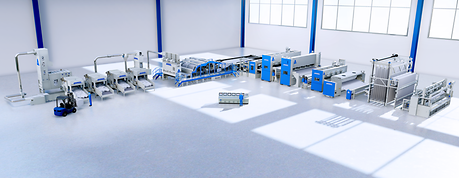
STANDARD LYOCELL PLANT:
Optimized of CAPEX and OPEX, 10,000 – 100,000 tpy capacity
RESEARCH & DEVELOPMENT:
Several lab and pilot facilities; cooperation with leading universities in Finland and Germany
TAILOR-MADE SOLUTIONS:
Engaging with partners, customers for joint-development initiatives to design advanced solutions
SERVICE:
Consultancy, feasibility studies, process audit, retrofit/de-bottlenecking, automatization & digitalization
INTEGRATION WITH NONWOVEN:
Offering to customer integrated solutions of MMCF with nonwoven lines
RAW MATERIAL FLEXIBILITY:
Different raw material to optimize the cost and differentiate in product quality – from proteins to different types of cellulosic material (pre-treated pulps, dissolving pulps, textile recycled, etc.)
INTEGRATION WITH PULP MILL
Maximize synergies with Pulp Mill on raw materials and utilities
DIGITALIZATION – METRIS AI:
Increase of automation level to optimize labor costs; Implementation of METRIS solution
NEXTGEN MMCF SOLUTION:
Offering to customer advanced IL (Ionic Liquid) solution to produce textile fibers
International technology group ANDRITZ has entered into a collaboration with Tandem Repeat Technologies, a pioneering biotechnology company, to bring to the market industrial-scale solutions for producing ProcellTM, a new sustainable fiber for textiles and nonwovens.
You can benefit from new ANDRITZ PULP & PAPER technologies that produce mechanical pulp of high quality at significant reductions in energy consumption.

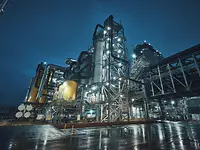
Os processos de fábricas de celulose precisam ser contínuos, e eficientes em custos e energia. O processo de evaporação desempenha um papel crítico. Como as soluções de evaporação da ANDRITZ efetivamente alcançam essas necessidades?
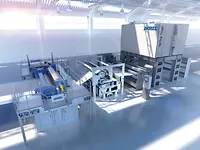
ANDRITZ Nonwoven & Textile supplies nonwovens technology and textile technology, including calenders, airlaid, wetlaid, spunlace, hydroentanglement, spunbond, drylaid, cards, needlelooms. And moreover textile recycling is part of this business.
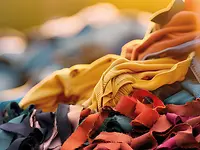
Textile recycling is a vital frontier for a more sustainable world. Clothing alone accounts for around 10 percent of greenhouse gas emissions from human activity, and much of the pre- and post-consumer waste generated by the textile industry ends up incinerated or in landfill.