Torrefaction

Converting biomass into high‑performance renewable carbon

The transition to sustainable and secure energy sources is accelerating—and torrefaction is emerging as a key enabler. By converting woody biomass and agricultural residues into high-quality, carbon-neutral biofuels, this process significantly enhances energy density, improves storage, and creates a viable alternative to coal in existing infrastructure. It unlocks the full potential of low-cost biomass, making it a valuable building block for the future energy mix.

In this article we will look at the following:

What is torrefaction?

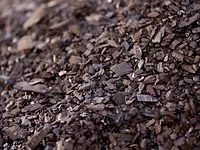
Torrefaction is a thermochemical method used to turn biomass into a renewable, coal-like material suitable for industrial and energy uses. This process takes place at 250–350 °C in the absence of oxygen, producing a stable, high-energy product. During heating, hemicellulose is largely decomposed, while lignin softens and partially remains intact, acting as a natural binder that helps maintain structural integrity and supports pellet formation, resulting in a dense, hydrophobic final material.

By transforming raw biomass, torrefaction creates material with coal-like traits, reliable quality, and easier handling.

Why torrefaction matters for industrial biomass use

Although biomass is renewable, untreated biomass has several limitations that restrict its industrial use. 

Challenges of raw biomass

  • High moisture content
  • Low and inconsistent energy density
  • Poor storage stability
  • Difficult handling and grinding

Torrefaction overcomes these drawbacks by upgrading the material. 

Benefits of torrefaction

  • Improved material quality
  • Enhanced storage and handling
  • Stable product performance

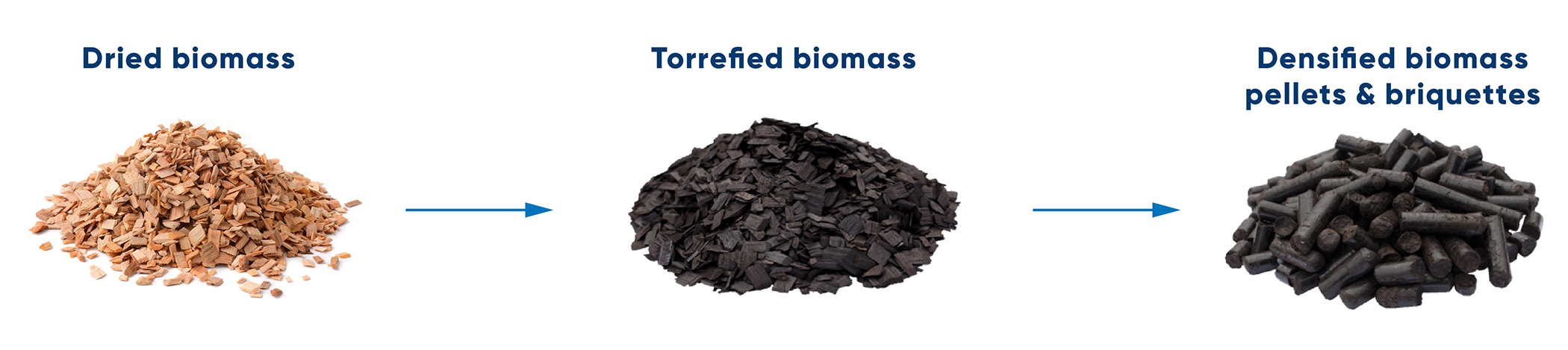
How the torrefaction process works

The torrefaction process consists of four distinct stages, with the torrefaction reactor serving as its key component.

1. Raw material preparation 

Biomass is prepared through storage, size reduction, and conditioning to achieve a uniform and suitable particle size for further processing.

2. Drying 

The material must be dried to remove surface and bound moisture. Drying is typically performed by using available process heat to improve overall energy efficiency. This step is critical, as raw biomass typically contains high water content.

3. Torrefaction include cooling

Dried biomass is processed in a torrefaction reactor, which is heated in the absence of oxygen to temperatures between 250 and 330 °C. This process causes most of the hemicellulose to break down and releases low-energy volatile gases and water, producing a denser solid material. Cellulose is only partially affected and lignin remains mostly intact, helping preserve the material’s structure. As a result, the material becomes more energy-dense, hydrophobic and brittle. Cooling the material after torrefaction stops oxidation and makes it safe to handle before moving on to the next steps.

4. Densification 

Depending on the intended application, the torrefied material is compacted into a higher-density form, such as pellets or briquettes, to improve handling, transport, and storage properties. 

Suitable biomass feedstocks

Torrefaction is applicable to various lignocellulosic biomass sources, whether in loose form or as white pellets. Typical feed stocks include:

Woody 
biomass

  • Wood chips
  • Sawdust
  • Bark
  • Forestry residues

Agricultural residues

  • Straw
  • Corn stover
  • Husks
  • Shells

Additional biomass sources

  • Energy crops
  • Selected biogenic waste streams

Key characteristics of torrefied biomass

Torrefied biomass combines several properties that make it highly attractive for industrial applications. 

  • High energy density, making it suitable for energy-intensive processes
  • Hydrophobic behavior, allowing long-term and outdoor storage
  • Improved grindability, reducing processing energy requirements
  • Stable and homogeneous quality, ensuring reliable operation
  • Low moisture content, improving combustion and storage behavior
  • Enhanced chemical composition, lower oxygen and hydrogen content with increased carbon content, improving fuel quality.

As a result, torrefied biomass acts as a renewable, coal-like carbon carrier used in industrial and energy applications

Conclusion

Torrefied biomass has established itself as a versatile and high-value renewable carbon carrier across energy and industrial sectors. By enabling coal replacement in power generation, supporting carbon-intensive industries such as steel and metal processing, and serving as a feedstock for thermochemical processes like gasification and pyrolysis, it offers a broad range of practical applications.

Its hydrophobic nature and improved storage and handling characteristics make it particularly well suited for global biomass supply chains, overcoming key limitations of untreated biomass. As a result, torrefaction plays a crucial role in positioning biomass as a reliable, scalable alternative to fossil fuels.

Overall, torrefaction contributes significantly to decarbonization and the transition toward a circular, carbon-reduced energy system by providing a stable, renewable substitute for conventional coal-based resources.

Find out more ...

se-hz-peeler

Our products

The world´s most comprehensive portfolio of separation technologies.

Go to our products

A world of service

Put our 150 years of OEM experience to work!

Discover our services

addIQ control system

Intelligence for machine and process control

Read more