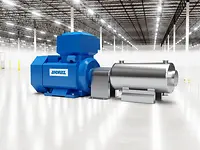
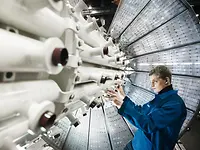
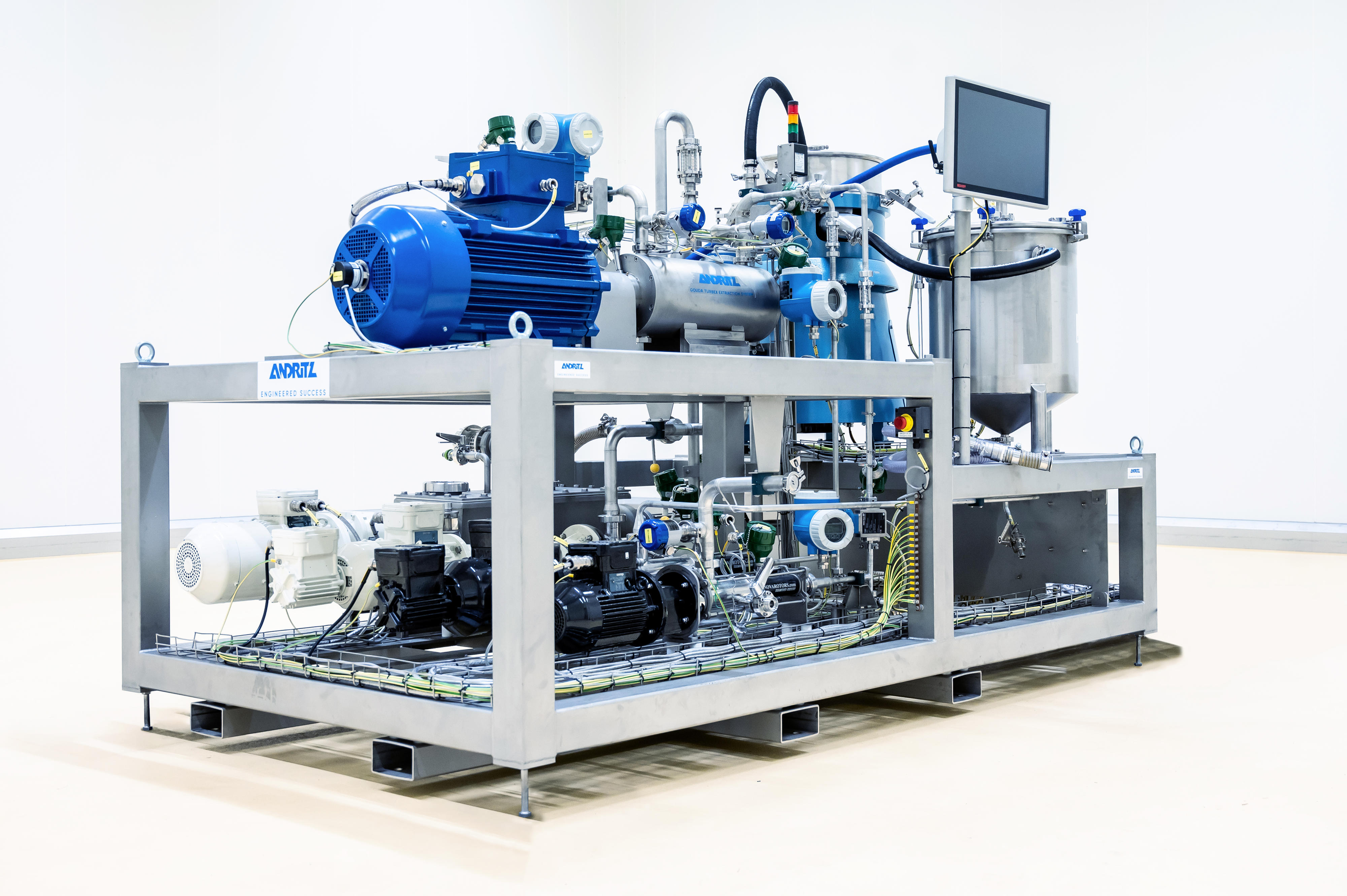
ANDRITZ Turbex mobile unit

We can help

Enabling the circular economy and increasing profitability in the food and beverage industry by unlocking value from side streams.

Modern extraction technologies are redefining what the food and beverage industry considers a valuable resource. Instead of limiting production to traditionally edible raw materials, advanced processes now make it possible to recover high-value components from plant fractions that were once treated as waste or low-grade by-products.

This shift is not only an environmental imperative but also a decisive lever for economic resilience, margin optimization, and long-term competitiveness. Massimo Secondo, Product Manager for Turbex at ANDRITZ was interviewed, about how the company partners with customers to industrialize value, reduce risk, and turn circularity into measurable business results.

How can modern extraction technologies help the food and beverage industry save energy and create value from side streams?  

Modern extraction technologies are at the heart of a circular economy approach. They enable the transformation of what was once considered waste – such as leaves, stems, husks, and other residual plant matter – into valuable ingredients for food, nutraceuticals, and functional applications. Every kilogram of by-product reused is a kilogram that does not generate additional emissions through disposal or require new raw material sourcing. This directly reduces the carbon footprint while maximizing yield per hectare and per ton of input - a strategic necessity as raw material costs rise and agricultural land becomes increasingly scarce.

By unlocking the nutritional, functional, and commercial potential of these side streams, we help our partners create new revenue streams and strengthen their economic resilience.

Massimo Secondo, Product Manager for Turbex, ANDRITZ

Massimo Secondo, Product Manager for Turbex, ANDRITZ

What does this shift toward full valorization of biomass mean for the industry’s future?

It means that the complete utilization of plant and biomass will become standard practice. The food industry can no longer afford linear production models that waste usable raw materials. Technologies that enable full valorization will determine who leads the market – transforming by-products into revenue streams, reducing dependency on primary resources, and turning circularity into measurable business value. This is not just about sustainability, it is about profitability and long-term competitiveness.

How does ANDRITZ support customers in identifying and monetizing valuable components from side streams?

Our role goes far beyond supplying extraction equipment. ANDRITZ acts as a strategic partner throughout the entire value creation journey. At an early stage, we work closely with customers to evaluate their raw materials and side streams, conducting feasibility studies and analytical trials to identify which components can be extracted, at what quality, and with what economic potential.

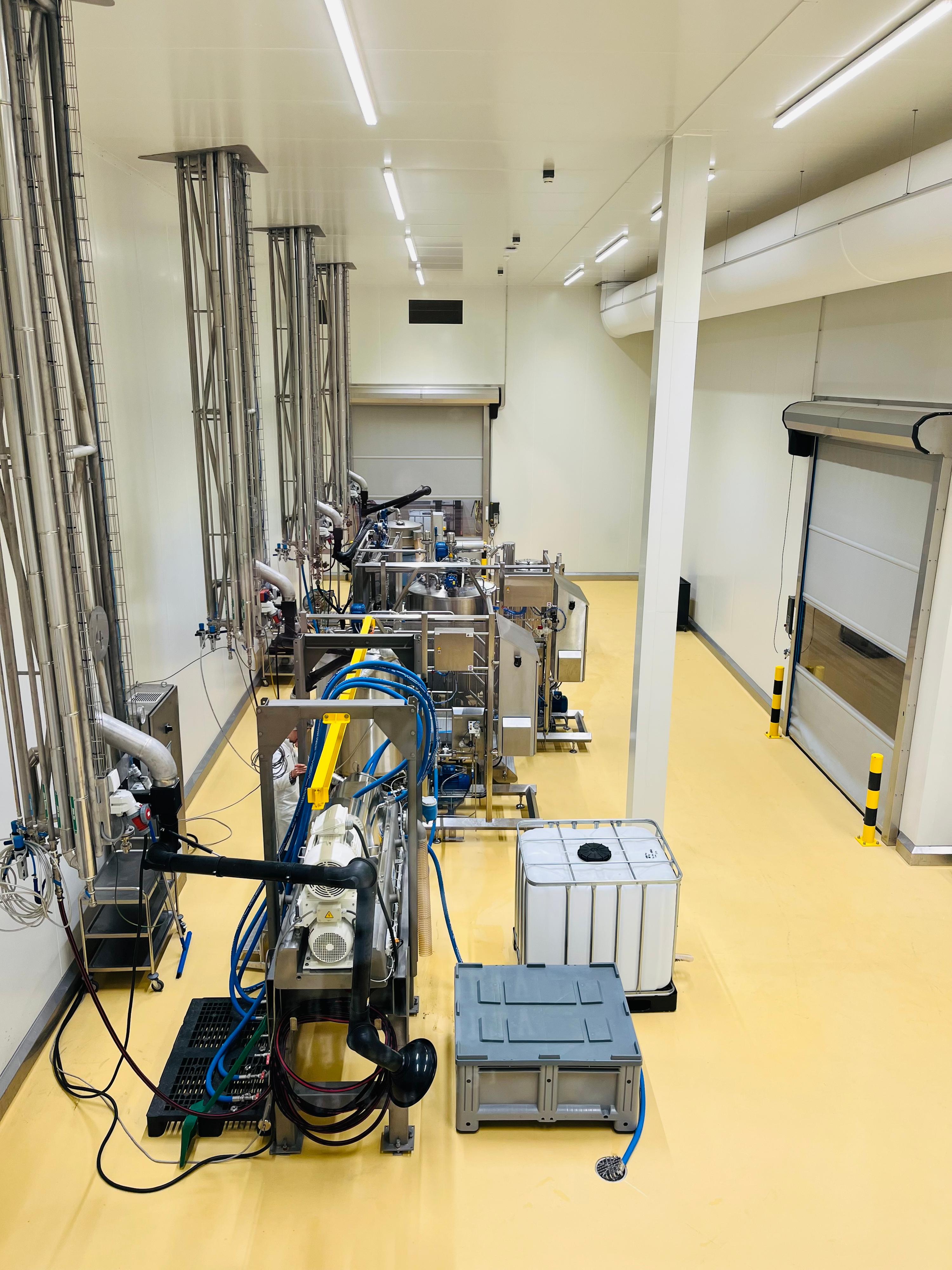
At our Food Innovation Xperience Center (FIX) in the Netherlands, customers can validate processes under realistic conditions, optimize extraction parameters, and generate robust data to support confident investment decisions.  

This structured, end-to-end approach ensures faster time-to-market, predictable performance, and maximum value recovery.


Can you share examples of promising side streams and how ANDRITZ helps industrialize their value?

We see strong demand for improved utilization of materials such as citrus peel, which can yield fruit oils and flavors, or spent grain from breweries, which contains valuable polyphenols like p-coumaric acid and ferulic acid.

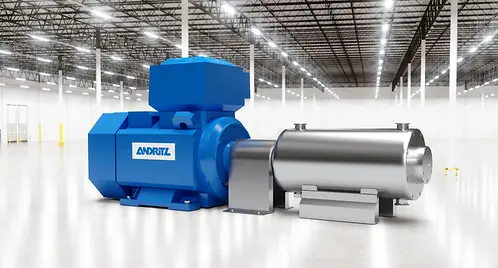
Our Turbex extractor enables the extraction of a wide variety of plant substances – from leaves, flowers, roots, or bark – provided the material is properly prepared. We have implemented projects in Japan, Italy, and Turkey, extracting high-value compounds such as oleuropein from olive leaves and tannins from oak bark or chestnut shells.

By supporting customers from pilot testing (including on-site campaigns with our mobile units) through to full industrialization, we help them transform side streams into scalable, profitable business models.

ANDRITZ Turbex mobile unit

Meet Massimo Secondo 
Product Manager Turbex, Separation


With three decades of experience in mechanical and thermal dewatering, Massimo Secondo brings a unique blend of technical expertise and strategic vision to ANDRITZ. Holding a master’s degree in management engineering from Politecnico di Milano and an MBA from SDA Bocconi, his career began in 1995 at Krauss Maffei in Germany as a Sales Engineer and Project Manager, later advancing to Managing Director of the Italian legal entity in Milan.

Since joining ANDRITZ in 2010 following the KMPT acquisition, he has focused on building trustful customer relationships and driving innovation for sustainable solutions - where technologies like Turbex play a key role in solid/liquid extraction. Based in Milan, he balances his professional passion with family life and hobbies such as skiing and freediving. 


PROFESSIONAL FOCUS 

Massimo leads innovation in plant-based extraction technologies, with a strong emphasis on sustainability, efficiency, and unlocking new nutritional potentials from previously unused raw materials. 


PURPOSE IN ACTION 

Through technologies like the Turbex extractor, Massimo and his colleagues enable the food and beverage industry to recover valuable ingredients from by-products such as citrus peels or olive leaves. By turning what was once considered waste into valuable nutritional ingredients, their work drives sustainable growth. 


WHY IT MATTERS 

Driven by the belief that “no part of nature should go to waste,” Massimo advocates for a future where all biomass is fully utilized. His work supports global food security and the transition to more resource-efficient nutrition systems. 


VISION FOR THE FUTURE 

Massimo envisions a world where functional nutrients are not just a trend but a foundation for healthier living. His vision aligns with the growing demand for sustainable, body-positive food innovations that empower consumers to age well and live better. 
 

Scaling up from laboratory trials to industrial production is a major challenge. How does ANDRITZ reduce risk and accelerate time-to-market for its partners?

Scaling an extraction process is indeed one of the greatest challenges in the industry. This is where ANDRITZ clearly goes beyond the role of a traditional equipment supplier.

At our FIX, customers can conduct investigative trials and analytical measurements using advanced technologies and automated systems, supported by our team of process experts and food chemists. Complemented by our Turbex mobile unit for on-site pilot testing, we help reduce technical and financial risks long before a full-scale plant is commissioned.

Once a process is proven viable, we sup-port the transition to industrial scale with a complete solution approach – providing basic engineering, defining the overall process concept, and integrating key process equipment into the customer’s production environment. Comprehensive training, start-up assistance, and process supervision ensure reliable performance from day one.


How do you see the market for functional nutrients and circular business models developing in the coming years?

The trend toward a healthier and more sustainable lifestyle is accelerating. Consumers are increasingly willing to invest in functional foods and beverages that support wellbeing and align with values like animal welfare and environmental responsibility.

The number of products in this segment continues to grow rapidly, and the global market shows sustained expansion. As the realization spreads that circular use of bio-mass is both a sustainability imperative and a powerful profit driver, companies that industrialize value from side streams will be best positioned for long-term success. With ANDRITZ as a strategic partner, our customers are not just adopting new technologies – they are transforming their business models for a circular, profitable future.