AdobeStock_1045433156

Advanced TAD technology for premium tissue grades (ATAD)

Softer on the environment, lighter on energy, and stronger in performance.

The TAD process has been widely recognized across the tissue industry as a major breakthrough in terms of finished product quality; however, the process has also become synonymous with excessive energy demands. ANDRITZ has come to the rescue with the ATAD concept, which is set to revolutionize the energy-intensive demand of TAD production.    

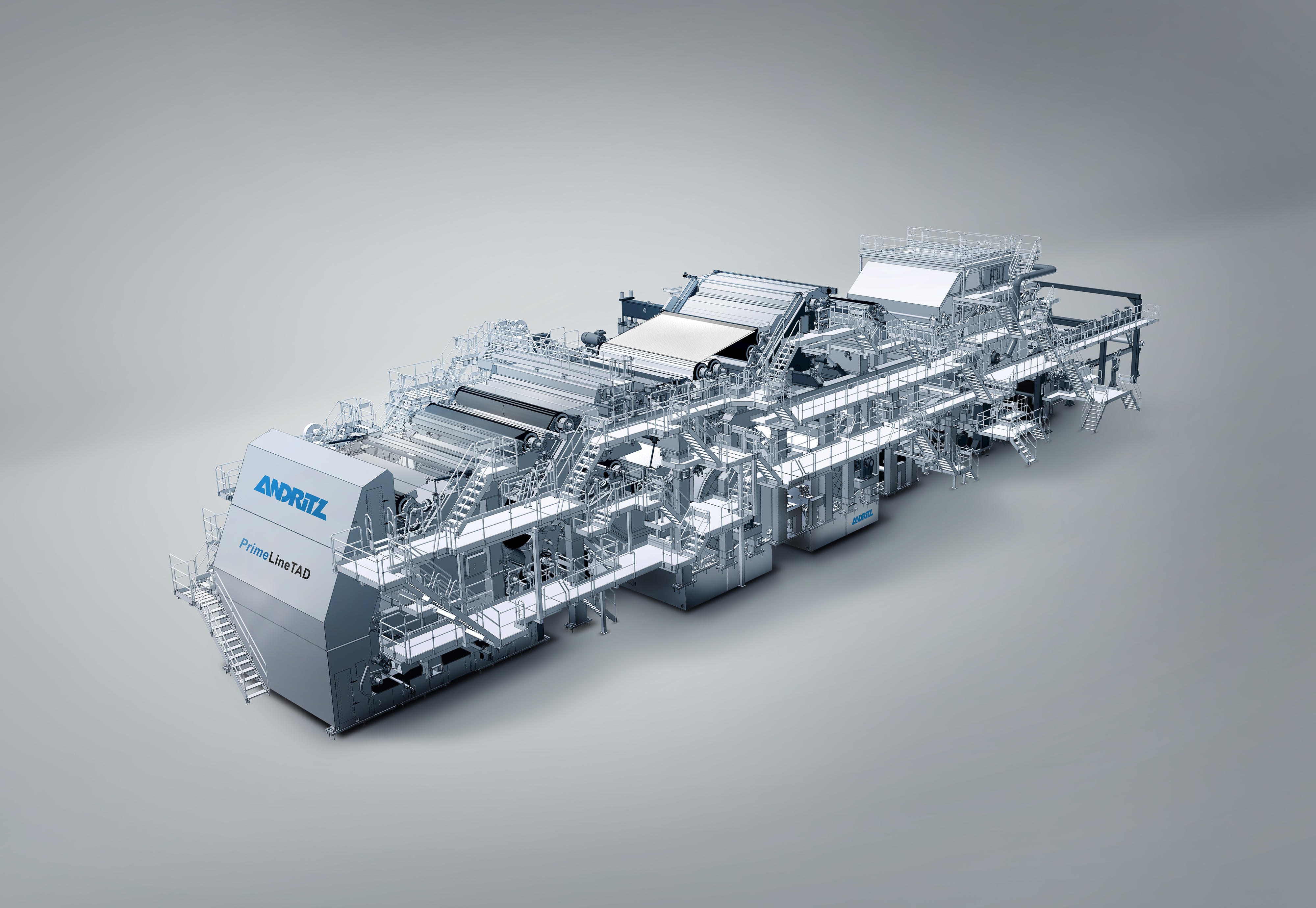
PrimeLineTAD machine: with brand-new ATAD technology, significant energy savings are achievable. 

SOFT TISSUE, HARD ENERGY REALITY 

Through-air drying (TAD) has been celebrated in the tissue industry since the 1960s for delivering premium products with superior bulk, strength, absorbency, and softness. However, TAD's Achilles' heel has been its significantly higher energy consumption compared to conventional tissue production processes. This energy intensity has limited the technology’s adoption, particularly outside regions like North America, where energy costs are significantly higher.

ANDRITZ has tackled the TAD energy challenge head on by launching Advanced TAD (ATAD), a groundbreaking innovation designed to slash energy use in the TAD drying process by more than 20%. Crucially, the energy reduction takes place while preserving the premium quality that makes TAD so appealing. Developed through years of research and testing at the ANDRITZ state-of-the-art PrimeLine TIAC pilot plant in Graz, Austria, ATAD addresses the core challenge head-on by removing more water from the sheet before it enters the energy-intensive TAD drying section.

Paul Richards, Senior Technology Manager Tissue and Grade Owner for TAD & Hybrid technologies at ANDRITZ explains, “Since starting the TAD journey, our goal has always been to target maximum energy efficiency. That is why our standard offering for TAD includes an impingement drying hood over the Yankee. Energy efficiency has caused producers and chemical suppliers to cooperate and drive the exit solids from the TAD process downwards. Drying beyond the 65-70% level is more energy demanding using through-drying, but more efficient when using high velocity impingement drying.

“The ATAD concept is straightforward in theory: remove as much water as possible from the sheet before it reaches the first TAD drum. Although TAD technology has been around for over 30 years, the pre-TAD section dewatering has long represented a process limitation, with only one proprietary process from a major producer demonstrating a viable solution. We set out to develop an alternative that leverages ANDRITZ’s deep expertise in both tissue and broader paper industry technologies.” 

Advanced TAD originates from the ANDRITZ Tissue Innovation and Application Center in Austria – the hub for next‑generation tissue solutions.

© Croce
Paul Richards, Senior Technology Manager, Tissue, and Grade Owner for TAD & Hybrid Technologies, ANDRITZ

“With ATAD, we set out to rethink the TAD process where it matters most: right at the point where energy consumption begins. By increasing sheet dryness before it reaches the drums, we unlock meaningful energy savings without changing what makes TAD so valuable.”

Paul Richards
Senior Technology Manager, Tissue, and Grade Owner for TAD & Hybrid Technologies
ANDRITZ 
 

HOW DOES THE ATAD CONCEPT WORK? 

“The idea was to go against the grain with regard to traditional TAD manufacturing,” continues Richards. “Conventional thinking tells us that tissue from the TAD process is never pressed. With ATAD we are challenging that perception. Our aim is to offer controlled pressing of the TAD sheet whilst it is protected by the TAD fabric.”

The ATAD process involves using a felted suction roll around which the TAD sheet passes. This felt is more akin to a press felt from the paper process and is softer and drier than conventional tissue-making felts. As the sheet wraps the suction zone, a hood with a combination of steam shower and hot air is located over the zone, using the temperature to help dewater the system. At the point just before the sheet leaves the suction zone, a press is used to create additional dewatering.

“Because the sheet is already molded into the TAD fabric at this time, there is a very limited impact of the pressing on the sheet structure, but the forced contact of sheet to felt increases the water removal and increases our sheet solids ahead of the first TAD drum,” says Richards. “If you consider the amount of water in the sheet at this point, even a small reduction in that water content is significant when it comes to the thermal energy needed for drying. Imagine now that we can achieve a 5 or 6% solids increase, and suddenly we are looking at very significant energy benefits.”

Making the impossible possible: premium tissue production with energy savings. 

© Croce
Boris Jancic, Head of Operation Tissue Pilot Plant, ANDRITZ

“We validated ATAD through systematic trials at our tissue pilot plant. We demonstrated that drying‑energy savings of up to 20% can be achieved, with indications that an even higher saving potential may be possible in real operations.”

Boris Jancic 
Head of Operation Tissue Pilot Plant 
ANDRITZ 

ENERGY AND EMISSIONS REDUCTION, ALONG WITH TOP QUALITY RESULTS 

The dedicated pilot machine in Graz is set up to be very flexible for various concepts. Therefore, ANDRITZ has extensively tested the ATAD concept regarding energy consumption against different TAD concepts available on the market. Boris Jancic, ANDRITZ’s Head of Operation Tissue Pilot Plant, explains, “The results of ATAD have been remarkable. Depending on the grades produced (bathroom or towel tissue), the energy savings based on steam, gas, and electrical from vacuum pumps and air system fans were measured between 6 and 16% reduced consumption.

“The 5 or 6% pre-TAD solids increase, which means solids above 30% ahead of TAD 1 drum, are not a dream, but on our pilot machine, repeatable and proven results. These results have been achieved after three years of intensive R&D activities and concept improvements. Additionally, trial results confirmed that further solids improvements are possible but testing on our pilot machine was limited by some mechanical components.”

To address concerns that the pressing of the paper sheet could have a negative impact on sheet quality, especially caliper, ANDRITZ carried out extensive laboratory work on the quality of the products produced with the ATAD concept. Jancic adds, “Final analyses showed that with the ATAD paper samples produced were equally comparable with samples produced using standard TAD processes.”

On the sustainability factors of ATAD, Franz Harrer, Director Global R&D and Pilot Plant Operations at ANDRITZ Paper & Tissue says, “CO₂ emissions in TAD are largely tied to gas consumption for heating the hot air that evaporates water in the TAD section. By removing more water mechanically upfront, less evaporation is needed, directly lowering emissions generated from use of fossil fuels. Depending on the split between gas and electricity used for drying, CO₂ reductions of up to 15% or more are achievable. We're also advancing use of electrification and heat recovery options to improve this further.” 

Franz Harrer, Director Global R&D and Pilot Plant Operations Paper & Tissue, ANDRITZ

“The strength of ATAD is its simplicity – a smartly-engineered, robust concept that can enhance new machines and can be applied to existing lines. It’s a practical step forward using low-risk and industry-proven concepts to help tissue producers boost efficiency while staying true to premium product quality.”

Franz Harrer
Director Global R&D and Pilot Plant Operations Paper & Tissue
ANDRITZ

INSTALLATION AND OPERATION – SIMPLICITY IS KEY 

“Our primary goal with ATAD has been universal applicability,” says Richards. “While ideal for new ANDRITZ PrimeLine TAD machines, ATAD technology is designed for retrofit on existing TAD lines – even those from other OEMs. We have kept the whole concept extremely simple, using known components and processes to minimize costs and complexity.”

For operators, ATAD is straightforward: initial setup resembles any suction roll. It adds equipment, for example, an extra fabric loop, but the energy savings more than justify the additions to the process. The system reuses waste heat from the Yankee or TAD exhaust, and the steam shower simply heats the fabric-sheet-felt sandwich quickly. Controls are basic – no complex profiling is needed initially, though adaptable if required.

Richards concludes, “TAD must become more affordable and sustainable to expand beyond North America, where cheap energy has masked inefficiencies. ATAD reduces the energy load significantly, but it's part of a bigger picture. Many existing TAD machines – especially some operating without Yankee hoods – rely heavily on TAD for the final drying stages, which is inefficient. Combining ATAD's wet-end dryness gains with further energy optimizations such as impingement drying with Yankee hoods can dramatically amplify energy savings.”

AdobeStock_1045433156

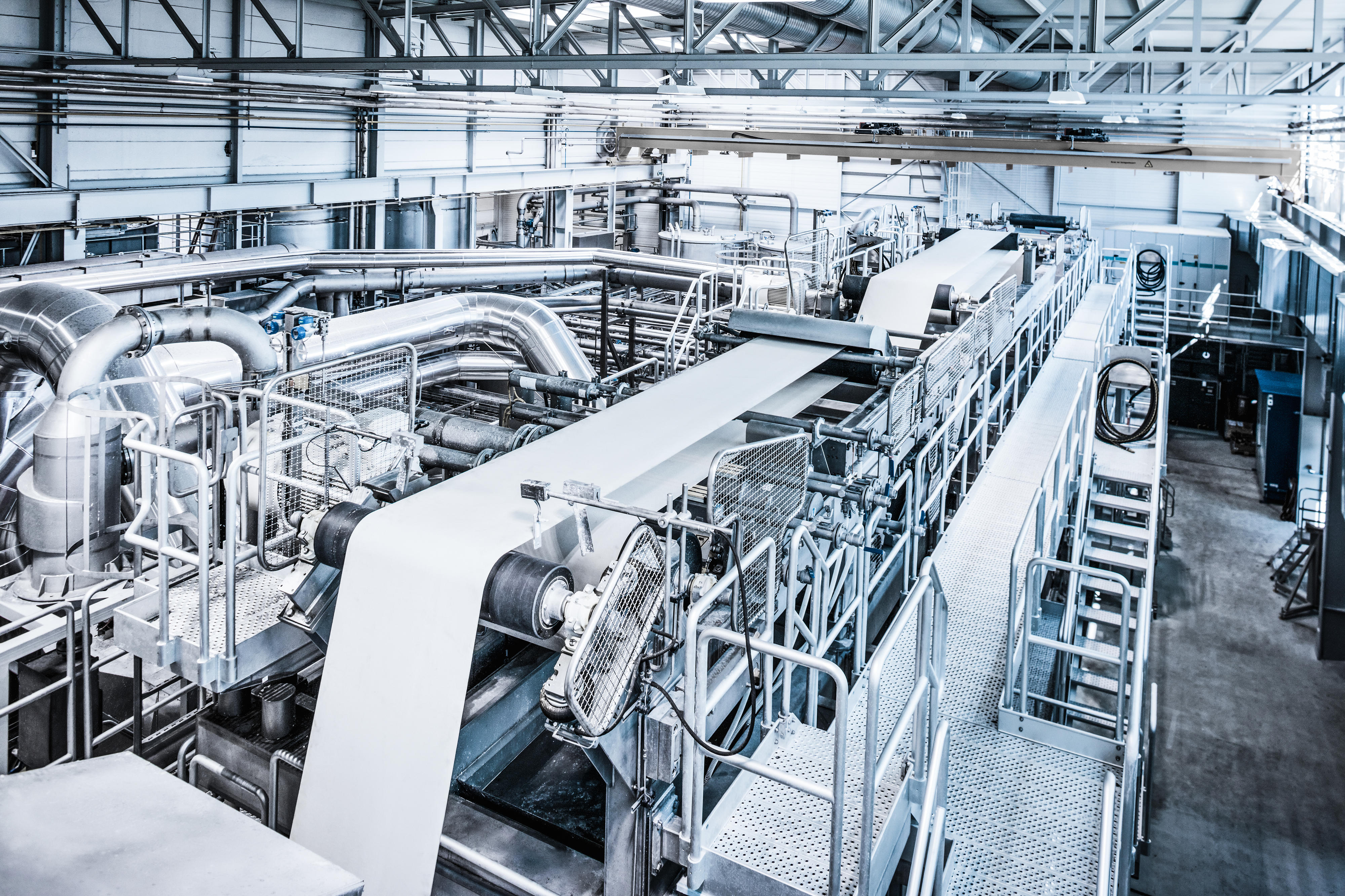
ATAD: a specially-developed module – integrating a suction pressure roll, controlled heating and pressing – raises sheet solids ahead of the first TAD drum. This reduces the amount of moisture that must be thermally evaporated, which is the costliest and most carbon-intensive part of the process.

Website-Banner-ATAD

ANDRITZ ATAD - Solving the TAD energy problem

How can the TAD tissue making process become significantly more energy efficient?


Listen to our Podcast!
ANDRITZ Tissue machine

PrimeLine technologies for tissue

Complete lines, key components and services for all grades.

Read more
Paper_Teaser_Tissue

Sustainable solutions for tissue production

Get to know our tissue technologies that help to protect the environment and save resources.

Read more
pp-spectrum-34-iggesund_teaser-174x105

ANDRITZ PULP & PAPER

Your technology and service partner for the production of pulp, paper, tissue, and board – and in the generation of power from renewable resources.

Read more