

The world´s most comprehensive portfolio of separation technologies.
Red mud filtration in alumina production
Optimizing washing, de-liquoring, and bauxite residue management in the Bayer process
Discover how advanced filtration solutions can improve bauxite residue washing and dewatering, recover valuable caustic liquor, reduce residual moisture, and enable safer and more efficient residue management. Learn how to select the right technology based on your process setup, bauxite quality, and sustainability goals.
In this article we will look at the following:
What is red mud and why does filtration matter?
Red mud, also known as bauxite residue, is the primary by-product of alumina production via the Bayer process. Its handling is one of the most critical challenges in refining due to:
- High alkalinity (typically pH 10–13)
- Fine particle size and challenging settling behavior
- Large residue volumes, depending on bauxite quality and refinery conditions
Effective filtration is essential to:
- Recover valuable caustic liquor and dissolved alumina
- Reduce residual moisture and soluble alkalinity
- Improve residue handling and storage stability
- Enable dry stacking and potential residue valorization
- Reduce fresh caustic and water demand
- Improve overall refinery economics
From bauxite to red mud - process overview
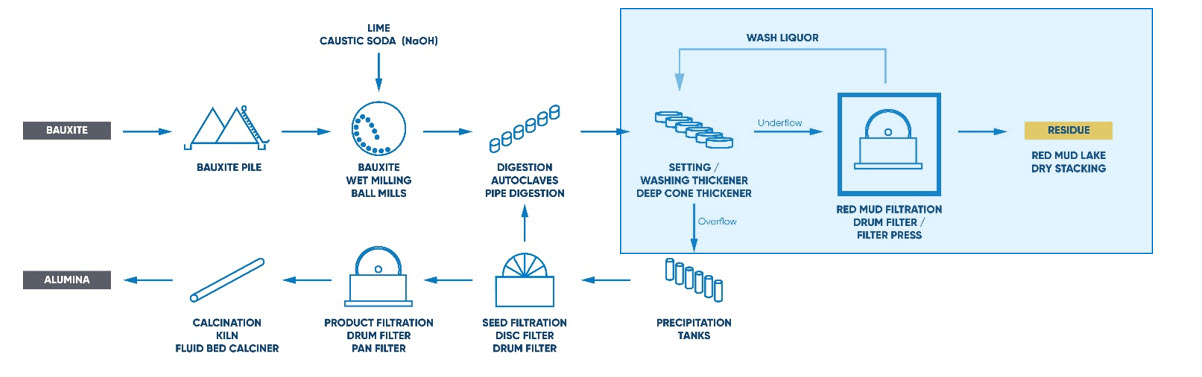
The Bayer process converts bauxite into alumina through digestion, clarification, precipitation, and calcination. Red mud is generated during separation of insoluble residues.
Key process steps:
- Bauxite grinding and digestion with caustic soda
- Solid-liquid separation via settling and thickening (CCD circuit)
- Washing of red mud to recover valuable soda
- Final filtration and dewatering of residue
Final residue filtration is a key step in determining residual moisture, recoverable process liquor, handling properties, and the requirements for residue storage.
Key challenges in red mud filtration
Red mud filtration technologies from ANDRITZ
One residue. Multiple separation technologies. One technology-independent partner.
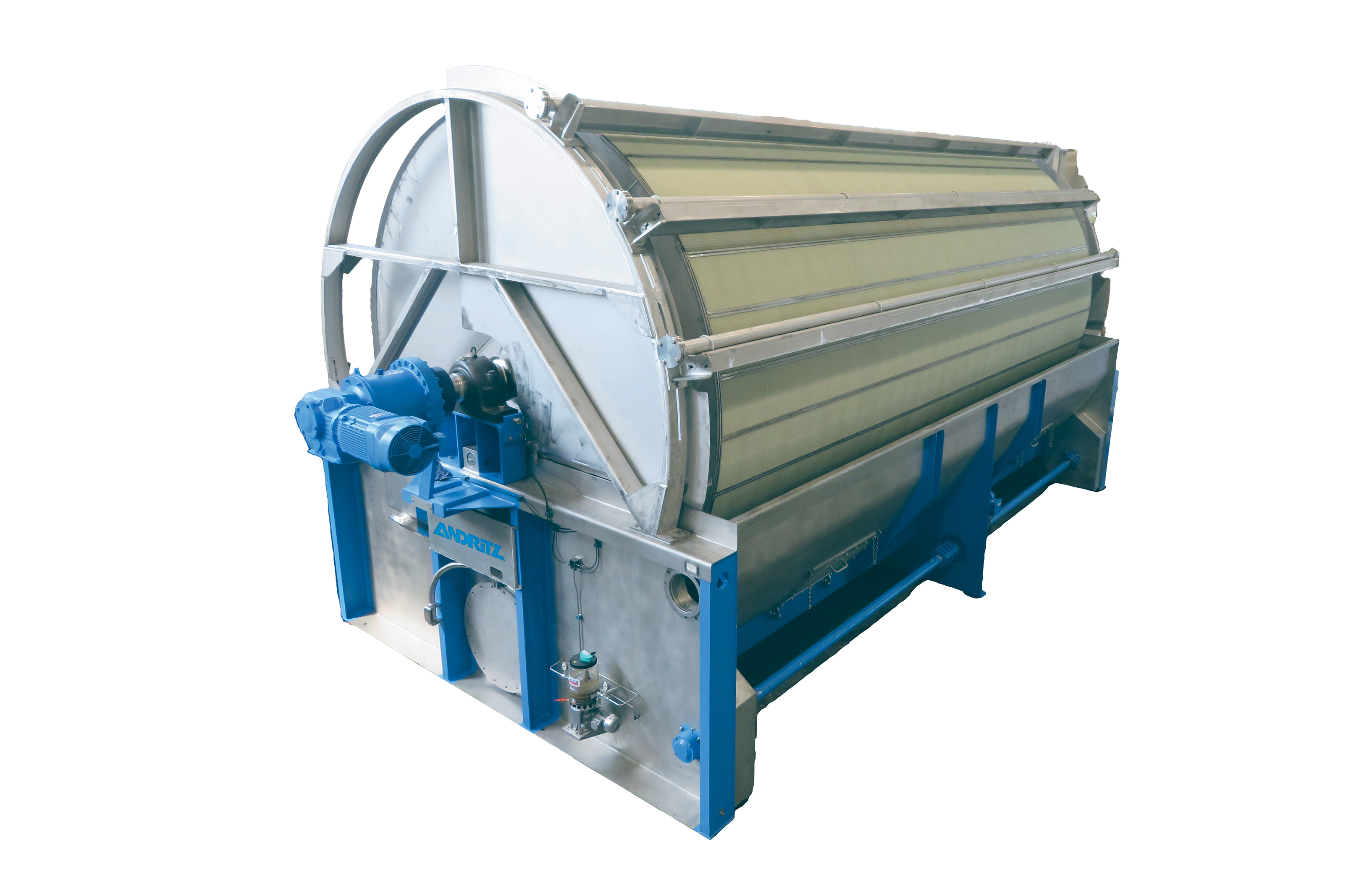
Vacuum drum filters – proven continuous washing
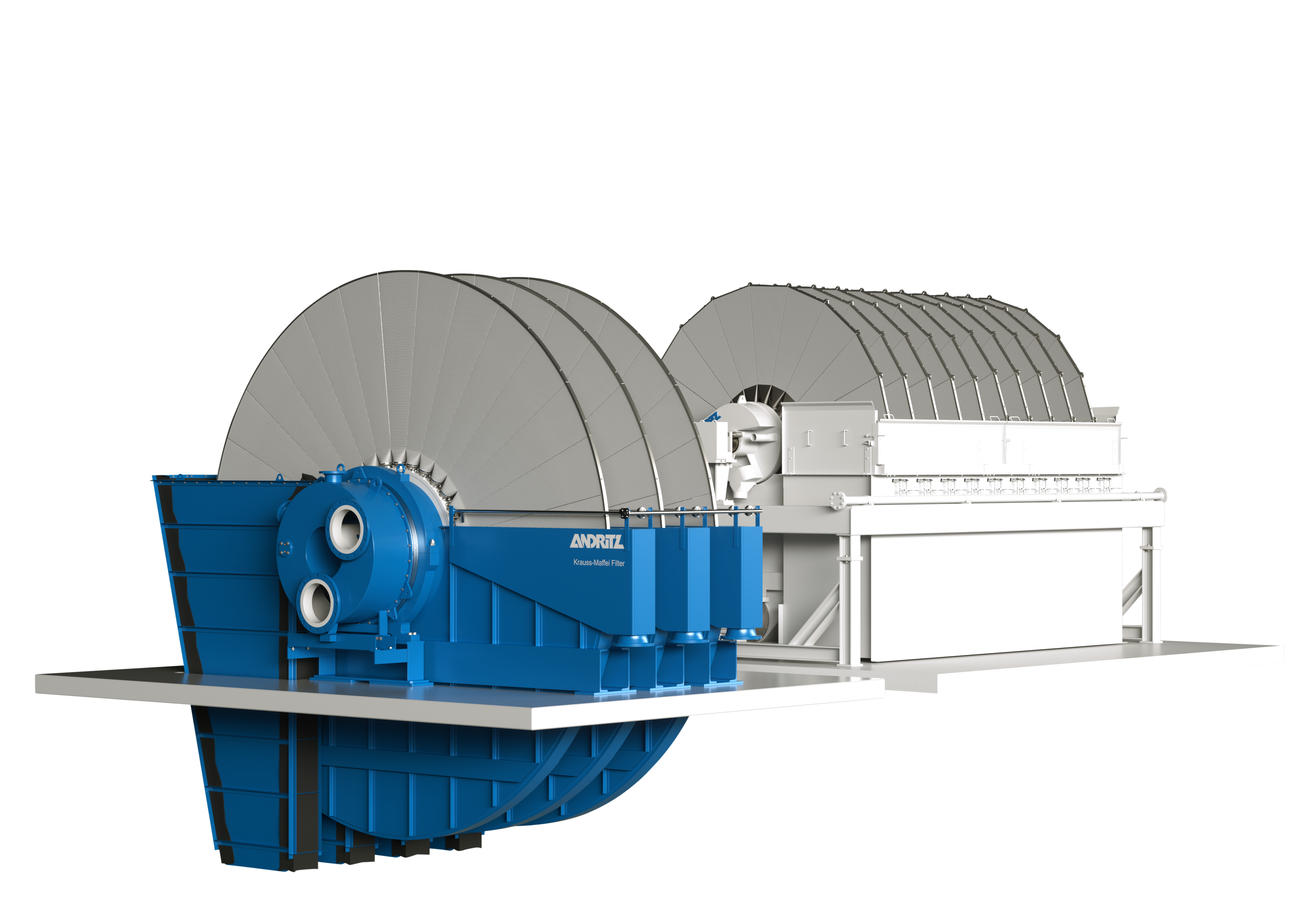
A proven technology for bauxite residue filtration, combining continuous operation with thin cake formation and efficient cake washing. Particularly suitable where caustic recovery and reliable handling of fine, sticky residue are key priorities.
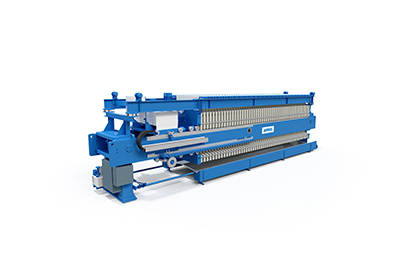
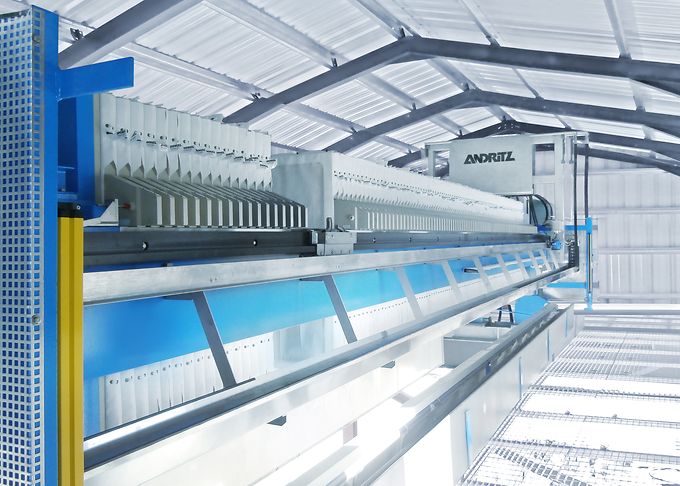
Filter presses – maximum dewatering for dry stacking
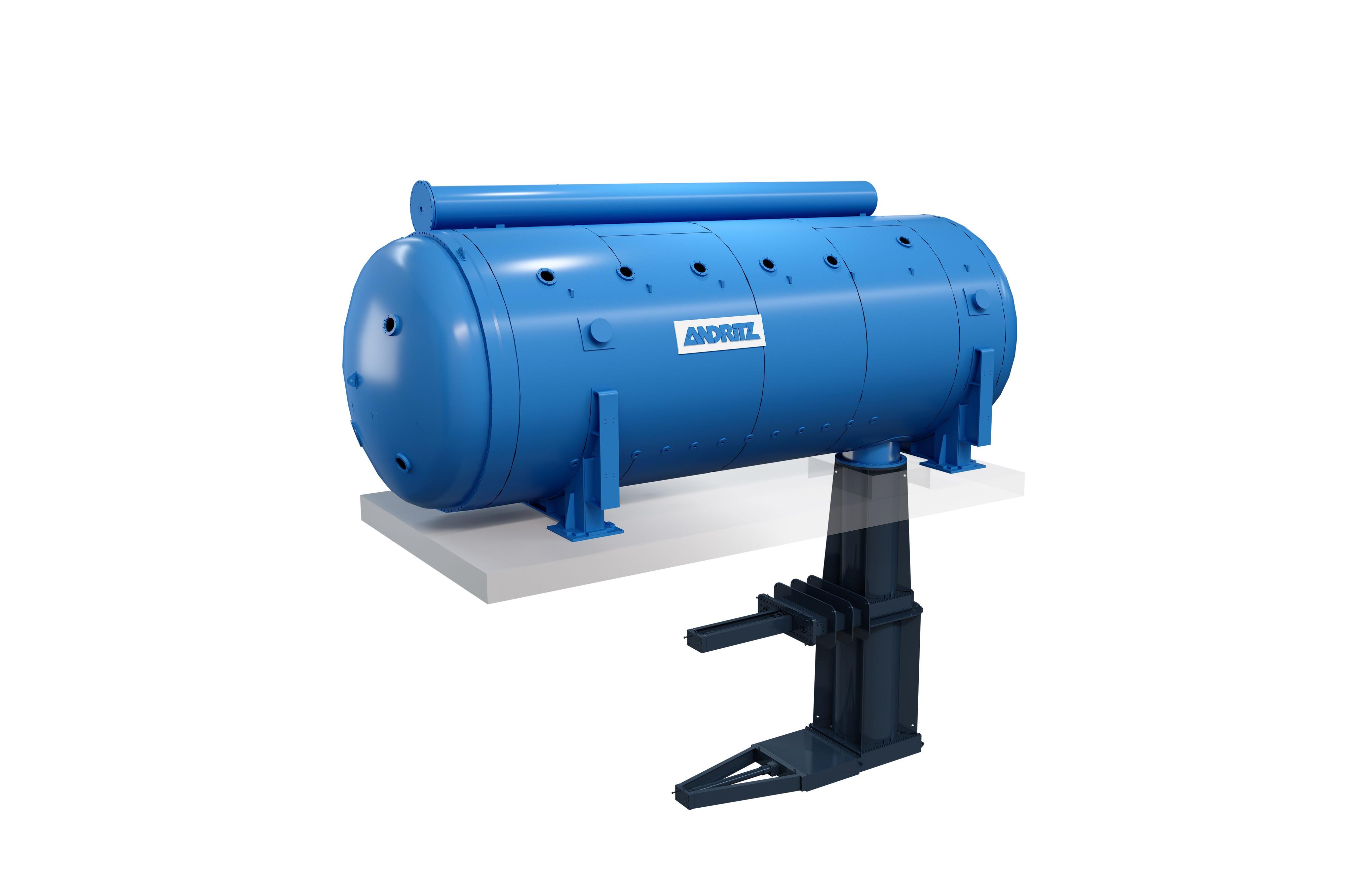
Pressure filtration enables very high cake solids and low residual moisture, making filter presses particularly attractive for dry stacking concepts and applications where maximum water and liquor recovery are required.
Hyperbaric disc filters – pressure filtration with continuous operation
Combining the advantages of continuous filtration with pressure differentials of up to 5.8 bar, the ANDRITZ HBF provides high specific throughput, low residual moisture, clear filtrate, and a compact footprint.
Vacuum belt filters – vacuum filtration with advanced washing opportunities
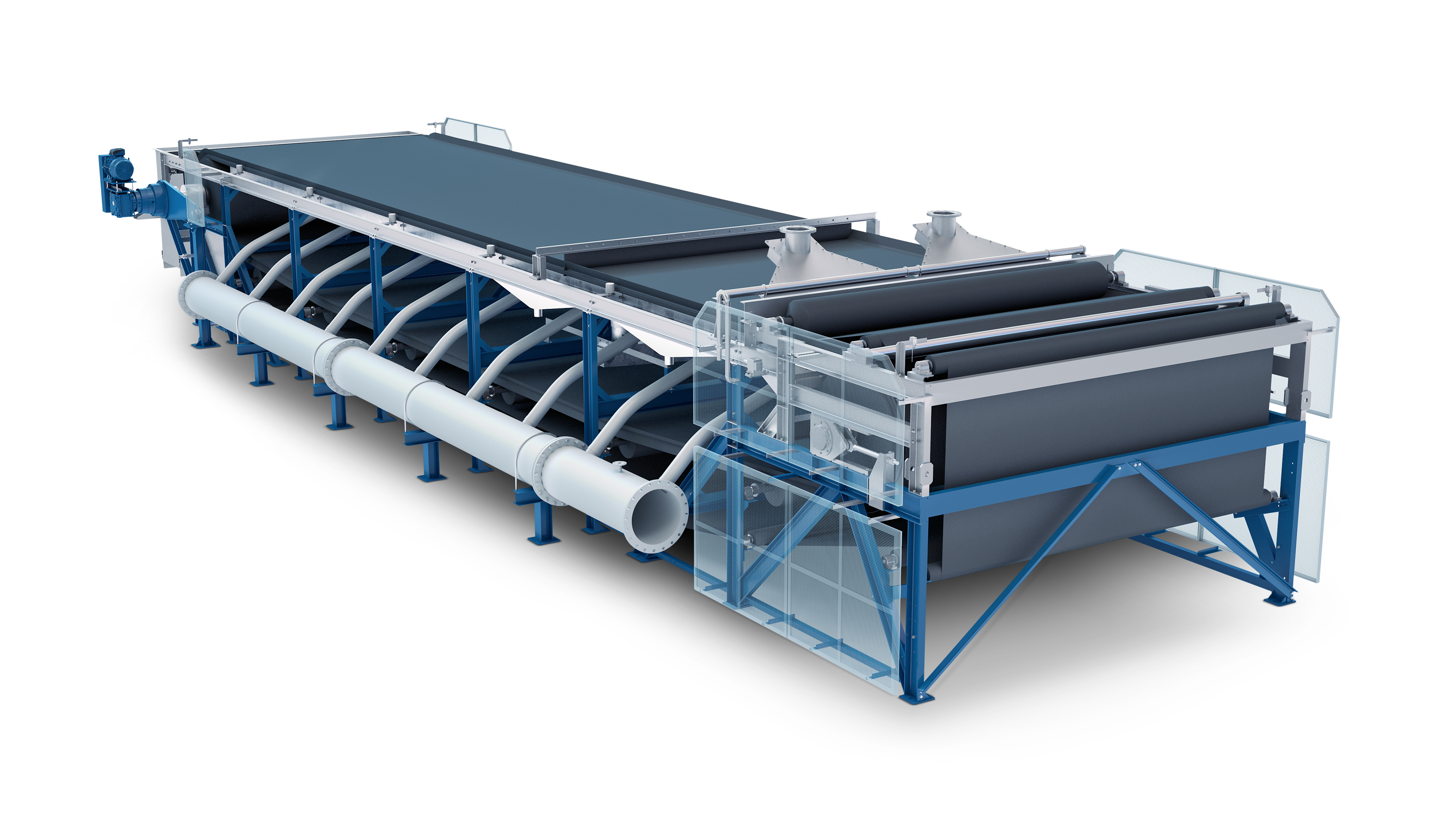
Particularly suitable where intensive or multi-stage cake washing and high caustic recovery are the primary objectives.
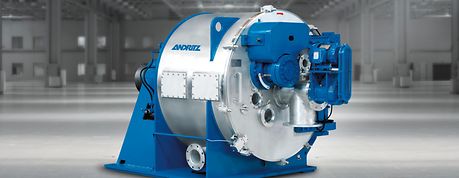
Decanter centrifuge – complementary solution
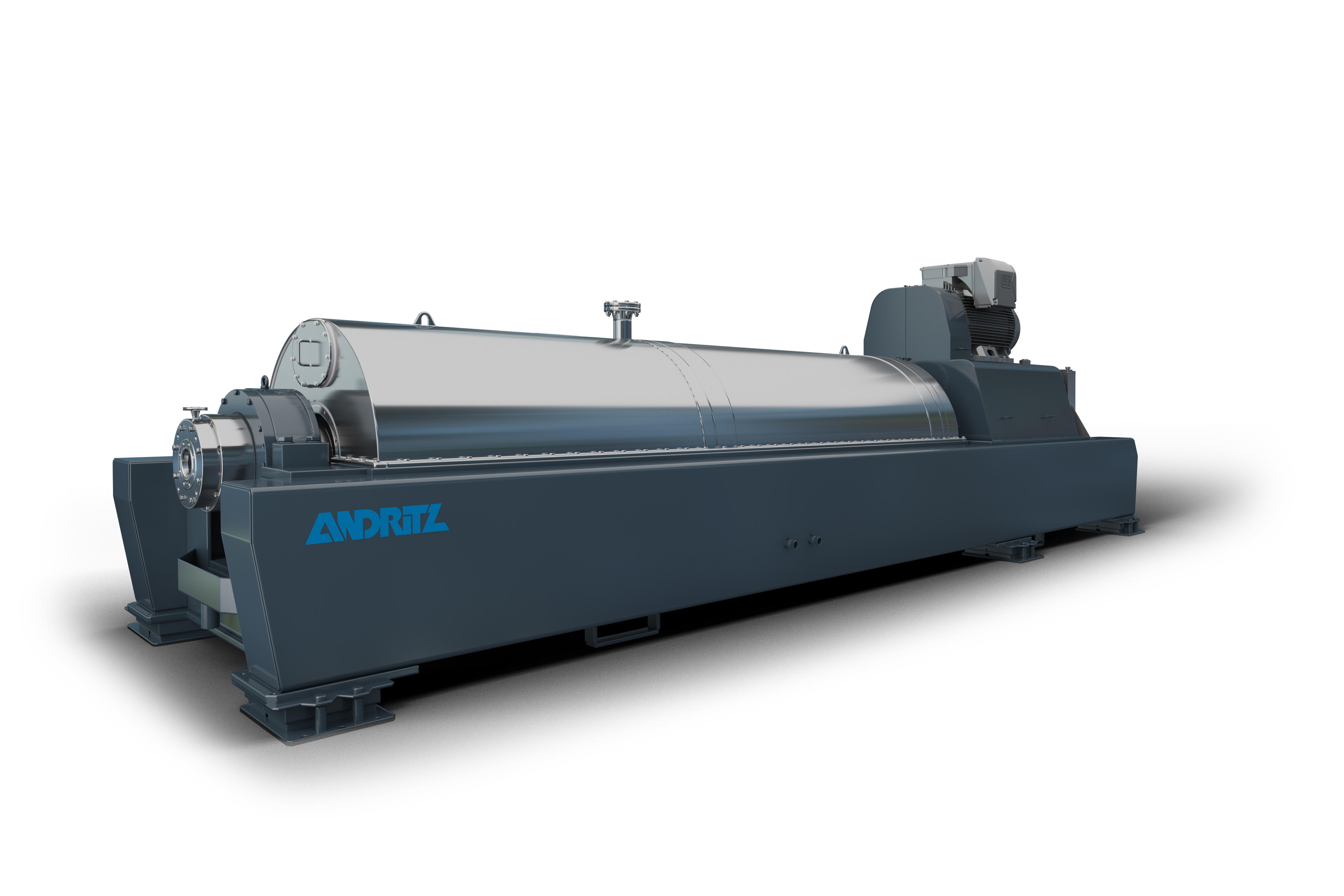
Complementary separation solution for specific fine-particle and clarification duties
How filtration impacts overall plant performance
Caustic and alumina recovery
More valuable process liquor returned to the Bayer circuit.
Water recovery
More filtrate returned to the process and less water transported to storage.
Residue management
Drier cake improves conveying, stacking and storage.
Smaller environmental footprint
Reduced liquor losses, improved water management and potentially smaller residue storage requirements.
Choosing the right solution for your refinery
Selecting the optimal filtration technology depends on:
- Bauxite quality and particle size distribution
- Desired moisture content of the residue
- Washing requirements and caustic recovery targets
- Disposal concept (dry stacking vs. slurry transport)
- Integration with existing CCD circuit
A combined evaluation of process, economics, and sustainability is essential.
Typical technology strengths
| Process priority | Technologies to consider |
| Maximum dewatering | Filter press |
| Continuous high-pressure filtration | Hyperbaric disc filter |
| Intensive cake washing | Vacuum belt filter, vacuum drum filter |
| Proven continuous residue filtration | Vacuum drum filter |
| High capacity in compact footprint | Hyperbaric disc filter, vacuum disc filter |
| Dry stacking | Filter press, hyperbaric disc filter depending on residue properties |
| Large continuous residue streams | Vacuum drum filter, vacuum disc filter, hyperbaric disc filter (depending on test results) |
| Fine-particle separation | Decanter centrifuge (for selected duties) |
Actual performance depends on the specific bauxite residue and process conditions. ANDRITZ recommends laboratory and pilot testing to determine the optimum technology and operating parameters.
ANDRITZ expertise: Find the right filtration technology - not just a filter
Every bauxite residue behaves differently. Mineralogy, particle size distribution, liquor chemistry, temperature, washing requirements and disposal strategy all influence filtration performance.
With one of the industry's broadest solid-liquid separation portfolios, ANDRITZ can evaluate multiple filtration technologies rather than applying a one-size-fits-all solution.
From laboratory testing and pilot trials to full-scale equipment, automation and lifecycle services, we help alumina producers achieve:
- Maximum caustic recovery
- Lower residual moisture
- Higher filtration throughput
- Optimized CAPEX and OPEX
- Long-term operational reliability
Frequently asked questions
To reduce moisture and caustic content for safe, cost-efficient disposal or reuse.
Filter presses typically achieve the lowest moisture levels.
Vacuum drum filters generally provide superior washing performance.
Yes, hybrid strategies can optimize both washing and dewatering performance.