Evaporator-1024x137

Dedert forced circulation evaporators for industrial applications

Working principle

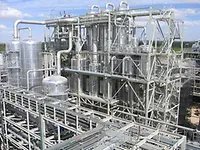
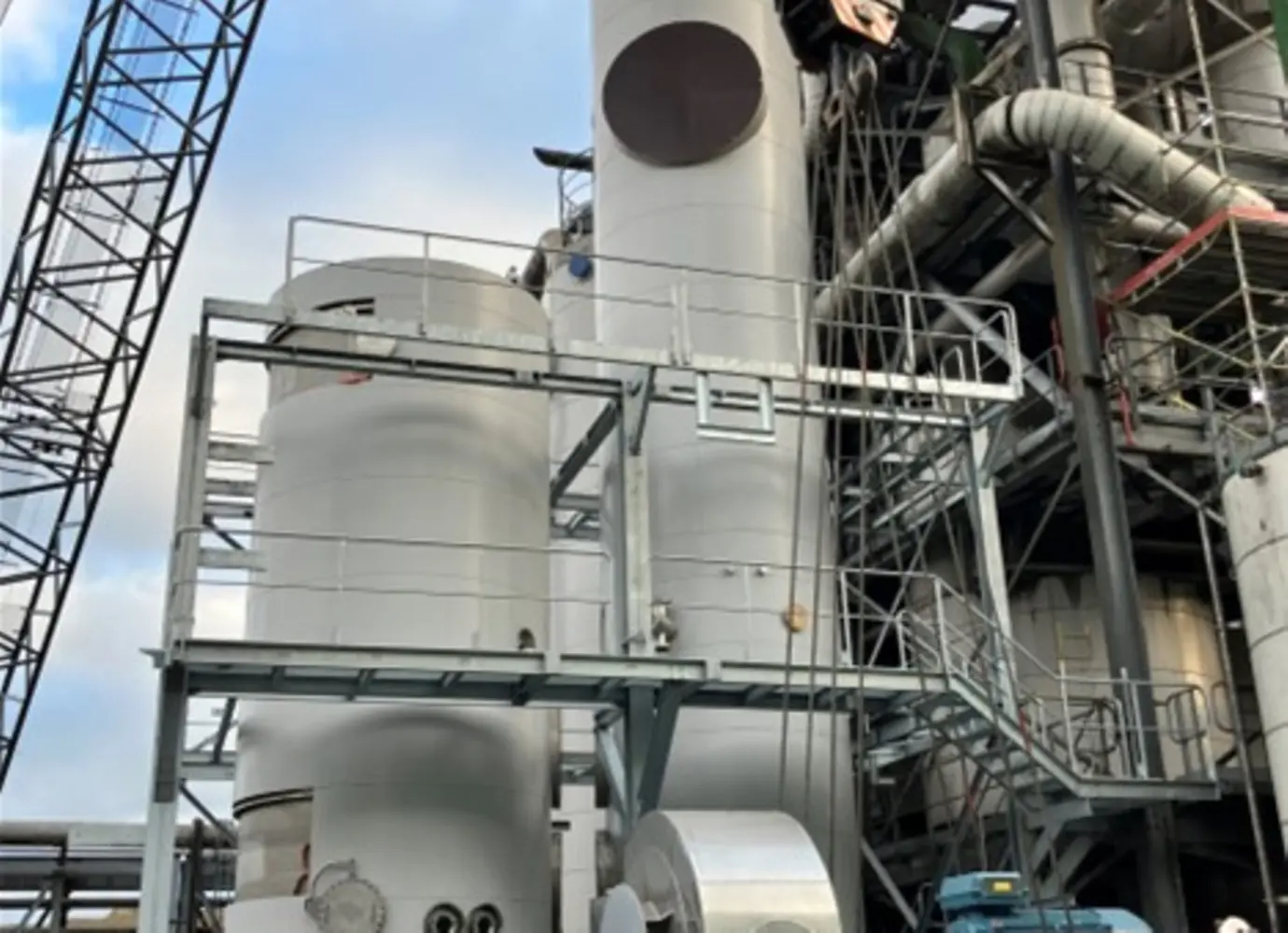
In forced circulation evaporators, the liquor is pumped through a heat exchanger, where an energy source on the shellside heats the liquor on tubeside. The liquor then continues to a flash vessel, where it is depressurized, causing the volatile liquid to vaporize. Any droplets are removed from the vapor in a de-entrainment device at the top of the separator. 

The device can be a centrifugal type or a demister. The droplets are then combined with the concentrated liquor. The clean vapor continues to a subsequent effect, a thermocompressor, a compressor or a fan. Learn more about evaporators.


Forced-circulation-evap

Industries

Dedert forced circulation evaporators are hard at work in the following industries:

  • Food processing
  • Chemical manufacturing
  • Distillery operations
  • Biofuel productions

Experience

1,500+
evaporators and crystallizers worldwide

55+
industry experience since 1968


0 +
0 +
0 +

Applications

Dedert forced circulation evaporators are typically used for solutions and slurries which present a risk of fouling or scaling. Fouling occurs at high temperatures and high concentrations. Scaling occurs with salts that are likely to precipitate. The forced circulation evaporator maintains a full tube, which mitigates these risks. Forced circulation evaporators have longer product residence time and higher liquid volume in the tube. Forced circulation evaporators are used for a variety of applications, including:

  • Kaolin clay
  • Ammonium sulfate
  • Barley stillage
  • Beet stillage
  • Betaine caustic stillages
  • Calcium carbonate
  • Cane stillage
  • Theonine
  • Citric acid and salts
  • Corn steep liquor
  • Corn stillage
  • Pea solubles
  • Potassium carbonate
  • Rendering waste
  • Sodium chloride
  • Sodium sulfate
  • Sodium thiocyanate
  • Steepwater
  • Sugar Vinasse
  • Wheat “C” starch effluent
  • Wheat stillage
  • Yeast
Forced-circulation-and-falling-film

Advantages

The following are some advantages of Dedert forced circulation evaporators:

  • Reduce precipitation or scaling
  • Reduce excessive fouling at high temperatures
  • Higher shear rates which reduces viscosity and allows higher concentrations
  • Higher viscous solutions which exceed the capabilities of the falling film
Forced circulation pilot evaporator

The Dedert research facility has a pilot evaporator to test products on a pilot scale and establish correct parameters and material characteristics needed for optimal design and scale-up. Dedert rental pilot evaporators are:

  • Skid mounted and preassembled
  • Equipped with vacuum system, pumps and motors
  • Easily reconfigured for forced circulation and falling film
  • Single effect steam heated
  • Robust, with an evaporation capacity  of 110-150 lb/h (50-70 kg/h)
  • Industrial stainless-steel grade Type 316
  • Suitable for installation and testing at operational plants and test facilities

Energy integration

MVR_evaporator-1.jpg

Mechanical vapor recompression (MVR)

MVR systems recompress the vapor produced in the evaporator using a fan, blower, or high-speed compressor to increase both the vapor pressure and temperature. This recompressed vapor is then returned to the shell side of the heat exchanger where it is condensed, driving evaporation on the tube side. Capacity is controlled by modulating the fan speed with a Variable Frequency Drive, or the flow by inlet guide vanes.

As of 2024, Dedert has provided over 250 MVR systems across 25 countries.

Mechanical vapor recompression in evaporators

Thermal vapor recompression (TVR)

Thermal vapor recompression (TVR) system is more energy efficient than a steam heated system when medium to high pressure steam is available. The motive steam enters through the nozzles and draws in recycled suction vapor. The vapor mixes in the converging section, and the recycled vapor is boosted to an intermediate pressure. Recycling the suction vapor allows for a lower steam consumption. Thermocompressors are more efficient when they are recycling more vapour, producing a lower boost and therefore requiring less steam.

Waste-heat-evaporators

Waste heat evaporator (WHE)

This evaporator condenses waste heat in the form of dryer vapors, ethanol from distillation columns, or cools hot process water to drive evaporation. Dedert was the first to use waste dryer gas as a heating source, receiving a patent in the early 1980s for an all-in-one scrubber and evaporator, which allowed the heat exchanger to accept dryer vapors containing particulates. Dedert has supplied more than 100 waste heat systems across the world, powered entirely by waste fluids.

Download
Proven design and competitive solutions

Dedert dryers

Proven design and competitive solutions

Dedert dryers

PDF: 1.1 MB
Dedert - Air bearing atomizer

A revolution in spray drying 

Dedert - Air bearing atomizer

A revolution in spray drying 

PDF: 480 KB
Dedert - Drying and evaporating technologies
PDF: 1.4 MB

Find out more ...

Intelligence for machine and process control

The brain behind your operation: Metris addIQ control systems

Read more

Our services

Whether you need spare parts, rentals, local service, repairs, upgrades, or modernization of your equipment.

Discover our Services