The powerful role of the river
Power and the river of life
Energy, economy, and diversity — why rivers are more than just water
Cover Story
Rivers are far more than mere waterways. Since the dawn of time, rivers have shaped the development of flora and fauna, and humankind. They are dynamic habitats and historical drivers of civilization and their economic systems.
Early humans chose to settle near rivers for good reason: water was essential — not only for drinking, but also for agriculture, hygiene, fishing, and later on for powering mills. Rivers made traveling and trading easier and laid the foundation for early connection and exchange between distant peoples. But rivers are also natural barriers — serving as borders, strategically important or insurmountable. The river was and is both an ally and an enemy.
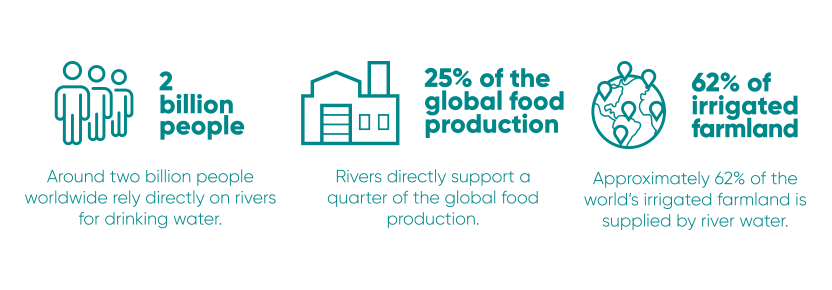
Yet the most valuable resource that rivers offer humankind is water itself. Around two billion people worldwide rely directly on rivers for drinking water, and approximately 62% of the world’s irrigated farmland is supplied by river water. Rivers thus directly support a quarter of the global food production. (Source: WWF)

© Olivia - adobe.stock.com

Source: WWF
Today, rivers are also central pillars of energy production, and their water reliably supplies electricity to millions sustainably and low in CO2 emissions. However, gathering this economic and social value also comes with challenges. Hydropower plants must balance energy generation, navigation, and environmental protection. Flood control, fish migration, and ecological compensation are just as important in planning hydropower projects as turbine technology or reservoir management. Modern projects are only approved after years of planning, environmental assessments, and public participation all taking place under the strictest environmental regulations.
"Where water
flows, life begins—
not just in nature,
but in civilization."
Preserving biodiversity — Why a healthy river means more than water
Rich in biodiversity, riverbanks and river beds are home to countless plant and animal species — many of them highly specialized and sensitive to disruption. Protecting this biodiversity is a major priority today. Every human intervention, whether riverbank reinforcement, hydropower development, or agriculture, affects this finely balanced ecosystem.
Central to today’s discourse is renaturation. In many regions, old river courses are being restored, artificial straightening is being reversed, and floodplain forests are being revitalized. Why? Because near-natural rivers not only provide habitats for animals, but also key services to people. They buffer floods, improve water quality, and support the river’s self purifying abilities.
A central issue is fish migration. Many species, such as salmon, huchen, or eel, travel long distances to spawn. Dams, weirs, or fortified banks can potentially block their path. Without continuous river systems, spawning new generations becomes almost impossible and entire populations may face extinction. This is why all modern hydropower plants are now equipped with fish passages. Some are spectacular, such as "fish lifts", but there are also less obvious bypass streams designed in a natural style.
Yet our rivers are not only threatened by technical obstacles. Climate change is causing increasing droughts, lower water levels, and overheating. Rivers lose volume and at the same time the risk of extreme weather rises: Heavy rainfall hits dried-out soil, and floods are becoming more frequent.
The Danube as a prominent example
The Danube is a prime example of these challenges. At 2,850 km long, it is Europe’s second-longest river, flowing from the mountainous regions of the Black Forest in Germany to the coastal plains of the Black Sea. With a catchment area of 817,000 km2, it connects 10 countries and passes through many major cities including Vienna, Bratislava, Budapest, and Belgrade. It is a vital lifeline for millions of people, the economy, and the environment.
These form the backbone of the national electricity supply.There are also significant hydropower plants in Slovakia, Hungary, Croatia, Serbia, Bulgaria, and Romania. Among them is the Iron Gate, with its Romanian (Portile de Fier I) and Serbian side(Đerdap I) combined, forming the Danube’s most powerful hydropower facility with more than 2,300 MW.

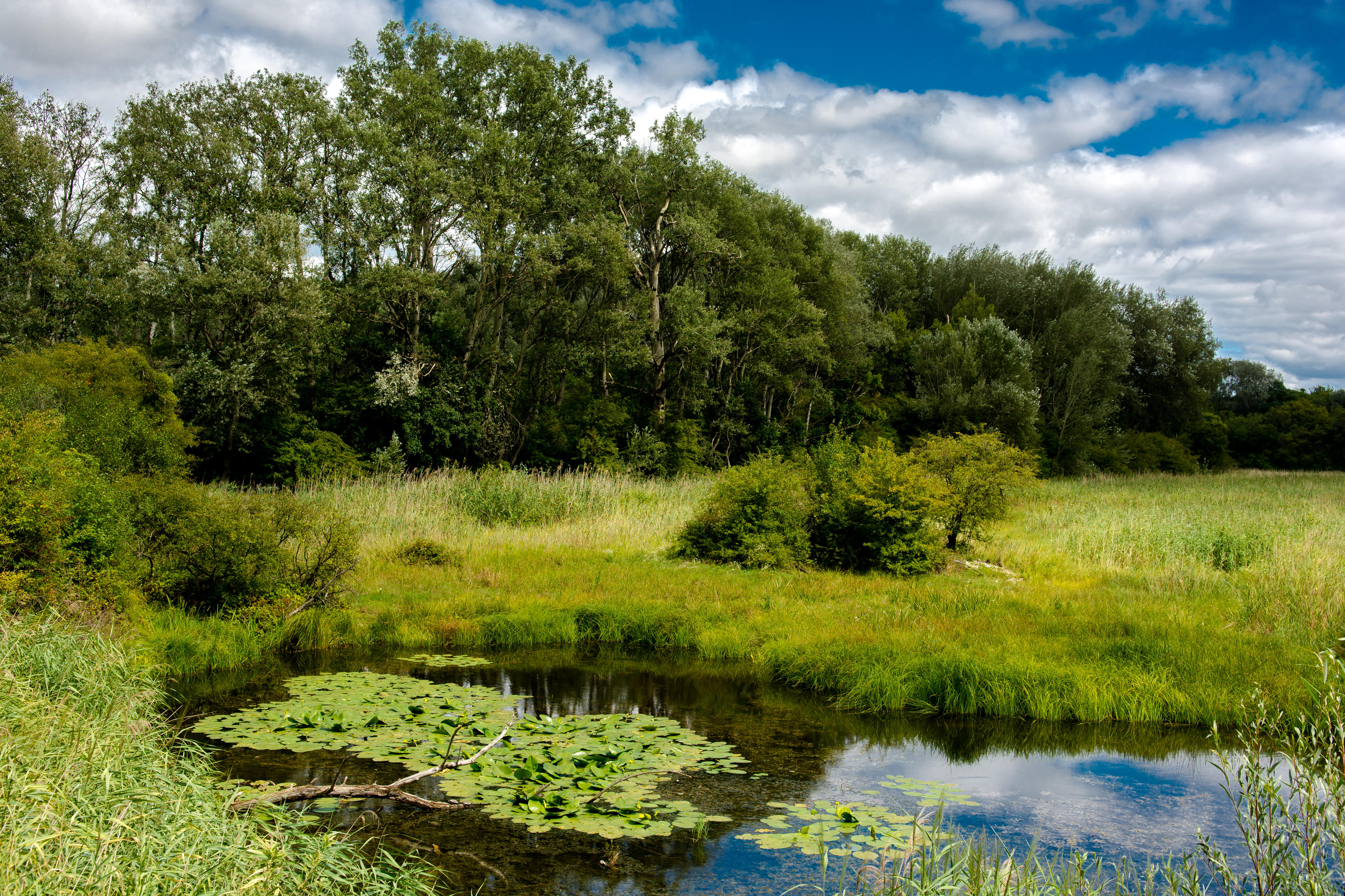
The Danube-Auen National Park stretches 38 km from Vienna to the conflu ence of the Morava and the Danube. Created in 1996, it is one of the largest intact and continuous floodplains in Central Europe.
© Grafxart - adobe.stock.com
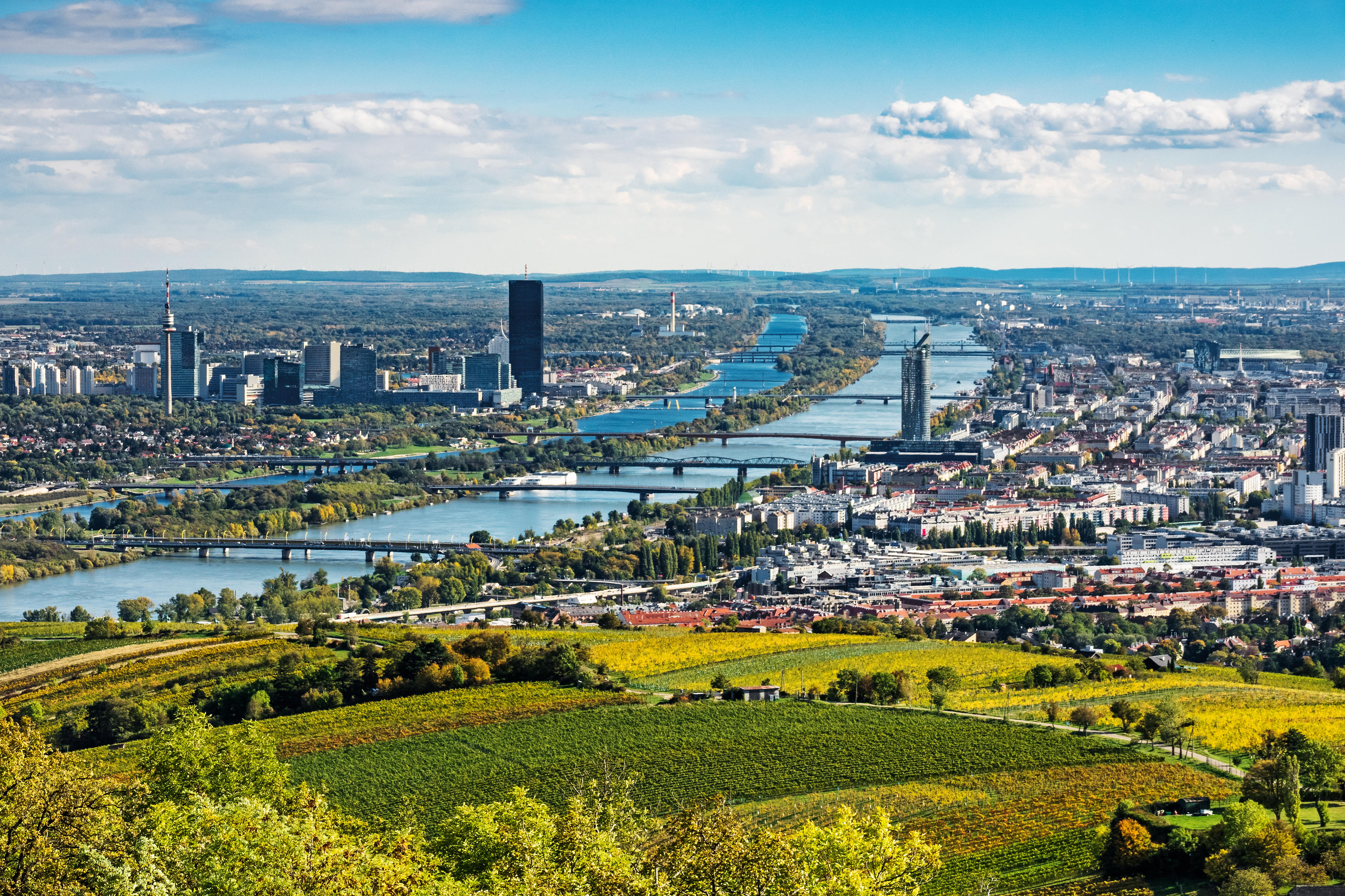
Vienna, the capital of Austria with over 2 million inhabitants, lies on the Danube. The artificially created Danube Island between the Danube and the New Danube protects against flooding and also provides an important recreational area for the city's population.
© Digitalpress - adobe.stock.comAlong the entire Danube, from source to mouth, numerous hydropower plants and dams have been constructed over the years for both energy generation and navigation. In Germany, the Donau power plants are well known for supplying electricity to the railway, for example. In Austria, there is a large number of power plants on the Danube, including Aschach, Ottensheim-Wilhering, Wallsee Mitterkirchen, Ybbs-Persenbeug, Melk, Altenwörth, Greifenstein, and Freudenau.
"The Danube knows no
borders — it connects
people, nations, and ideas."
Numerous international initiatives are underway focusing on renaturation, navigation optimization, and energy production — highlighting the complexity of managing such a river. The Danube is a symbol of the delicate balance between use and protection, and of cross- border cooperation.
Programs and institutions such as viadonau, the International Commission for the Protection of the Danube River (ICPDR), the Danube Commission, or the EU LIFE Network Danube Plus demonstrate the opportunities and this spirit of collaboration. Through these projects, ecological corridors are being restored, and joint protective measures are implemented. Sustainability truly knows no borders.
ANDRITZ — High-tech sustainability and river engagement
As one of the world’s leading suppliers of hydropower technology, ANDRITZ has a unique connection to rivers. For decades, our expertise has shaped the development of modern, efficient, and environmentally friendly power plant solutions — from small hydro plants to large-scale river projects across both Europe and worldwide.
Along the Danube, ANDRITZ has been involved in more than half of all projects to date, often as an Original Equipment Manufacturer (OEM) — including the Freudenau run-of-river plant in Vienna. This is a showcase project for balancing navigation, energy, and fish protection. The turbine and generator technology for many other key sites also originates from ANDRITZ. They include Aschach, Ybbs Persenbeug, Wallsee-Mitterkirchen, and Altenwörth plants, to name a few.
In addition to providing generation equipment for hydropower, ANDRITZ's portfolio also includes a product and service range covering all types of hydro mechanical equipment, including gates, weirs, power plant intakes, and outlet structures. Two highlights along the Danube are the flood protection gates in the ports of Vienna and Linz, which make the Danube and its surroundings safer and better protected.
ANDRITZ also focuses on fish-friendly solutions, combining hydraulic expertise with biological insight to ensure efficient technology and healthy fish populations. In addition to improving efficiency and flexibility to maximize the economic potential of hydropower plants, a key research area is the minimization of their environmental impact. Of special interest are fish-compatible designs, which are becoming increasingly important for new hydropower investments.
"The power of water is ancient — our technology makes it futureproof."
Hydraulic and mechanical design choices in hydro turbines can significantly affect fish survivability, with features like reduced runner gaps, minimized cavitation design, and blunt runner blades. ANDRITZ has incorporated fish-friendly designs in its technology since the early 1990 using CFD-supported biological assessment tools to evaluate stressors on fish. ANDRITZ has also supplied over 130 Kaplan turbines with oil-free runner hubs to reduce water contamination and enhance the environmental sustainability of hydropower plants. These innovations continue to be driven by dedicated R&D efforts.
Efficiency, durability, and ecological optimization are not mutually exclusive. In pilot projects and in cooperation with operators, universities and ecologists, ANDRITZ continuously works to minimize the impact of hydropower on nature. Ongoing advances of our industry include improved turbine technologies, new operational schemes, new fish passage. systems, smart flood control technologies, and resource-efficient material use on all rivers around the world — from A to Z - from the Amazonas to the Zambezi.

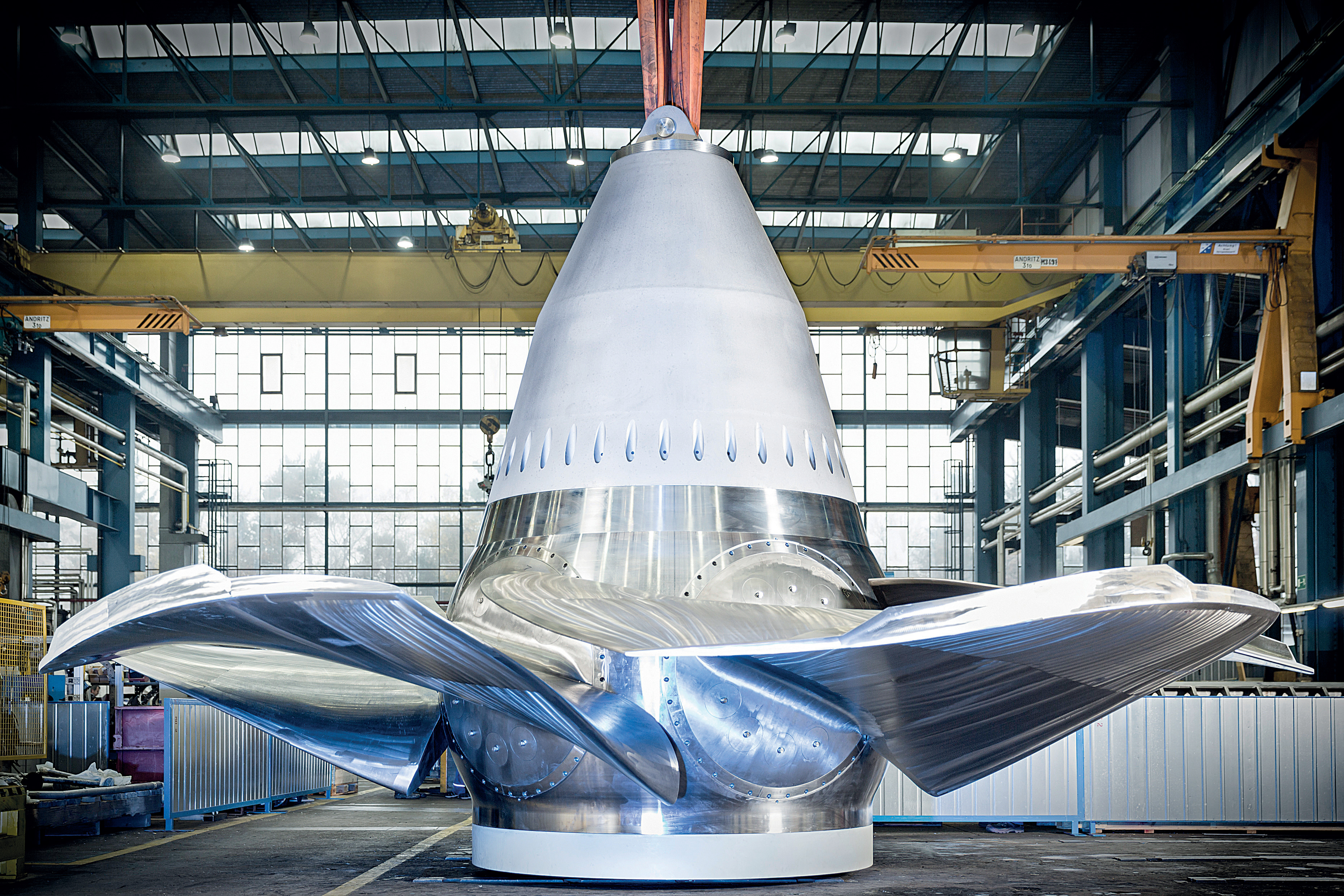
One of the new Kaplan turbine runners for the Ybbs-Persenbeug power plant, a run-of-river power plant on the Austrian Danube, which was renovated as part of the Ybbs 2020 rehabilitation project.
© VERBUND
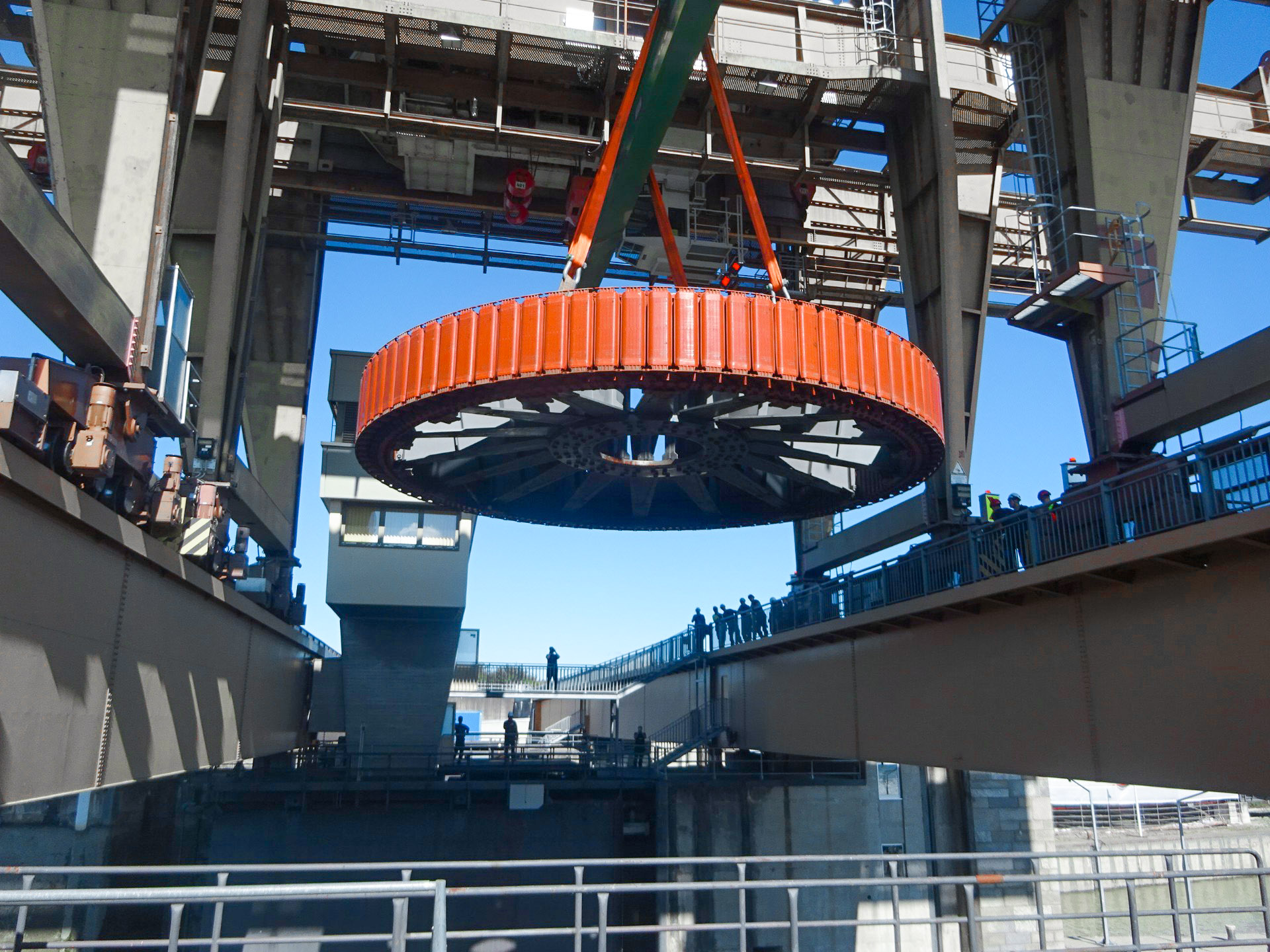
Lowering of generator rotor at the Wallsee-MItterkirchen power plant. ANDRITZ is not only the OEM for, but is also involved in the comprehensive refurbishment of the electromechanical equipment.
© Joannes WiedlOutlook: A future with and for the river
Rivers are the ultimate lifeline — ecologically, economically, and emotion ally. They deserve our full attention and care. The challenges — climate change, rising energy demand, and biodiversity protection — are considerable, but so too are the opportunities. Hydropower plays a key role in producing clean, reliable, and local energy. With cutting-edge technology, sustainable planning, and a deep understanding of the value of river habitats, hydropower provides energy in harmony with nature so that we can secure the future of our rivers.
With its core values of foresight and care, ANDRITZ will continue to innovate responsibly, ensuring that rivers remain powerful and full of life — sources of energy of energy, places of biodiversity, and symbols of unity.
How does a run-of-river plant work?
Run-of-river power plants generate electricity using the natural flow of rivers without large reservoirs. Water is directed through turbines, and output depends on river flow and head. These plants are eco-friendly but sensitive to droughts. They include river power plants, built directly in the river, and diversion plants, which guide water through a channel before returning it to the river. Both types of run-of-river power plants are regulated to maintain a minimum environmental river flow.
Run-of-river power plants are highly reliable, continuously operating facilities that generate electricity around the clock. They play a key role in covering the base load in the power system.
"Technology alone is not enough. It takes responsibility, foresight, and respect for the river."

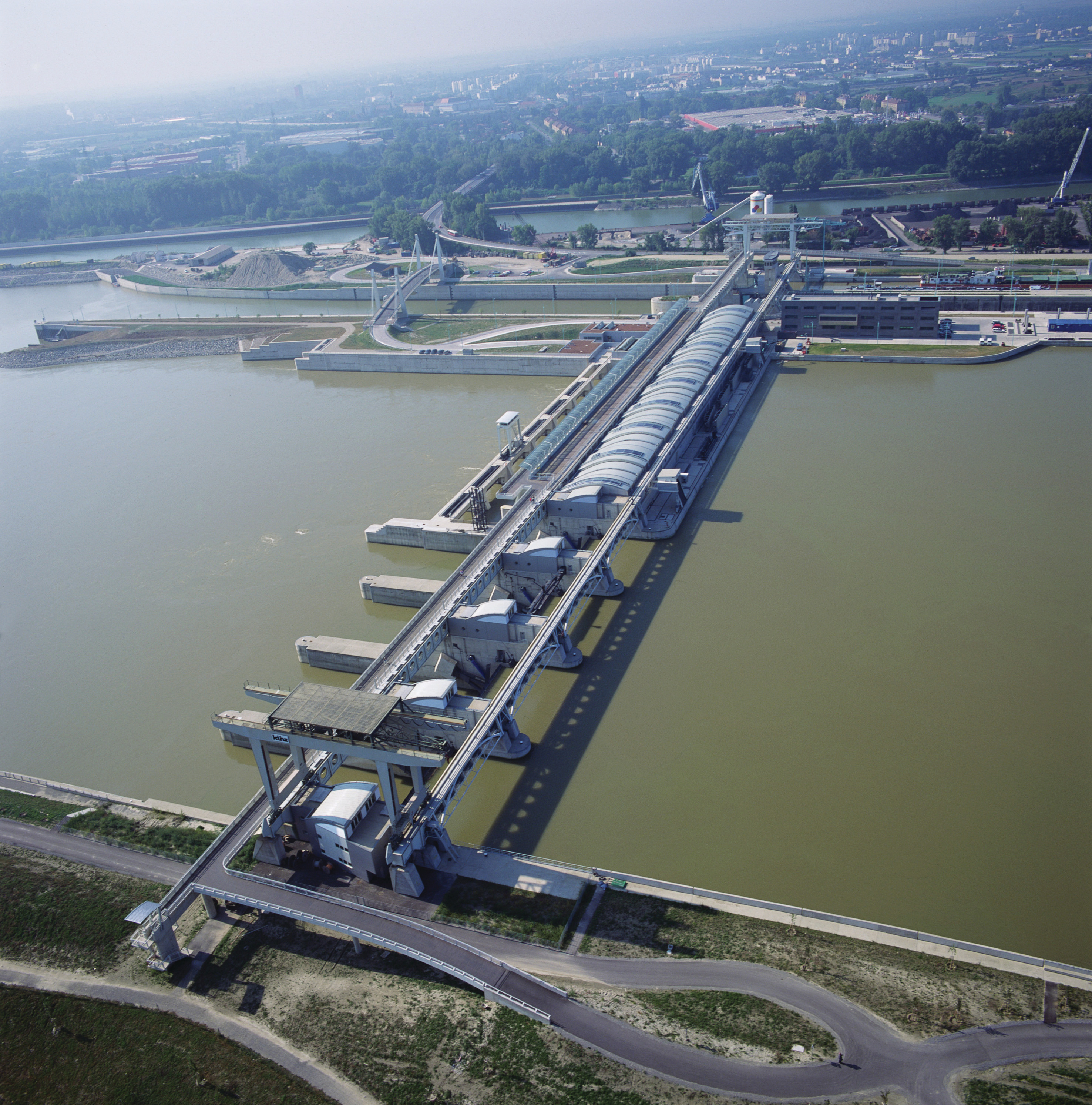
The Freudenau Power Plant is a run-of-river plant on the Danube in Vienna, the Austrian capital, and is the tenth and last of the Austrian Danube power plants.
© VERBUNDAuthor: Marie-Antoinette Sailer