ANDRITZ-HN38-Header-with-overlay-and-text-v2

The powerful role of the river

The Danube in Austria and VERBUND

Cover Interview

How Austria’s largest hydropower producer VERBUND connects energy, the environment, and the future: In conversation with Dr. Karl Heinz Gruber.

Dr. Karl Heinz Gruber

Interview with Dr. Karl Heinz Gruber Managing Director of VERBUND Hydro Power GmbH

Since 2007, Dr. Gruber has been Managing Director and Member of the Executive Board of VERBUND Wasserkraft, responsible for all hydropower activities in Austria, Germany, Albania, and Spain and active in national and international associations in the field of power generation. He is Chairman and Spokesman for Generation at Oesterreichs Energie (representing the interests of all electricity companies in Austria), a member of the Executive Board of the Bavarian Energy and Water Industry Association, a member of the Committee for Energy and Climate Policy at the Bavarian Industry Association, and Chairman of the Hydropower Group at vgbe Energy, the European association of around 500 energy suppliers.

Dr. Gruber, could you please give us a brief overview of VERBUND?

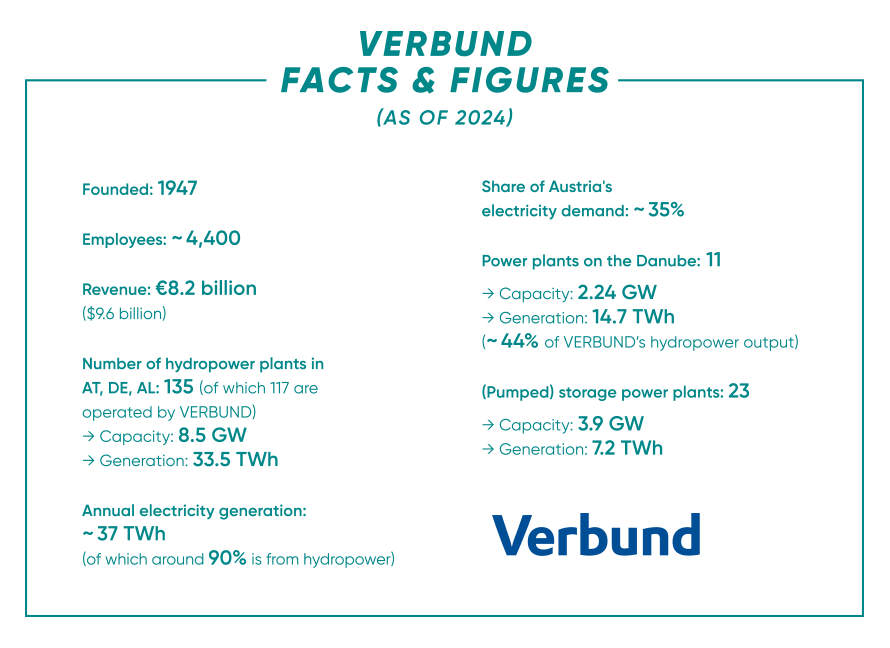
VERBUND is Austria’s leading energy company, operating 135 hydropower plants in Austria, Germany and Albania. It is also one of Europe’s largest hydropower producers. 96% of our 37 TWh of generated electricity in 2024 came from renewables — primarily hydropower (90%). In addition, we are investing in wind power, photovoltaics, batteries, and green hydrogen. Besides electricity generation, we also operate Austria’s transmission grid, connecting industries and households with green energy.

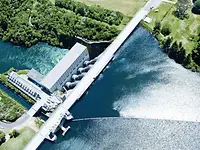
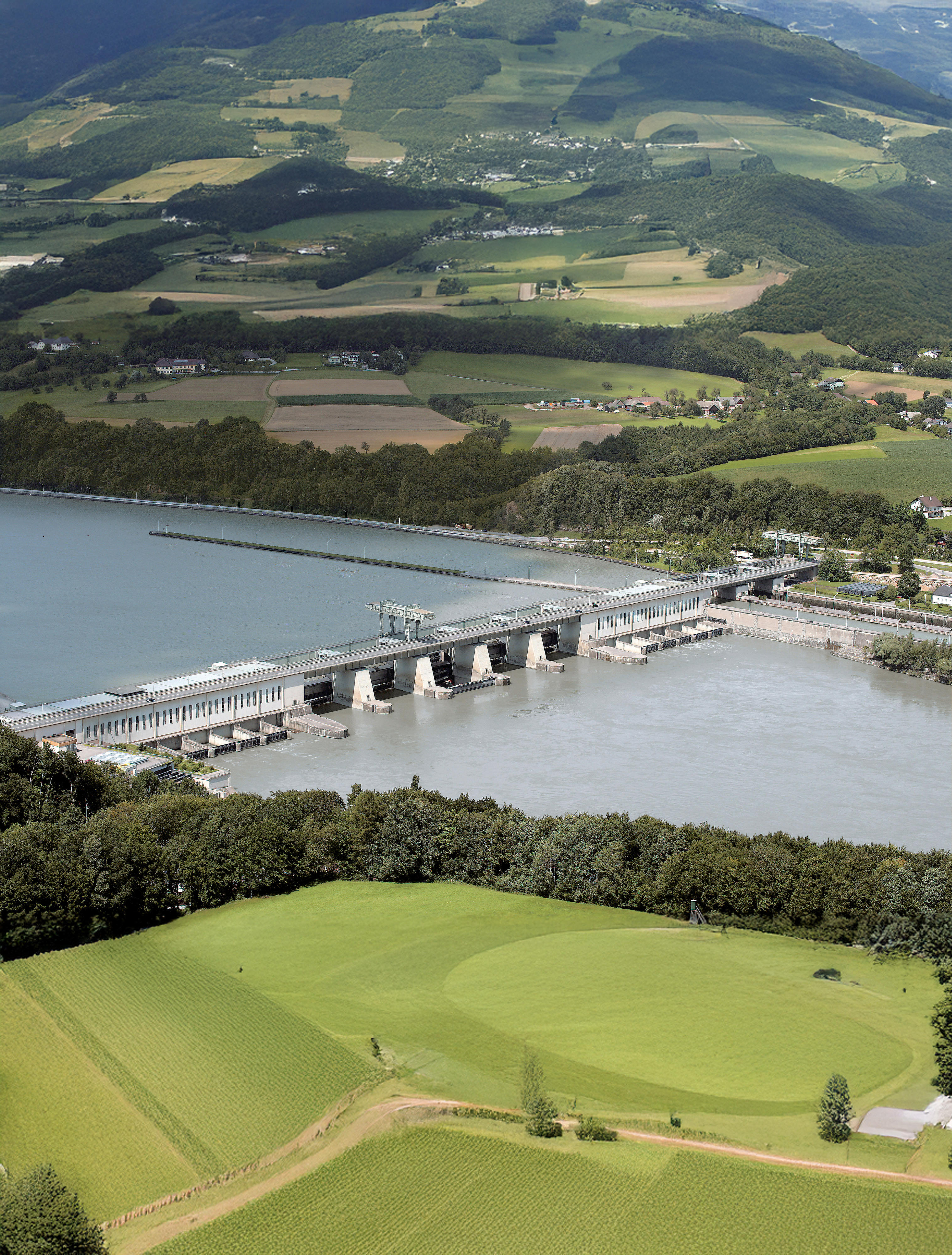
Ybbs-Persenbeug run-of-river power plant on the Danube @Johannes Wiedl

© Joannes Wiedl

What role does the Danube play for VERBUND?

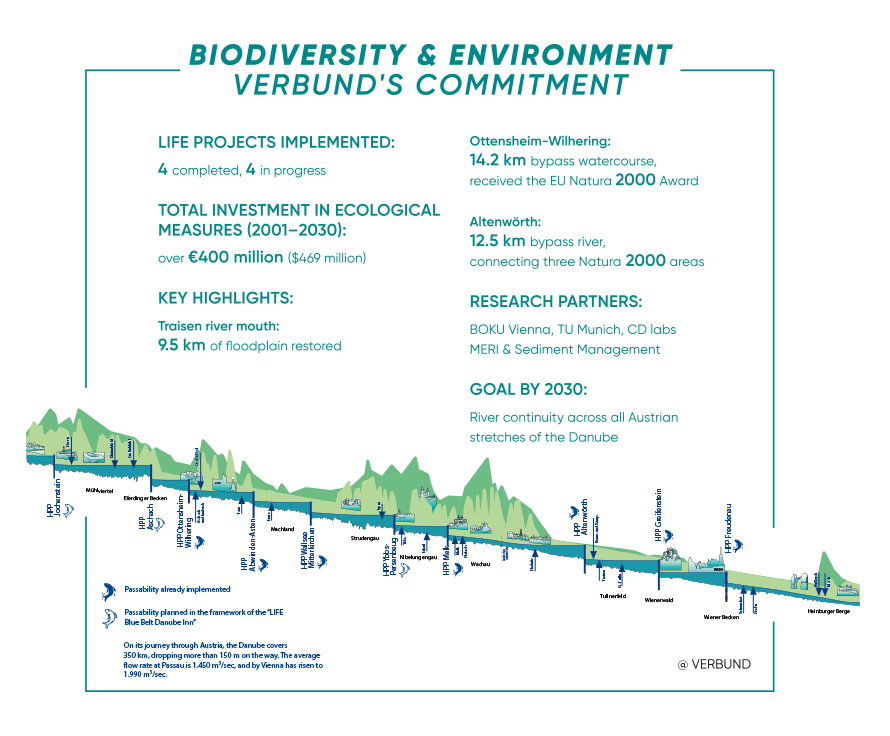
The Danube forms the backbone of our annual electricity production. It runs through Austria for about 350 km, offering a natural gradient of over 150 meters. Along the Danube, we operate eleven power plants — from Jochenstein on the German border to Freud enau in Vienna. With an installed capacity of 2.24 GW and an energy production of 14.7 TWh, it accounted for around 44% of our total hydropower output in 2024.

What technical challenges do the power plants on the Danube face, especially given increasing flood risks?

Our Danube power plants are run-of-river without large storage reservoirs. During floods, operations are precisely governed by officially approved operating procedures. We must shut down the turbines and open the weirs, and during extreme events also open the lock gates.

www.verbund.com

© VERBUND

Hydropower is not just a source of energy, it also impacts ecosystems. How does VERBUND address this responsibility?

Even before the EU Water Framework Directive was adopted, we had already begun ensuring river continuity at our power plants. We’ve also implemented measures to improve river structures and restore habitats. Together with partners like the BOKU University in Vienna, the Technical University of Munich, and the water way operator viadonau, we carry out large scale river restoration projects — especially along the Danube, but also on all other rivers, like Inn, Enns, and Traisen.

Can you name specific initiatives?

Some of our projects are European benchmarks: As part of the renaturation project LIFE+ Traisen, a 9.5 km straightened river section was trans formed back into a near nature floodplain. At the Ottensheim-Wilhering plant, a 14.2 km-long bypass watercourse was created, which won the prestigious Natura 2000 Award. To date, we have invested over €200 million ($234.5 million) in such efforts, with an additional €200 million planned by 2030. The goal is to create a continuous river system with habitats for humans, animals, and plants alike.

What is the significance of the international award for your LIFE project "Danube Network"?

The LIFE project set new standards in eco logical river development — not just due to its scale, but also because of the results achieved. It demonstrates that technical flood protection, electricity generation, and nature conservation are not mutually exclusive. The "Distinguished Project Award" at the Fish Passage Conference 2024 was a special recognition of that success.

What roles do research and ecological development play?

Research plays an essential role. Together with universities and partners, we continuously develop new technologies, for example, in sediment management, hydropeaking mitigation, or fish migration behavior. At the Christian Doppler Laboratory MERI in Vienna, we systematically analyze the ecological impact of our measures. In the "ÖkoReSch" initiative, together with the Christian Doppler Laboratory for Sediment Research and Management and other partners, we’re developing standards for evaluating the ecological potential of residual flow sections. Since 2004, we have supported more than 160 research projects with a total investment volume of around €350 million ($410 million).

Hydropower is considered a mature technology. Are there still innovations?

Absolutely. Proven also means reliable and long lasting, which is especially important now, as we fully transition our energy system to renewables. That’s why I am deeply convinced that all our currently operational plants — which, by the way, have the highest value-added share among all renewable technologies in Europe — will continue to safely and efficiently generate and store domestic, CO2-free electricity for the next 100 years and beyond.

The innovation potential is huge. Beyond the ecological projects on fish migration and river continuity, we are continuously working on more efficient turbines and generators, as well as smarter control systems. Digitalization is key: Real-time data analysis, predictive maintenance, robotics, digital twins, remote diagnostics, and enhanced cybersecurity all help make our plants safer, more efficient, and environmentally friendlier. Industrial partners like ANDRITZ play an important role in this. 

One key project is the Operation & Security Center Hydro. Can you tell us about that?

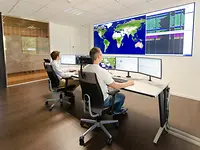
We are centralizing the control of our 117 company-operated power plants in one single control center: the OSC Hydro. The goal is to enhance supply security, asset protection, and IT security. Together with partners like ANDRITZ, we are currently building this high-security center with investments of over €100 million ($117 million). It will start operation in stages in 2026, beginning with a 24/7 control room. (See related article on page 26.)

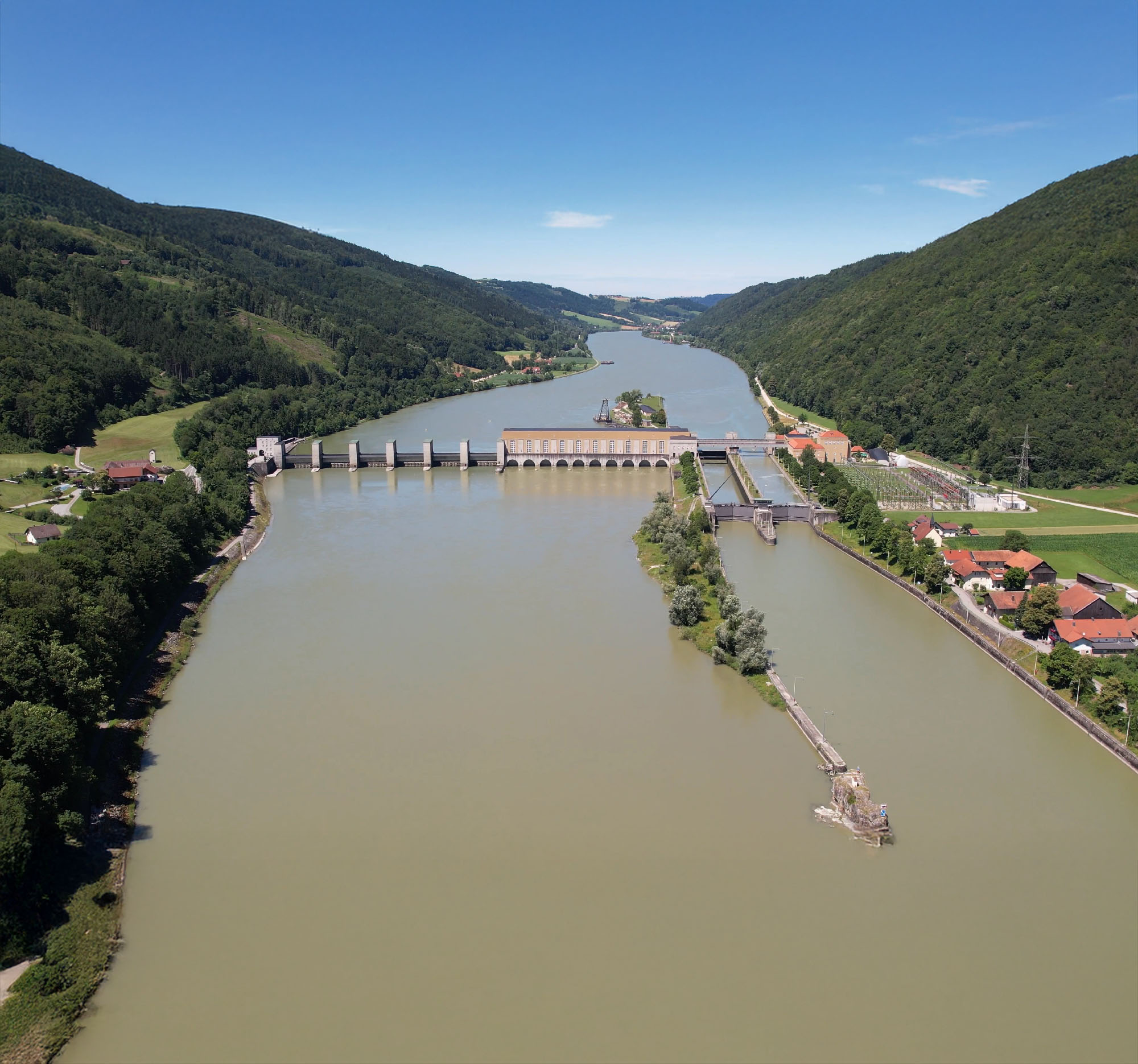
Jochenstein run-of-river power plant on the Danube at the border between Austria and Germany

© Joannes Wiedl

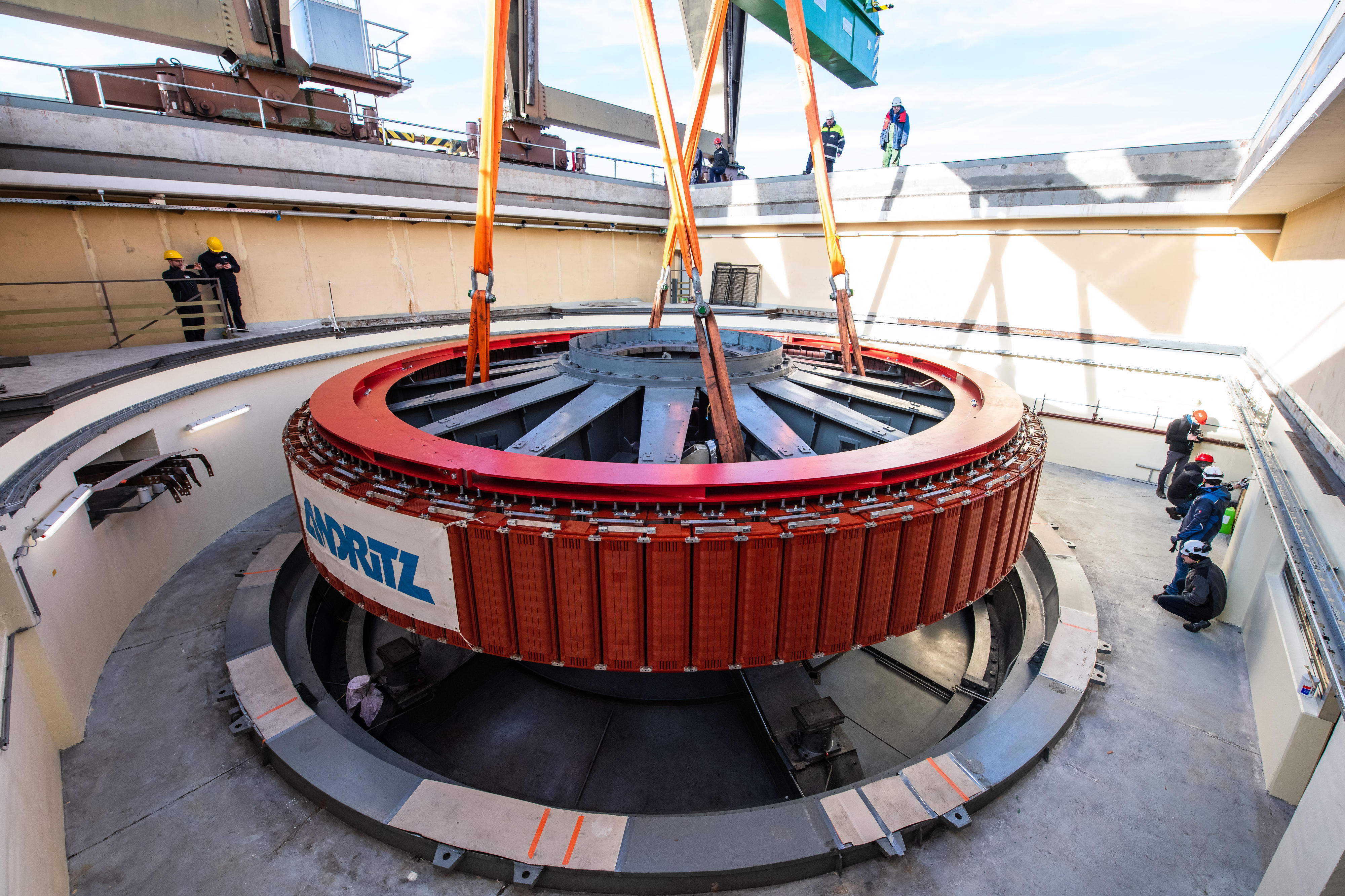
Lowering of generator rotor at the Wallsee-Mitterkirchen power plant

© Joannes Wiedl

What is VERBUND's modernization strategy?

Many plants were built in the 1950s to 1970s. We’re investing in technical upgrades while also increasing efficiency. At the Ybbs-Persenbeug plant, for example, modernization of turbines and generators increased the annual output by about 80 GWh. We’re currently modernizing nine plants along the Danube, Inn, Mur, and Drau rivers — including Jochenstein, Ottensheim-Wilhering, and Wallsee-Mitterkirchen, with a planned generation increase of 385 GWh.

In total, we are currently working on 14 projects in Austria and Southern Germany, including also pumped storage power plants, which will increase the annual electricity production by 470 GWh, turbine capacity by 660 MW, and pump capacity by 555 MW.

What are your long-term expansion plans?

Our project pipeline includes over 40 projects — 80% of which are modernization measures, and 20% new builds. These also include new pumped storage power plants such as Riedl (300 MW) and Schaufelberg (480 MW). Overall, we plan to invest more than €4.7 billion ($5.5 billion) to generate an additional 1.1 TWh of electricity a year and provide 1,600 MW of new capacity.

The climate crisis is the defining issue of our time. How is VERBUND contributing to climate goals?

A rapid and economically viable transforma tion to a CO2-free energy system is the order of the day. This transformation requires massive investments in all forms of renewable energy not just hydropower, but wind, photovoltaics, and green hydrogen, as well as the expansion of grid infrastructure and energy storage.

Austria, for example, aims to cover 100% of its electricity demand from renewables by 2030 and to be climate-neutral by 2040. Hydro power alone is to be expanded by 9–10 TWh by 2040. As the country’s largest electricity producer, VERBUND plays a key role in this with its investment program.

We are expanding our production capacities at home and abroad, building new storage facilities, strengthening grids, and developing end-to-end solutions for green hydrogen with the goal of becoming an important European hydrogen player. Our strategy "Mission V" combines supply security with climate protection and value-generating growth.

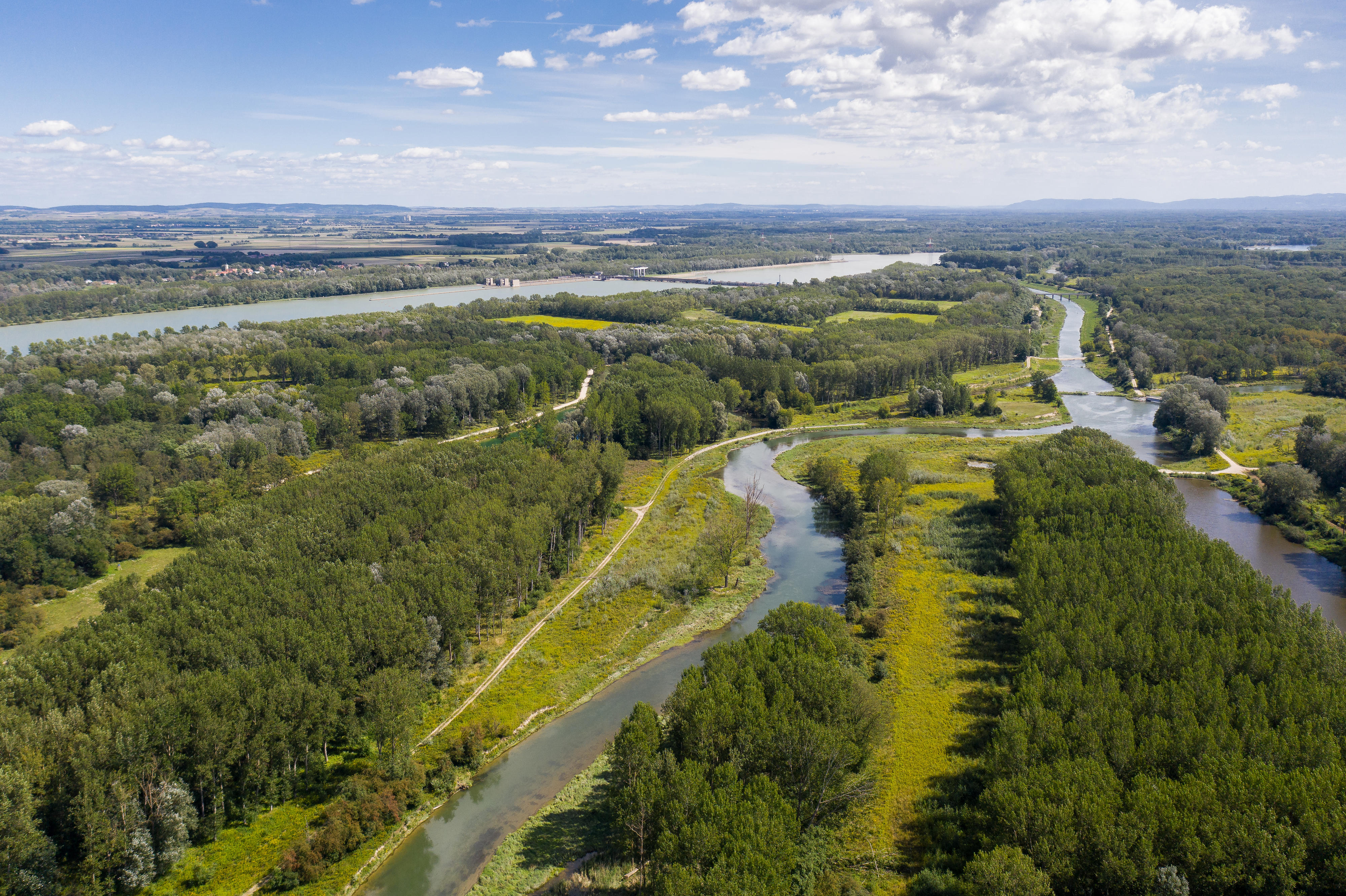
LIFE+ Traisen: Austria’s largest river revitalization project created a 9.5 km meandering “New Traisen,”restoring wetlands, boosting biodiversity, and enabling fish migration to the Danube

© Joannes Wiedl

What role does hydropower play in combating climate change? 

Of course, climate change affects hydropower and its impact on energy production is currently being studied in an interdisciplinary research project. At the same time, hydropower plays a central role in the fight against climate change: It generates 100% renewable electricity and enables the effective integration of wind and solar power. This flexibility helps store excess electricity, stabilize the grid, and support the phase-out of fossil fuels.

How is VERBUND addressing the future and the shortage of skilled workers? 

We place great emphasis on in-house training. Currently, we are training about 160 apprentices in dual qualifications (electrical and mechanical engineering) at our locations in Kaprun, Ybbs-Persenbeug, and Töging. The graduation rate is nearly 100%. With our new "LernWerkStatt Donau" (Danube Learning Workshop), we offer a modern environment for hands-on training. At our technical center in Schwarzach we combine engineering expertise with the practical knowledge of experienced technicians to enhance the plant know-how of our employees. At the same time, we promote continuing education for all employees with an average of 40 training hours per year.

Finally, what is your personal wish for the future of hydropower?

I hope for stable, reliable, and fair regulatory conditions and equal treatment with all other renewable energy sources. That would send a strong signal to the industry and to everyone who believes in the power of water.

Thank you for your time, Dr. Gruber.

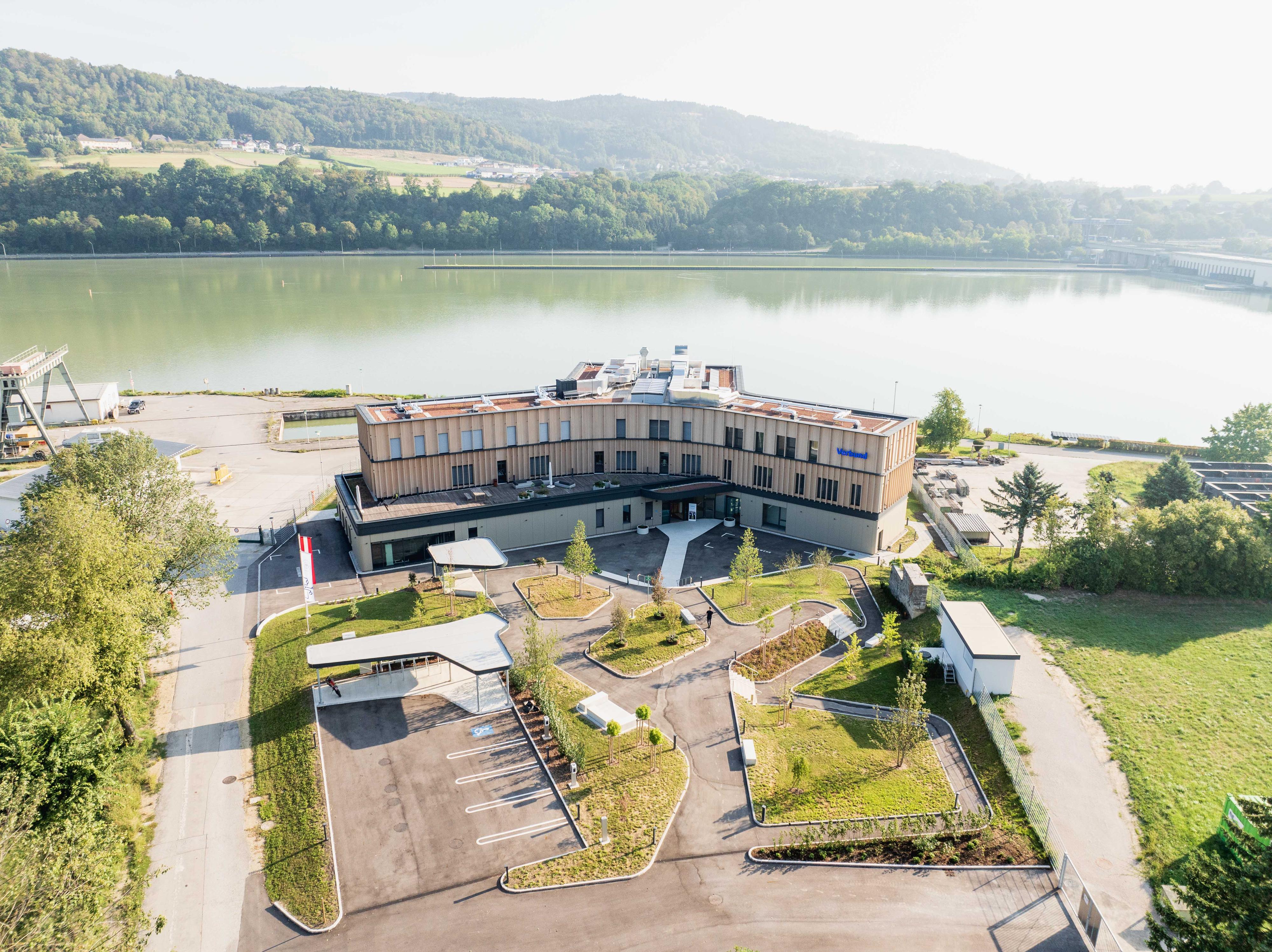
The Danube Learning Workshop near the Ybbs-Persenbeug run-of-river power plant

© Joannes Wiedl

© VERBUND

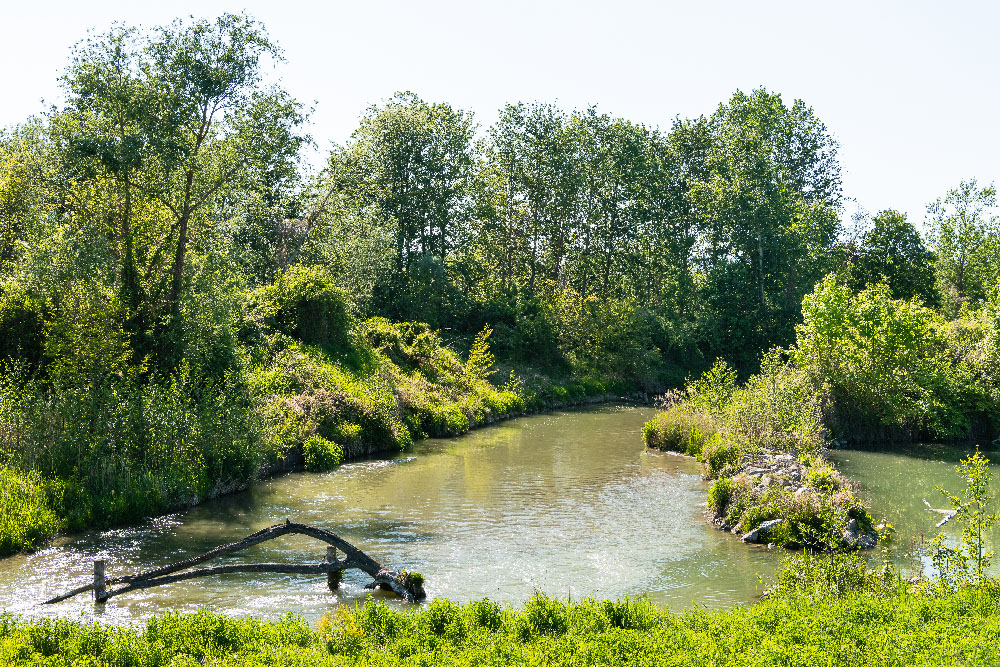
Europe’s longest fish pass (14.2 km) at Ottensheim-Wilhering restores Danube connectivity and fish-passability, renatures tributaries, creates habitats, and won the EU Natura 2000 Award

© Joannes Wiedl

Author: Interview conducted by Marie-Antoinette Sailer

India, Gandhikota-edit

Next article

Latest News & Highlights

Read latest news & highlights
Cover

List of all articles

Overview of content in HydroNews No. 39.

HydroNews 39 overview