“I’m very pleased with how it all went. It’s a clever piece of equipment, and it’s running really well.”
Patrick Stoschek
Production Manager at Carl Macher

In the northeastern corner of Bavaria, Germany, the Carl Macher core board mill has become the world’s first to install and run the UTurn Dual Speed Split Rotor from ANDRITZ. All of the new components were tailor-made for the specific screen, and installed in a single day that had already been scheduled for maintenance downtime.
And the result? Patrick Stoschek, Production Manager at Carl Macher, says, "Since installing the UTurn, we are seeing major improvements in energy consumption, while screening capacity and quality are virtually unchanged from before.”
This was all achieved with the help of a strikingly simple idea – constructing the pressure screen rotor in two separate sections instead of one. The unsolved challenge with one-piece rotors is the speed mismatch between the rotor and the incoming stock. The rotor needs to turn fast enough to prevent plugging at the bottom of the screen, but that is much faster than the stock flows in at the top of the rotor, which causes an unavoidable waste of energy in that area.
Unavoidable, that is, with a single-piece rotor. However, by splitting the rotor into two parts, ANDRITZ has made it possible to operate the top section at a slower speed to better match the flow of the incoming stock. At the same time, the bottom part of the rotor can still revolve as fast as necessary to prevent plugging. This effectively eliminates the compromise between process stability, screening capacity, and energy efficiency that is typical with conventional rotor designs.
Patrick Stoschek points out, “We had been looking at replacing some of our older screens but, instead, ANDRITZ asked whether we would consider a rebuild with this brand-new technology. The advantages were obvious; it was just a question of whether it would work – no other mill had used a UTurn before.”
But ANDRITZ was well prepared. Florian Lingauer, Product Manager, Screening, ANDRITZ, explains, “The engineers at ANDRITZ Fiedler regularly brainstorm to come up with ways that our customers might use their existing machinery better. In 2022, a colleague suggested splitting the pressure screen rotor into two parts, to save energy. We came up with a design, and the simulations looked promising. So we built a trial unit at the ANDRITZ pilot plant in Graz, and it was a success. That’s why we were already confident the UTurn would work, before we came to install it at Carl Macher.”
In fact, the technology is notable for its simple, low-risk design, with no need for a major rebuild. At Carl Macher, for example, the housing, basket, and main structure of the screen were all left unchanged. The UTurn, a new bearing unit, split rotor, and new V-belt drive system (that enables the existing single motor to drive the two sections of the rotor at different speeds) were all manufactured to fit the specific screen and installed in a plug-and-play style in a matter of hours.
Patrick Stoschek
Production Manager at Carl Macher
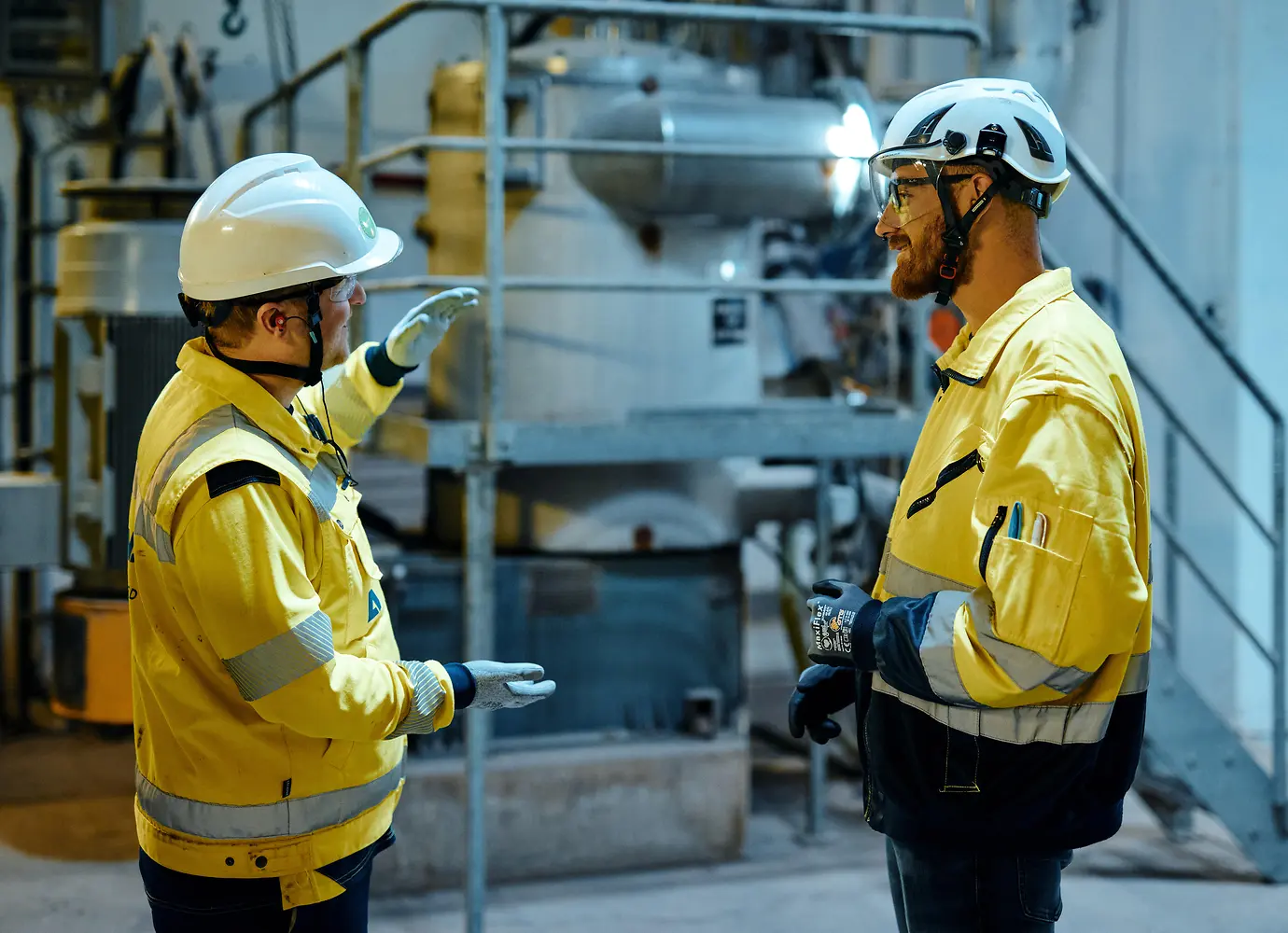
In this way, the world’s first commercially-operated UTurn was started up at Carl Macher in October 2025, and as Patrick Stoschek says, “I’m very pleased with how it all went. It’s a clever piece of equipment, and it’s running really well.”
Florian Lingauer adds, “This project shows that energy efficiency in screening is not just a question of motor power, but of intelligent rotor design and flow management. It also demonstrates that process driven retrofits can unlock hidden potential in equipment that a mill is already using. With the right engineering, even existing screening systems can see big improvements."
Patrick Stoschek concludes, “I would definitely recommend the UTurn to our sister mill in France, Papeteries du Rhin. It makes sense to copy what we’ve done here.”
Your technology and service partner for the production of pulp, paper, tissue, and board – and in the generation of power from renewable resources.Contact our Pulp & Paper team!

Tune in to our podcast where industry meets innovation. We spotlight the most relevant trends, challenges, and solutions shaping the pulp, paper, and bioproduct sectors. From expert insights on recovery boilers, fiberlines, and tissue to deep dives into ESG, NOx reduction, cybersecurity, circular economy, and carbon capture – this is your gateway to what’s next in industrial transformation.


Your technology and service partner for the production of pulp, paper, tissue, and board – and in the generation of power from renewable resources.Contact our Pulp & Paper team!

Tune in to our podcast where industry meets innovation. We spotlight the most relevant trends, challenges, and solutions shaping the pulp, paper, and bioproduct sectors. From expert insights on recovery boilers, fiberlines, and tissue to deep dives into ESG, NOx reduction, cybersecurity, circular economy, and carbon capture – this is your gateway to what’s next in industrial transformation.